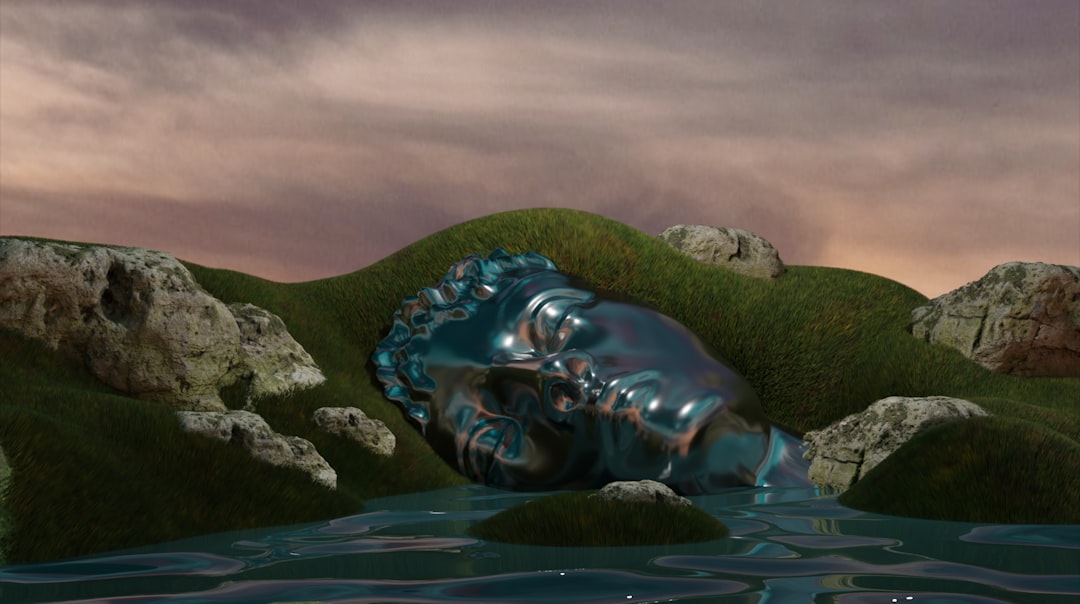
Photo by Vignolo Design on Unsplash
When the Storyteller Becomes the Story
There's a particular thrill that comes from realizing, halfway through a novel, that the person telling you the story has been lying. Not the author—the narrator. The voice you've been trusting, the one who's been your intimate guide through every page, suddenly reveals itself to be fundamentally unreliable. It's like discovering your closest confidant has been wearing a mask the entire time. And somehow, readers find this absolutely irresistible.
The unreliable narrator isn't new. Dostoevsky played with the concept in "Notes from Underground." Nabokov made it an art form with Humbert Humbert in "Lolita." But something shifted in the last fifteen years. Publishers started noticing that books with narrators who couldn't be trusted were becoming bestsellers. "Gone Girl" sold over 20 million copies worldwide. "The Woman in Cabin 10" moved millions of copies. "Rebecca" experienced a renaissance on social media. Readers weren't just accepting unreliable narrators—they were hunting for them.
What changed? It wasn't that the technique got better. It was that readers got tired of being passive observers. The unreliable narrator transformed fiction into a game, and everyone suddenly wanted to play.
The Psychology of Pleasant Deception
Consider what happens when you're reading a novel with a narrator you can't entirely trust. Your brain enters a heightened state of engagement. You're not just following a plot—you're investigating it. Every statement gets questioned. Every detail gets scrutinized. That throwaway comment about how the narrator "never was good with faces"? That suddenly matters. That convenient memory gap from three chapters ago? Red flag.
This active participation creates a neurological reward system that straightforward narrative can't match. When you catch the lie, your brain floods with the pleasure chemicals associated with solving a puzzle. You feel smart. You feel like you've accomplished something. The author didn't give you the truth on a silver platter; you had to earn it.
There's also something deeply human about relating to a narrator who lies. Because we all lie. Not necessarily malicious lies—we lie to ourselves constantly. We rationalize our failures. We rewrite our memories to make ourselves the hero instead of the villain. We remember conversations differently than they actually happened. An unreliable narrator doesn't feel like a literary gimmick when you recognize yourself in the distortion. It feels like honesty.
The Evolution from Twist to Texture
Early unreliable narrators often worked on a single principle: the big reveal. You read the entire book believing one version of events, and then—plot twist!—everything flips. "Gone Girl" made this structure incredibly popular, and it worked because the twist was genuinely surprising. But something interesting happened after that book's massive success. Writers realized the unreliability didn't have to culminate in a shocking revelation. It could just be the texture of the story.
Take Sally Rooney's "Normal People" or Hanya Yanagihara's "A Little Life." These aren't books where the narrator is secretly a villain or has been deceiving you about major plot points. But they're still unreliable in the most human way possible. The narrators have blind spots. They misunderstand each other's motivations. They miss crucial moments happening right in front of them. The unreliability comes from being trapped inside a single perspective that, like all perspectives, is fundamentally limited.
This shift matters because it opened the door for unreliable narrators in every genre. Literary fiction, yes, but also thrillers, romance, even science fiction. The technique became less about shocking twists and more about exploring how perception shapes reality.
Why Authors Can't Stop Writing Them
Publishers have data showing that unreliable narrators sell. But that's not really why authors write them. Ask any writer and they'll tell you something different: it's genuinely interesting to explore consciousness when that consciousness is flawed. When your narrator is perfect and honest, they become a camera. When they're unreliable, they become a character in their own right.
An unreliable narrator forces you to make difficult writerly choices. How much do you let the reader know before the narrator realizes it? How do you plant clues without making them obvious? How do you create sympathy for someone whose perception is skewed? These are problems worth solving. They require craft and precision and a genuine understanding of human psychology.
And there's freedom in it too. If your narrator can't be trusted, you're not locked into objective reality. You can play with timeline in ways that would be confusing otherwise. You can contradict yourself and call it characterization. You can explore the messy, contradictory way humans actually experience the world instead of the clean, linear way we pretend to remember it.
What This Means for Readers Going Forward
The unreliable narrator has become so prevalent that a new generation of readers now approaches every novel with protective skepticism. Some readers find this exhausting. Others find it exhilarating. The relationship between reader and narrator has become inherently adversarial in many contemporary books, which changes everything about how stories function.
What's fascinating is that this trend has created space for a new kind of twist: the reliable narrator in a sea of unreliable ones. Sometimes the most shocking thing a contemporary author can do is have a narrator you can actually trust. The literary world has inverted so completely that honesty has become the surprising move.
The unreliable narrator works because it mirrors real life in a way that straightforward storytelling sometimes can't. We don't get access to objective truth. We only get our version, and we have to hope it's close enough to reality to matter. Books that embrace this uncertainty feel true in a way that feels almost confessional. And readers, it turns out, have been hungry for that kind of truth all along.
If you're interested in how this concept plays out across different books and series, you might also enjoy exploring The Ghost in the Sequel: Why Beloved Characters Become Strangers in Follow-Up Novels, which examines how authors handle complex character development across multiple books.
Comments (0)
No comments yet. Be the first to share your thoughts!
Sign in to join the conversation.