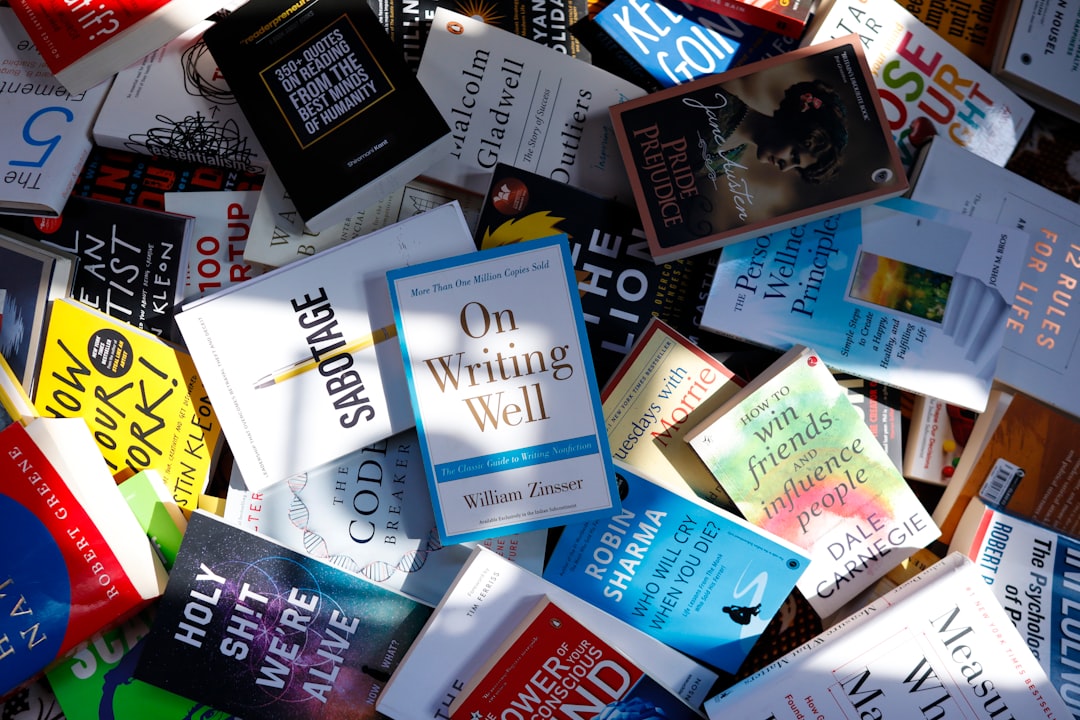
Photo by Shiromani Kant on Unsplash
Most readers trust their narrator the way they trust GPS directions: completely, until they're suddenly lost in the wrong part of town. An unreliable narrator strips away that comfortable certainty and replaces it with something far more intoxicating—doubt. This isn't a gimmick. It's one of fiction's most potent tools for creating genuine psychological suspense, and when executed well, it transforms a simple story into an experience that haunts readers long after they've finished the final page.
What Makes a Narrator Unreliable (And Why We Can't Look Away)
An unreliable narrator isn't necessarily someone who lies intentionally. They might be delusional, like Patrick Bateman in "American Psycho," genuinely uncertain about their own memories, or so convinced of their righteousness that they unconsciously distort reality. The brilliance lies in the fact that readers experience the story exactly as the narrator does—we see only what they see, believe what they believe, at least until the cracks start showing.
Consider "Gone Girl," the 2012 thriller that made unreliable narration a cultural phenomenon. Amy and Nick Dunne each tell their version of events with complete conviction, yet their stories contradict each other in ways that make it impossible to trust either one entirely. Gillian Flynn didn't invent this technique, but she weaponized it masterfully. The book spent 160 weeks on the New York Times bestseller list, proving that readers were willing to feel mentally destabilized if it meant experiencing something genuinely unpredictable.
What makes this technique psychologically powerful is that it forces active participation. You can't passively consume the story. Your brain is constantly cross-referencing details, questioning motives, reconstructing events. It's exhausting and addictive in equal measure.
The Psychology of Doubt: Why Our Brains Love Being Manipulated
Neuroscience research suggests that uncertainty actually activates our brains more intensely than straightforward information. When we encounter contradictions or gaps in a story, our minds work harder to fill those spaces. We become invested in solving the puzzle because our brains are wired to seek coherence and meaning.
This is why "The Turn of the Screw" by Henry James, published in 1898, still generates heated debate among literary scholars and readers. The novella presents a governess's account of supernatural events at an English estate, but James constructed the narrative so masterfully that readers remain divided about whether the ghosts are real or manifestations of the narrator's deteriorating mental state. Over 125 years later, people are still arguing about it. That's not a bug in the storytelling—that's the entire point.
The unreliable narrator creates what psychologists call "cognitive dissonance"—the uncomfortable feeling when we hold two conflicting beliefs simultaneously. The more compelling the narrator and the more evidence they present, the harder it is for readers to dismiss their account, even when red flags emerge. We want to trust them. We're predisposed toward trust. When that trust is violated, the emotional payoff is devastating.
Unreliable Narrators in Contemporary Fiction: From Literary to Commercial
This technique has moved far beyond the literary fiction ghetto. Commercial fiction has embraced it with enthusiasm. "The Woman in Cabin 10" by Ruth Ware uses an unreliable narrator dealing with insomnia and anxiety medication to create genuine uncertainty about whether the crime she witnessed actually occurred. "Shutter Island" by Dennis Lehane builds an entire mystery around a protagonist whose grip on reality becomes increasingly questionable. Even young adult fiction has deployed this tool effectively—"Truly Devious" by Maureen Johnson weaves together multiple perspectives, some more reliable than others, to create a mystery that plays with reader expectations.
What's fascinating is that the technique works across genres. Psychological thrillers weaponize unreliable narration for suspense. Literary fiction uses it to explore the nature of truth and memory. Science fiction and fantasy deploy it to question reality itself. "Dune," Frank Herbert's epic science fiction classic, relies partially on an unreliable narrator's interpretation of events and prophecies that may or may not be genuine.
The common thread? Each genre adapts the technique to serve its core purposes. Thrillers use unreliable narration to misdirect. Literary fiction uses it to complicate our understanding of character and morality. Genre fiction uses it to expand the scope of what we consider "real" within the fictional world.
The Craft Behind the Deception: How Writers Pull It Off
Writing a successful unreliable narrator requires walking a razor's edge. Make the narrator too obviously untrustworthy, and readers disengage. Make them too convincing, and readers feel cheated when the truth emerges. The best unreliable narrators are those who are partially right. They're not lying about everything—they're distorting, misinterpreting, or selectively remembering.
This is why you should also check out "Why We're Obsessed with Flawed Characters Who Make Terrible Decisions"—unreliable narrators are almost always deeply flawed, and understanding what makes flawed characters compelling will deepen your appreciation for how unreliable narration works.
The technical skill involves subtle things: inconsistencies in small details while remaining consistent about major plot points; emotional truth even when factual accuracy is questionable; motivation that feels real, even if it's self-serving. When Holden Caulfield in "The Catcher in the Rye" tells his story, we never quite know how accurate his account is, but we never doubt that he genuinely feels what he's expressing. That emotional authenticity grounds us in his perspective, making his distortions all the more effective.
Why This Matters for Readers and Writers Alike
For readers, an unreliable narrator offers something increasingly rare: genuine surprise. In an age where plot summaries, reviews, and spoilers are unavoidable, the unreliable narrator is one of the few techniques that can still blindside you. It respects your intelligence while deceiving you. That's a delicate balance, and when it's achieved, it creates moments of pure reading pleasure.
For writers, mastering unreliable narration means understanding that storytelling isn't about events—it's about perception. It's about learning that what your character doesn't know is as important as what they do. It's about recognizing that the most powerful deceptions in fiction aren't about plot twists; they're about fundamentally shifting how readers understand everything they've read.
The unreliable narrator has endured for over a century because it taps into something essential about human nature itself: our need for truth and our difficulty in obtaining it. Even in fiction, we're still searching for reliable ground, still questioning our own perceptions, still trying to figure out who to trust. That struggle is what makes these stories resonate. That struggle is what keeps readers up at night.
Comments (0)
No comments yet. Be the first to share your thoughts!
Sign in to join the conversation.