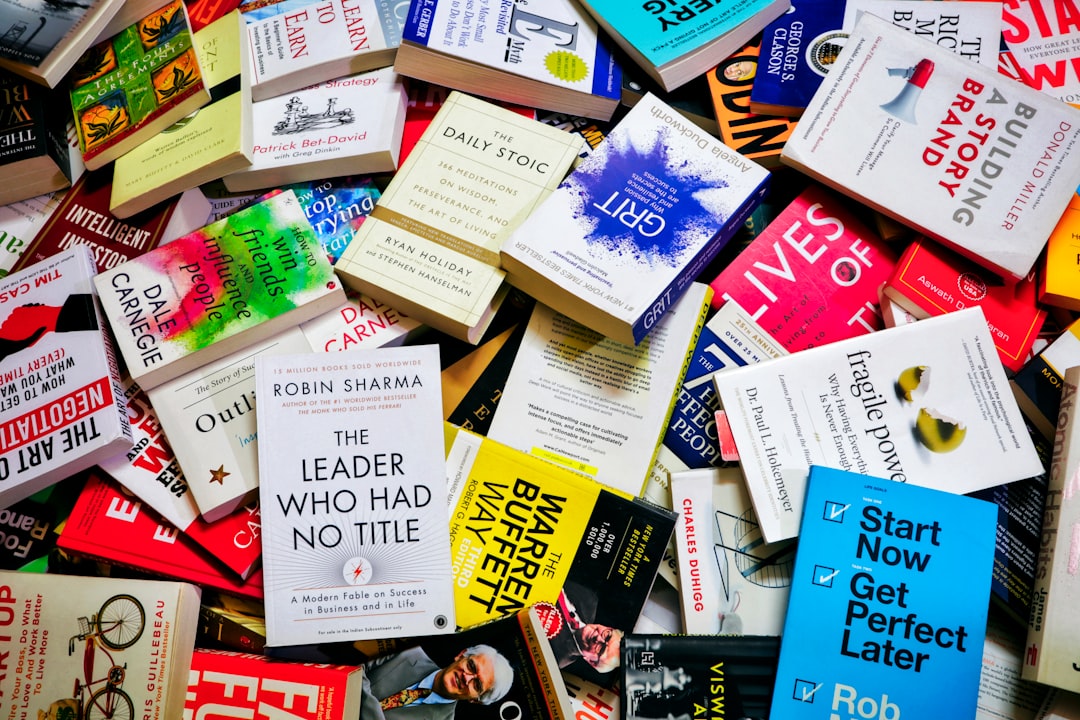
Photo by Shiromani Kant on Unsplash
There's a particular moment that happens during book club discussions, the kind that makes everyone groan and flip back through pages they've already read. Someone will say, "Wait. I need to reread this entire thing," and suddenly the room fills with the nervous energy of people realizing they've been played. The unreliable narrator—that delightfully devious storytelling device—has just claimed another set of victims. And honestly? They loved every second of it.
The unreliable narrator isn't new. In fact, critics point to Agatha Christie's "And Then There Were None" (1939) as one of the first major works to weaponize narrative deception. But something shifted in the last fifteen years. What was once considered a literary trick reserved for highbrow fiction has become mainstream entertainment. "Gone Girl." "The Woman in Cabin 10." "We Need to Talk About Kevin." These books didn't just sell copies—they sold the *experience* of being deliberately misled, and readers couldn't get enough.
The Psychology of Being Betrayed by a Book (And Why It Feels So Good)
Here's the uncomfortable truth that makes unreliable narrators so effective: we're trained from childhood to trust narrators. When a story is told in first person, we assume intimacy. We assume honesty. An author is essentially asking us to climb inside someone's head, and our instinct is to believe what we find there.
An unreliable narrator exploits that trust. They don't necessarily lie outright—at least, not obviously. Instead, they omit details. They reframe situations. They convince themselves of false versions of events. They're not comic book villains twirling mustaches and cackling about their deceptions. They're people who genuinely believe their own narratives, even when those narratives are catastrophically wrong.
When the reveal happens—and it always does—readers experience something like betrayal, but wrapped in exhilaration. Your brain has to reconcile two completely different versions of events simultaneously. That cognitive friction? It's addictive. It's why people who finish "Gone Girl" immediately start recommending it to everyone they know. It's why readers will spend hours on Reddit threads dissecting every line for clues they missed.
The writer Gillian Flynn, who essentially perfected the formula with her bestseller, has talked about how she wanted to write a story where "the reader's assumptions would be wrong." She crafted Amy Dunne as a character who seemed sympathetic at first—a missing woman, presumably a victim. But as the story unfolds from multiple perspectives, Flynn systematically dismantles that assumption until readers realize they've been rooting for someone genuinely terrifying. That feeling of moral vertigo is the whole point.
The Mechanics: How Authors Hide the Truth in Plain Sight
The best unreliable narrators aren't obvious about their unreliability. They can't be. The moment a reader suspects something is wrong, the game collapses.
One technique is selective honesty. The narrator tells you true things, but strategically leaves out context. In "The Woman in Cabin 10" by Ruth Ware, the protagonist describes events accurately, but her anxiety and paranoia filter everything through an increasingly unstable lens. She's not lying about what happened—she's interpreting it through the lens of someone whose perception is actively deceiving her.
Another method is the narrator's self-deception. They genuinely believe their own story. Look at Lionel Shriver's "We Need to Talk About Kevin," where a mother describes raising a teenager who committed an act of horrific violence. Her narrative reveals her guilt, her denial, and her maternal love tangled together so completely that the reader can't separate one from another. She's not being dishonest—she's being human in the most devastating way.
Then there's the narrator who lies actively but convincingly. This is riskier. The author has to plant clues subtle enough that rereading the book reveals breadcrumbs readers missed the first time, but obvious enough in retrospect that readers feel clever for catching them. It's a high-wire act.
Some authors use multiple perspectives to create unreliability through contradiction. When two characters tell conflicting versions of the same event, readers have to decide who's telling the truth—or realize that maybe both perspectives are distorted. This technique became wildly popular after books like "Room" by Emma Donoghue showed how powerfully a limited perspective could manipulate reader sympathy.
The Backlash and the Art of Not Overdoing It
There's a reason countless Reddit threads include people complaining about unreliable narrators. Some authors have taken the trend and weaponized it poorly. When every detail is suspect and nothing can be trusted, the reading experience becomes exhausting rather than engaging.
The problem with an overused technique is simple: the shock value evaporates. Once readers expect betrayal from the narrative, the impact diminishes. An unreliable narrator only works if there's still something genuine underneath all the misdirection. Readers need to feel like their trust wasn't completely worthless—that there was *something* true they could hold onto.
The best unreliable narrators give you this. They're unreliable about specific things, not about everything. Think of Nick Carraway in "The Great Gatsby"—he's not lying about what happened at the parties or the accidents, but his romantic idealization of Gatsby colors how he presents events. That selective unreliability is what makes the trick work.
If you're interested in how this technique compares to other manipulation tactics in fiction, you might enjoy reading about when the villain steals the show and why readers fall in love with characters they're supposed to hate—because unreliable narrators often occupy this exact moral gray area.
Why We Keep Coming Back for More
The unreliable narrator has become a staple of contemporary fiction because it mirrors something true about human experience. We all construct narratives about our own lives. We all have blind spots. We all believe stories about ourselves that might not withstand outside scrutiny.
Reading an unreliable narrator lets us examine that tendency from a safe distance. We get to be smarter than the narrator. We get to catch the lies. And in doing so, we confront how easily *we* might be fooling ourselves about our own narratives.
That's why a well-executed unreliable narrator stays with readers long after the final page. It's not just a plot twist. It's an experience that makes you question your own judgment, your own ability to perceive truth, your own assumptions about the people telling you their stories.
And somehow, despite knowing better, we keep picking up these books. We keep trusting narrators we suspect might be lying. We keep hoping this time, maybe, we'll see through the deception before the reveal. That's not masochism. That's the mark of genuinely great storytelling—the kind that makes readers feel alive.
Comments (0)
No comments yet. Be the first to share your thoughts!
Sign in to join the conversation.