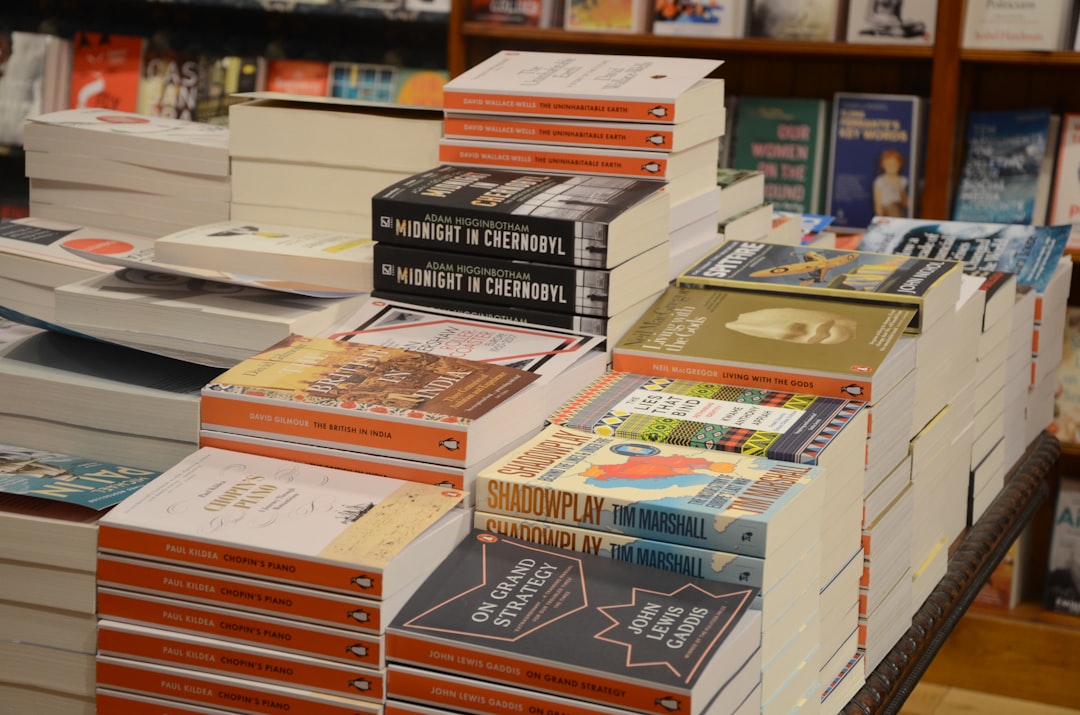
Photo by Geilan Malet-Bates on Unsplash
There's a specific moment that happens when you're reading a really good unreliable narrator. You're maybe a third of the way through the book, and you realize the person telling you the story has been lying. Not dramatically, not obviously—just subtly twisting facts, omitting details, reframing events to make themselves look better. And instead of feeling cheated, you feel absolutely hooked. You have to keep reading because now you're desperate to figure out what's actually true.
This is the unreliable narrator's superpower. It's not a new trick—we can trace it back to Fyodor Dostoevsky's 1864 novella "Notes from Underground," where an anonymous narrator spirals through self-contradicting philosophy while justifying his own bitterness. But something shifted in contemporary fiction. Over the last fifteen years, unreliable narrators have moved from literary gimmick to mainstream obsession. Gillian Flynn's "Gone Girl," published in 2012, proved that millions of readers wanted to spend 400 pages being systematically deceived. Since then, we've gotten "The Woman in Cabin 10," "Rebecca," "We Need to Talk About Kevin," and countless others that weaponize the narrator's perspective against us.
Why We Fall for Beautiful Lies
The real genius of a great unreliable narrator isn't that they fool you. It's that they make you complicit in the deception. They're not shouting lies at you; they're sharing intimate thoughts. They're confessing secrets. They're letting you into their headspace in a way that feels incredibly personal.
Consider Amy Dunne from "Gone Girl." Flynn structures her chapters so that we hear Amy's internal monologue alongside the investigation into her disappearance. When Amy describes her marriage, her perspective feels valid because we're inside her head. She's vulnerable, funny, clever. By the time you realize she's a murderer with a calculated plan stretching months backward, you've already been convinced of her version of events. The plot twist doesn't feel like a cheat because Flynn laid the groundwork from page one—Amy just let us interpret things in a particular way.
What makes this effective is that unreliable narrators typically aren't wrong about everything. They're selective about what they tell us. They might accurately describe a conversation but leave out their own inflammatory comment before it. They might honestly report their emotions while completely misinterpreting someone else's motives. This mixture of truth and distortion is far more unsettling than an outright liar would be, because we can't simply dismiss everything they say.
The Narrator Who Believes Their Own Story
Some of the most compelling unreliable narrators aren't deliberately deceiving us—they're deceiving themselves. This is where the device becomes truly psychological. The narrator genuinely believes their version of events because that's the only way they can live with themselves.
Take "We Need to Talk About Kevin" by Lionel Shriver. Eva, the mother, recounts her relationship with her son Kevin, who commits a horrific act. Throughout the novel, Eva wrestles with whether she's culpable. She examines her own coldness as a mother, her ambivalence about motherhood itself, her relationship with Kevin's father. What makes the narrative devastating is that we can't determine whether Eva is actually guilty of emotional negligence or whether she's been punishing herself unfairly. The reader has to sit with that uncertainty, which is precisely Shriver's point.
These narrators often have unreliable narration that mirrors real human psychology. We all rationalize our behavior. We remember conversations in ways that support our self-image. We rewrite history to make sense of our pain. When a fictional character does this, it feels achingly authentic because we recognize ourselves in their distortions.
The Technique That Separates Good from Gimmicky
Not every unreliable narrator works, though. Some feel like a author's clever trick rather than an essential part of the story. The difference usually comes down to whether the unreliability serves the theme or just serves as a plot twist.
The best unreliable narrators embody their own unreliability thematically. In "The Talented Mr. Ripley," Patricia Highsmith's protagonist is a chameleon who morphs his personality to match whoever he's with. His narration reflects this—we're never sure who Tom really is because Tom doesn't know who he is. The unreliability isn't a surprise reveal; it's the core of who he is. That's why the novel works as a masterpiece of character study, not just as a thriller.
Conversely, narrators who are unreliable just to provide a twist ending often feel unsatisfying. Readers feel angry not because they were tricked, but because the trick didn't illuminate anything meaningful about the character or the story's themes. There's a reason When Your Villain Becomes the Hero: The Art of Redemption Arcs That Actually Work discusses the importance of character motivation—a great twist needs to feel inevitable in retrospect, not random.
Living in the Gray Zone
What makes the unreliable narrator resonate so deeply in contemporary fiction is that they offer permission to exist in moral ambiguity. Our current moment is full of competing narratives, selective truths, and clashing perspectives on what's real. Reading a novel where we can't trust what we're being told feels almost like training for actual life.
The best unreliable narrators don't resolve neatly. We close the book and we're still not entirely sure what happened. We might never know whether they were the hero or the villain, whether they deserve our sympathy or our judgment. That discomfort is the point. These narrators remind us that truth is complicated, that people are rarely purely good or bad, and that our perspective is always limited by what we choose to see.
Maybe that's why we keep falling for beautiful lies in fiction. They give us space to explore the liars inside ourselves.
Comments (0)
No comments yet. Be the first to share your thoughts!
Sign in to join the conversation.