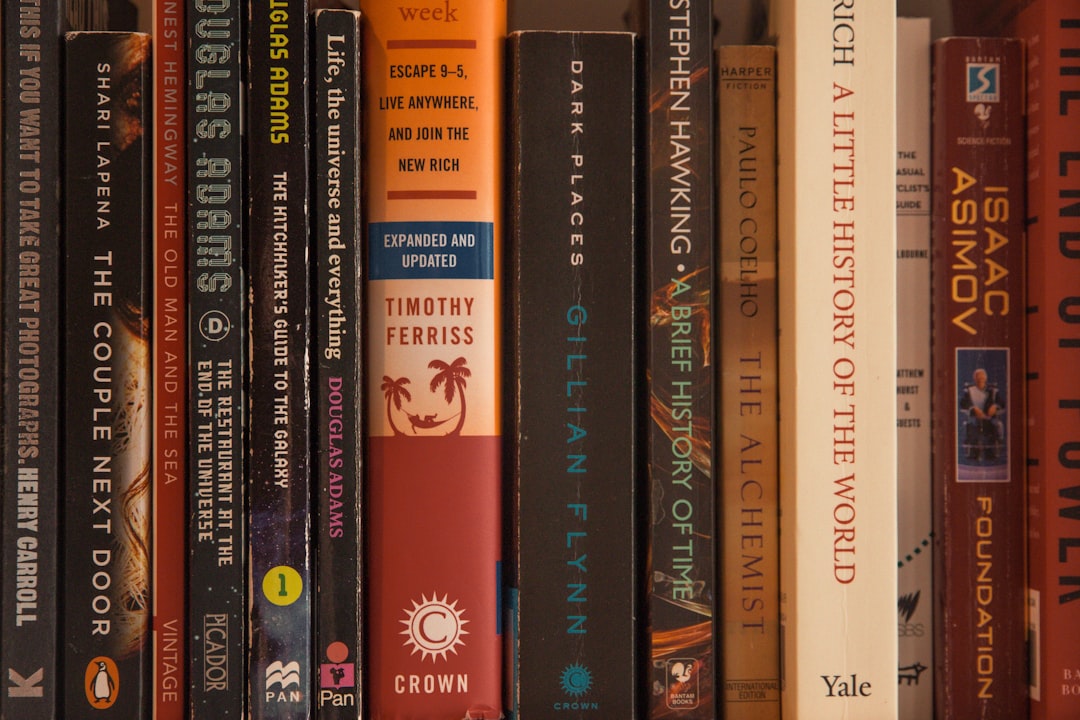
Photo by Stephen Phillips - Hostreviews.co.uk on Unsplash
Picture this: You're 200 pages into a mystery novel. The detective has just had a breakthrough. The clues are connecting. And then—in a single paragraph—you realize everything you've been told is a fabrication. Your stomach drops. You flip back through pages, searching for the moment you got fooled. And then you do something strange. You keep reading. Faster now. Because being lied to by a skilled narrator is one of the most intoxicating experiences fiction has to offer.
The unreliable narrator has become one of contemporary fiction's most potent tools, but it's not a trick that works on accident. It requires precision, restraint, and an almost sadistic understanding of reader psychology. When done well, it transforms reading from passive consumption into active investigation. When done poorly, it feels like a betrayal. The difference between these outcomes matters, and understanding it might just explain why certain novels live rent-free in our heads for years.
The Architecture of Beautiful Deception
An unreliable narrator isn't simply someone who lies. That would be too simple, and simplicity is death for this technique. The most effective unreliable narrators believe their own stories. They're not winking at the reader from behind the fourth wall. They're genuinely convinced of their version of events, which means they can present falsehoods with the absolute confidence of someone speaking truth.
Consider Gillian Flynn's "Gone Girl"—a novel that practically rewrote the rules for unreliable narration in mainstream fiction. Amy Elliott Dunne doesn't sit down to deceive readers. She's telling her story the way she experiences it, with the conviction of someone who has crafted a narrative so thoroughly that it's become indistinguishable from reality in her own mind. The genius isn't that she's lying. It's that she's lying *convincingly*, with details so specific and emotions so raw that most readers accept her account as gospel for the first half of the novel.
What makes this different from a simple twist ending? Everything. A twist ending surprises you. An unreliable narrator rewires how you understand the entire book retroactively. You don't just learn new information. You realize that your interpretation of character motivations, relationships, and morality was fundamentally wrong. That's a much more unsettling experience—and a much more memorable one.
The Reader as Detective (Whether We Want To Be Or Not)
Here's what happens in your brain when you encounter an unreliable narrator, even if you don't consciously realize it: You activate detective mode. Every sentence becomes evidence. Every contradiction becomes a clue. Readers start unconsciously fact-checking the narrator against the few objective facts provided in the text.
This transforms passive reading into something closer to puzzle-solving. Your engagement multiplies because you're not just consuming a story—you're trying to solve it. Studies on reading comprehension show that readers retain significantly more information when they're actively questioning a narrative versus passively accepting it. The unreliable narrator hijacks this cognitive process and weaponizes it for emotional effect.
The best part? Most readers don't even realize they've been enlisted as detectives until much later. They think they're just reading. But every time they notice a contradiction, feel a flicker of doubt about the narrator's account, or instinctively distrust a character description, they're gathering evidence for a trial they don't know they're attending.
The Fine Line Between Genius and Manipulation
Not all unreliable narrators are created equal. Some novels use the technique with the subtlety of a hammer to the face. Others weave it so seamlessly that readers don't even catch on until the final pages—or sometimes not until a second reading.
The difference usually comes down to one principle: fair play. The best unreliable narrators give readers genuine clues that something isn't right, even if those clues are easily missed on a first pass. They don't introduce crucial information solely through other characters' dialogue in chapter 47. They don't make facts up from whole cloth. They omit. They reframe. They rationalize. But they leave breadcrumbs.
Compare this to novels that simply cheat. They withhold information that the narrator would definitely know. They introduce "surprise" facts that have no narrative foundation. They mistake shock value for storytelling. Readers can sense the difference, even if they can't articulate it. It feels like being scammed versus being outsmarted, and we resent being scammed.
Kazuo Ishiguro's "Never Let Me Go" is a masterclass in this principle. The narrator, Kathy, tells you what's happening. She just doesn't tell you what it *means* until you've had time to understand it yourself. The information is there. Your horror comes from realization, not revelation. That's the distinction that separates great unreliable narration from exploitative manipulation.
Why We're Addicted To The Lie
Psychologically, there's something deeply satisfying about being fooled by a narrative. When you discover the deception, you experience a rush of cognitive restructuring. Your brain reorganizes massive amounts of information simultaneously, which triggers a sense of accomplishment. You feel clever for catching on. You feel validated for your suspicion. Even though the author was technically one step ahead of you the entire time.
There's also an element of emotional honesty embedded in unreliable narration. Real life rarely offers clear narratives. We all interpret events through our own biases, traumas, and self-interest. An unreliable narrator mirrors this fundamental human experience more authentically than a perfectly reliable one. The deception feels real because it *is* real—it's how consciousness actually works.
Additionally, unreliable narration creates rereadability. A novel with an unreliable narrator becomes a different book on your second pass. You catch details you missed. You understand motivations differently. You appreciate the author's craft more thoroughly. This creates genuine value in rereading, which is increasingly rare in contemporary fiction.
The Future of Beautiful Lies
As readers become more sophisticated and media literacy increases, authors working with unreliable narrators face a challenge: How do you deceive an audience that's actively expecting to be deceived? The answer isn't to deceive harder or with more elaborate tricks. It's to understand that some readers will see through you anyway, and that's fine. The pleasure isn't purely in the surprise. It's in the *ride*.
If you're fascinated by how character perspective shapes narrative, you might also enjoy reading about why secondary characters sometimes become more compelling than protagonists—another way fiction subverts reader expectations through clever characterization.
The unreliable narrator remains one of fiction's most potent tools because it acknowledges a fundamental truth: We don't read just for information. We read to be *changed* by the experience. And there's no more effective way to change a reader than to make them complicit in a beautiful lie, then reveal the truth they helped construct.
Comments (0)
No comments yet. Be the first to share your thoughts!
Sign in to join the conversation.