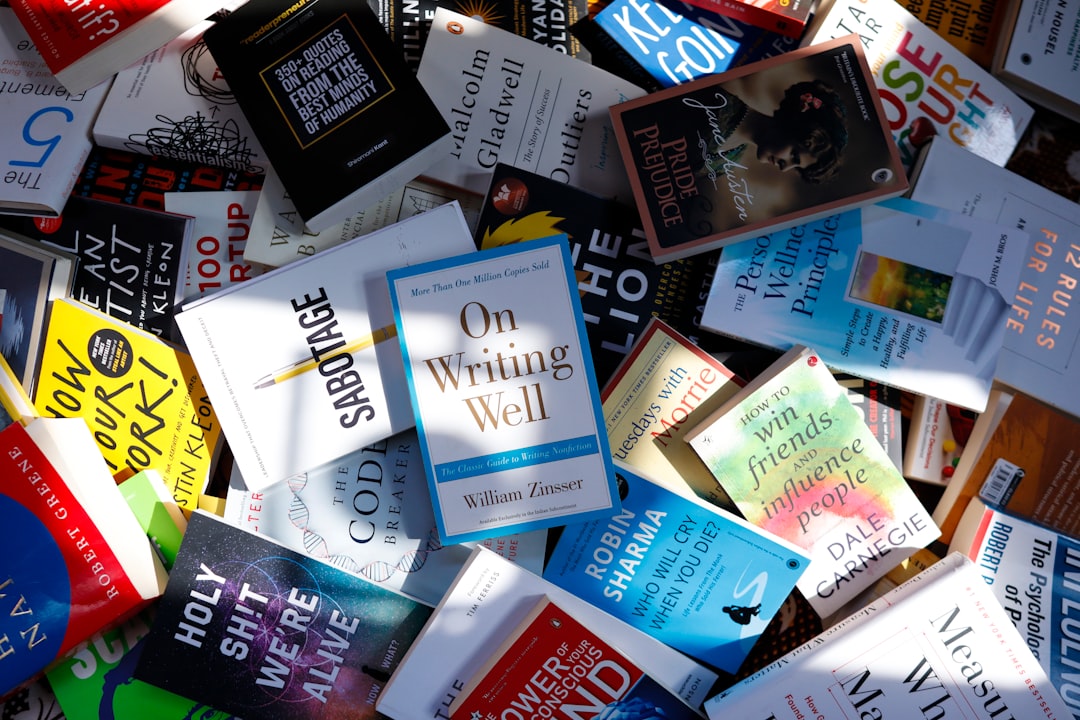
Photo by Shiromani Kant on Unsplash
There's a moment in Gillian Flynn's Gone Girl where you realize the woman you've been sympathizing with for hundreds of pages has been manipulating you the entire time. You feel betrayed. Angry. Then you want to immediately reread the whole thing.
That's the magic of the unreliable narrator—and it's everywhere right now.
Pick up any contemporary literary fiction novel and there's a decent chance you're reading someone's skewed version of events. Not because the author is lazy or confused about their own story, but because they understand something fundamental about human nature: we're all unreliable. We remember things wrong. We justify our terrible choices. We lie to ourselves before we lie to anyone else.
The unreliable narrator isn't new—you can trace it back to the Modernists, to Dostoevsky, even further if you're ambitious about your literary archaeology. But something shifted in the last decade. These characters stopped being clever narrative devices and became mirrors. Readers started recognizing themselves.
The Psychology of a Narrator Who Lies
What makes an unreliable narrator work isn't the plot twist at the end. It's the meticulous process of dismantling someone's credibility, one small detail at a time.
Consider Paula Hawkins' The Girl on the Train. Rachel is an alcoholic who can't remember entire days, yet she narrates significant portions of the novel. As you read, you're constantly negotiating with her reliability. Did that really happen? Is she misremembering? Is she deliberately leaving something out? The uncertainty creates a specific kind of tension that a straightforward narrative simply cannot achieve.
Or look at The Ghost in the Code: How AI Characters Are Becoming Our Most Unreliable Narrators, which explores how modern authors are pushing this concept into entirely new territory.
The psychology is fascinating because it mirrors how we actually function. Memory isn't like a video recording—it's a constantly updated story we tell ourselves. Researchers at Northwestern University found that every time we recall a memory, we're actually modifying it slightly. We're not intentionally lying; we're unconsciously revising. Our brains are basically unreliable narrators operating every single day.
When an author captures this phenomenon with precision, readers feel seen. They recognize their own mental gymnastics—the way they've justified questionable decisions, reframed uncomfortable memories, presented themselves differently to different people.
The Escalation of Deception in Modern Fiction
Early unreliable narrators were often victims of circumstance or mental illness. Think of the narrator in The Tell-Tale Heart—unreliable because he's literally unraveling psychologically. We sympathized because we understood he couldn't help it.
Contemporary unreliable narrators are different. They're calculating. Deliberately manipulative. The distinction matters enormously.
Books like We Have Always Lived in the Castle by Shirley Jackson (published in 1962, but deeply influential to modern works) feature narrators whose unreliability stems from something darker: intentional deception combined with something close to charm. Merricat Blackwood tells you her story, and you believe her, even though the evidence suggests she may have committed murder.
What's changed is that authors now feel liberated to make their narrators actively complicit in wrongdoing. Not victims of their own minds, but architects of their own lies. This shift reflects something happening in our culture—a growing skepticism about authority, expertise, and even first-person testimony.
When you can't trust what you're reading from the person telling you the story, you become an active participant in the narrative. You're forced to question everything. You're building your own version of events. That's exhausting. That's also compulsively readable.
Why We're Drawn to Deception
There's something deeply human about our attraction to liars in fiction. Psychologically, unreliable narrators offer us a safe space to explore moral ambiguity. Real life is messy and complicated, but in real life, you often can't afford to sympathize with people who've done bad things. In fiction, you can.
You can spend 400 pages inside the mind of someone who is fundamentally dishonest and emerge not with answers, but with more empathy for human complexity. That's radical, actually. That's the opposite of how we're trained to think about morality in most spaces.
There's also an element of intellectual satisfaction. Readers enjoy the puzzle. When you realize you've been deceived, you immediately want to solve it—to go back and figure out where the cracks appeared, where the narrator slipped. It engages a different part of your brain than a reliable narrator does. You become an investigator, not just a reader.
Data supports this appeal. Psychological thrillers with unreliable narrators consistently rank among the bestselling fiction categories. Gone Girl has sold over 20 million copies worldwide. We Need to Talk About Kevin by Lionel Shriver—a novel told primarily from the perspective of a woman whose reliability is deeply questionable—continues to generate discussion and debate nearly two decades after publication.
The Fine Line Between Brilliant and Frustrating
Not every unreliable narrator works. There's a razors edge between a narrator whose deception feels organic and one that feels like a betrayal of narrative covenant.
The difference is often intention. If the author is being unreliable for a reason—to comment on memory, to explore perspective, to examine how we construct identity—readers sense it. But if the unreliable narrator feels like a cheap trick, like the author waited until the last chapter to reveal information that would have fundamentally changed the reading experience, it can feel manipulative in the wrong way.
The best contemporary unreliable narrators give you breadcrumbs. They let you be confused, but not blindfolded. You have enough information to construct alternative interpretations, even if you don't initially. That's craftsmanship. That's the difference between a gimmick and an actual exploration of how humans perceive and interpret reality.
What's Next for the Unreliable Narrator
The unreliable narrator has become so prevalent that authors are now finding new ways to complicate it further. Multiple unreliable narrators. First-person narrators who are also the victims of other narrators' unreliability. Stories where every perspective is fractured in different ways.
The evolution suggests that we're not getting tired of being lied to in fiction—we're getting better at reading the lies. The audience has become sophisticated enough that authors need to up the ante.
What began as a Modernist experiment has become a fundamental tool for exploring truth itself. In a world where misinformation spreads instantly and everyone has a different version of events, the unreliable narrator in fiction has become almost prophetic. Literature is teaching us how to read reality.
And that might be the most important thing fiction can do right now—not give us answers, but teach us to question carefully, sympathetically, and with our eyes wide open.
Comments (0)
No comments yet. Be the first to share your thoughts!
Sign in to join the conversation.