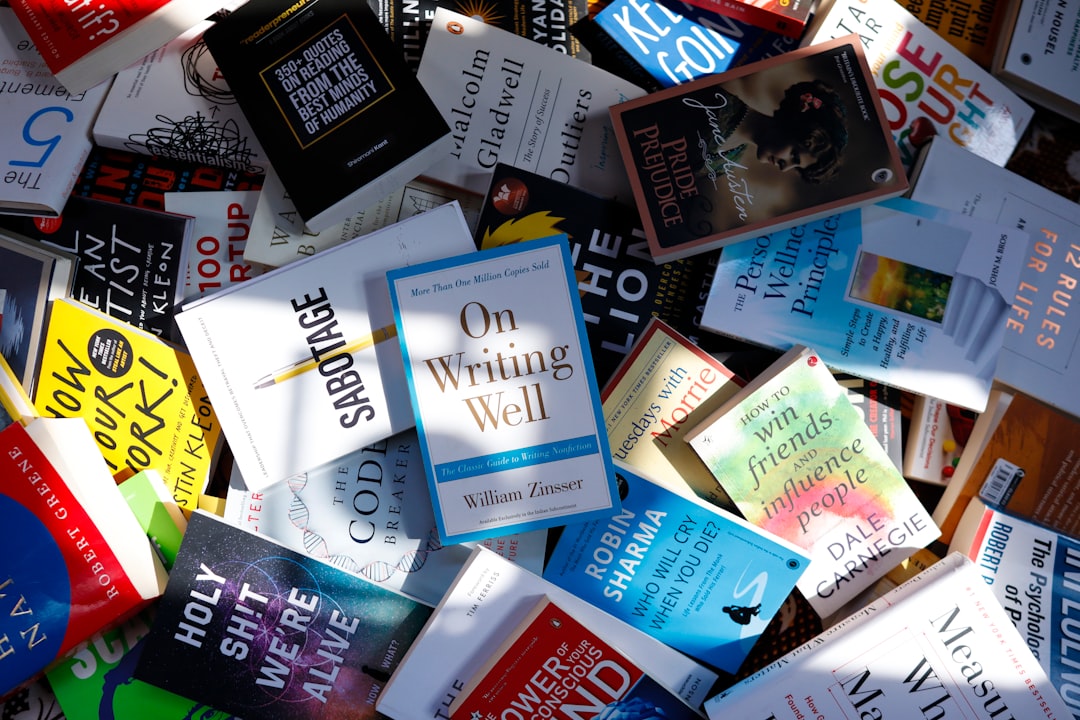
Photo by Shiromani Kant on Unsplash
The unreliable narrator used to be fiction's favorite plot twist. A reader would finish a book, flip back through the pages, and suddenly see everything differently. Agatha Christie did it. Gone Girl did it. We all nodded knowingly, satisfied that we'd been cleverly deceived by an author playing fair.
But something shifted. Around 2019 or so, writers started getting bored with the gimmick. And honestly? The best contemporary fiction stopped using unreliable narration as a reveal and started using it as a condition of being human.
Why the Old Trick Started Feeling Stale
The traditional unreliable narrator relies on a fundamental contract: the author lies to you, but they know they're lying, and eventually they'll show you the truth. You get your aha moment. The puzzle clicks into place. It's satisfying in the way a magic trick is satisfying—you appreciate the craftsmanship even after learning how it's done.
The problem is that this structure demands a single, objective reality waiting to be discovered. The narrator has been hiding something from you. Once revealed, the story becomes fixed. It calcifies into a known quantity.
But human consciousness doesn't work that way. We don't have a single true version of our own stories. We have competing narratives, contradictions we never resolve, truths we genuinely believe that contradict other truths we also genuinely believe. We're walking around containing multitudes that can't be reconciled.
Sally Rooney understood this when she wrote Beautiful World, Where Are You. Her characters aren't hiding secrets from the reader—they're hiding contradictions from themselves. They believe they've moved past something, then act as though they haven't. They insist they're happy, and maybe they are, but their choices suggest otherwise. No big reveal moment arrives to untangle the knot. The knot is the point.
The Contradictory Protagonist Doesn't Know They're Contradictory
Here's where it gets interesting. The contemporary fiction that feels most honest isn't told by narrators who are deliberately misleading you. It's told by characters genuinely confused about their own motivations.
Think about Chris Kraus's I Love Dick. Kraus writes herself as someone who is simultaneously sharp and delusional, intellectually rigorous and emotionally myopic. She's not pretending to be reliable. She's not setting up a twist. She's just inhabiting the actual experience of being someone who holds contradictory beliefs about her own life without fully reconciling them. The reader sits with her in that contradiction.
Or consider the protagonists of recent literary fiction by writers like Claire Messud or Jenny Offill. They make choices that seem to contradict their stated values. They believe things about themselves that their behavior undermines. No narrator steps in to explain the gap. You have to sit with the uncomfortable fact that human beings are not internally consistent, and that's not a narrative trick—it's the truth of how we function.
This approach requires more from readers. It's less satisfying in a structural sense. There's no moment where everything clicks into place. Instead, you finish the book feeling like you've spent time with a real person—which is to say, a person containing unresolved contradictions, blind spots, and competing truths.
Why This Matters Beyond the Page
The shift from unreliable narrator to contradictory protagonist reflects something deeper about how we understand ourselves and each other. We live in a time of unprecedented self-documentation. We curate ourselves constantly on social media. We have access to our own search histories and location data. We're more documented than any previous generation.
And yet we're still fundamentally mysterious to ourselves.
The fiction that resonates most in 2024 tends to honor that irreducible complexity. It doesn't pretend that more information will solve the puzzle of a person. It suggests that sometimes the puzzle is the person—that we are our own contradictions made flesh.
Young writers seem to understand this intuitively. While older narrative traditions emphasized clarity and revelation, emerging authors are comfortable leaving things murky. They're writing characters who misremember things not as a plot device but as an accurate reflection of how memory works. They're depicting people who believe contradictory things about their own lives and never resolve the contradiction because that's what human experience actually is.
The Future of Narrative Deception
This doesn't mean the unreliable narrator is going extinct. The form still works brilliantly when it's about something—when the unreliability itself is the subject matter rather than the mechanism. The Ghost in the Code: How AI Characters Are Becoming Our Most Unreliable Narrators explores how artificial characters are changing what unreliability can mean in fiction, pushing the form into new territory.
But the trend in literary fiction suggests a move away from unreliability as a mechanism and toward contradiction as a fundamental condition. Writers are getting comfortable with ambiguity that doesn't resolve. Characters who don't understand themselves. Truths that conflict without any clear victor.
It's messier than the elegant twists of classic unreliable narration. It's also more honest. And maybe that's what we need from fiction right now—not clever deception, but something closer to what it actually feels like to be inside a human head, where everything is true and nothing quite fits together, where we're always narrating ourselves, and we're always getting the story slightly wrong.
Comments (0)
No comments yet. Be the first to share your thoughts!
Sign in to join the conversation.