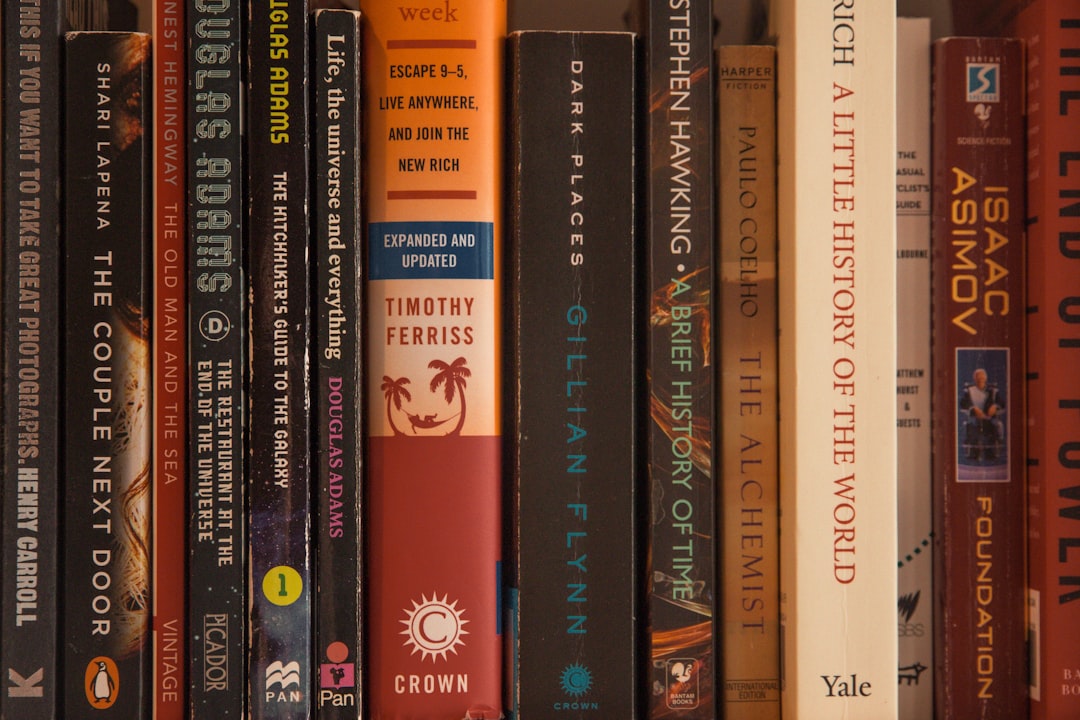
Photo by Stephen Phillips - Hostreviews.co.uk on Unsplash
There's a moment in every nostalgia-heavy novel where you realize the narrator has been lying. Not maliciously, perhaps. Not even intentionally. But lying nonetheless.
I experienced this recently while rereading Sally Rooney's "Beautiful World, Where Are You," specifically the email exchanges between Eileen and Alice. Both women constantly reframe their own pasts, interpreting old conversations through the lens of who they've become rather than who they were. The reader watches them revise their own histories in real-time, and it's unsettling in ways that matter.
This phenomenon has become one of the most interesting challenges in contemporary fiction: how do you write about memory when memory itself is inherently unreliable? Authors attempting to capture the feeling of "the way things were" keep stumbling into the same problem—they can't help but lie about it, because nostalgia is built on distortion.
The Selective Memory Problem
Writers often approach nostalgia as if it were a camera recording past events. But memory doesn't work that way. It works more like a Polaroid that's been sitting in the sun too long: faded, warped, bleached of certain details while other minor moments become inexplicably vivid.
Take Celeste Ng's "Our Missing Hearts," which reconstructs a near-future America through the fragmented memories of a child separated from his family. The novel's power comes entirely from how unreliable these memories are. The protagonist, Will, remembers certain details with crystalline clarity—the specific shade of his mother's lipstick, a particular song playing on the radio—while massive gaps exist around the actual emotional landscape of his childhood. He's not lying; he's just remembering what mattered to him in isolation, without context.
The problem becomes acute when authors try to pass selective memory off as objectivity. When you're writing a story that begins "I remember everything about that summer," you've essentially made a promise you can't possibly keep. Every author who's written a nostalgic coming-of-age story has wrestled with this contradiction. You want to capture the feeling of a moment, but feeling and fact are fundamentally different creatures.
The Narrator's Hidden Agenda
What makes nostalgia-driven fiction particularly tricky is that the narrator almost always has a stake in misremembering. Even unconsciously, they're crafting a mythology about their own past.
Consider Kazuo Ishiguro's "Never Let Me Go." Kathy, the narrator, tells us her life story with a peculiar sort of calm acceptance. Only gradually do readers realize that Kathy is constructing a narrative that allows her to process unprocessable trauma. She's not inventing false details so much as she's selecting which truths to emphasize and which to leave in shadow. It's a masterclass in how memory becomes autobiography becomes fiction.
This is why unreliable narrators work so effectively in memory-based fiction. The reader expects some distortion. They understand, on some level, that anyone telling you a story about their own life is editing for narrative coherence, emotional impact, and self-preservation.
The question that haunts the best of these novels is simple: does it matter that the past is being reframed if the emotional truth is preserved? Anthony Doerr explores this in "All the Light We Cannot See," where Marie-Laure and Werner's parallel narratives during World War II contradict each other constantly. Neither character is lying. They're both just seeing different truths from different angles, and the novel refuses to resolve which version is "correct."
The Nostalgia Trap
Authors who write about the past often discover they're writing love letters to it, whether they intended to or not. The act of remembering introduces a fundamental bias toward idealization.
Margaret Atwood has talked about this problem when discussing her own historical fiction. How do you write about a time period you didn't live through without either sanitizing it or oversaturating it with modern cynicism? The answer, apparently, is to acknowledge that you're doing both simultaneously. Your fiction about the past is always a conversation between then and now, filtered through your own consciousness in the present.
The most honest nostalgic fiction—the stuff that actually works—admits this contradiction openly. It shows the narrator actively mythologizing their own past. Zadie Smith's "White Teeth" does this by jumping between time periods and letting different characters contradict each other about shared memories. No single perspective dominates. Memory becomes something that's negotiated between multiple people, none of whom can claim absolute authority over what actually happened.
When False Memory Becomes the Point
The smartest contemporary authors have stopped fighting this problem and started using it as their primary tool. If memory is unreliable, why not build the entire fiction around that unreliability?
Kate Atkinson's "Life After Life" takes this to its logical extreme: the protagonist, Ursula, lives multiple versions of her life, remembering fragments of alternate selves. The novel asks whether any version of a life is more "real" than another, and whether memory of lives unlived might matter as much as lives actually lived. It's a science fiction premise deployed entirely through the mechanics of memory and forgetting.
Similarly, Hilary Mantel's "Wolf Hall" reconstructs Thomas Cromwell's life partly through what Cromwell himself remembers and partly through what the historical record shows. The reader watches these two sources of truth constantly friction against each other, creating a richly complex portrait of a man who is both a historical figure and an unknowable consciousness.
The future of nostalgic fiction probably involves more of this kind of transparency. Authors are learning that readers don't need perfect memory—they need honest uncertainty. We can tolerate narrators who misremember as long as those narrators are aware, at some level, that they're doing it.
Memory, after all, was always fiction. The only question is whether the author will admit it.
Comments (0)
No comments yet. Be the first to share your thoughts!
Sign in to join the conversation.