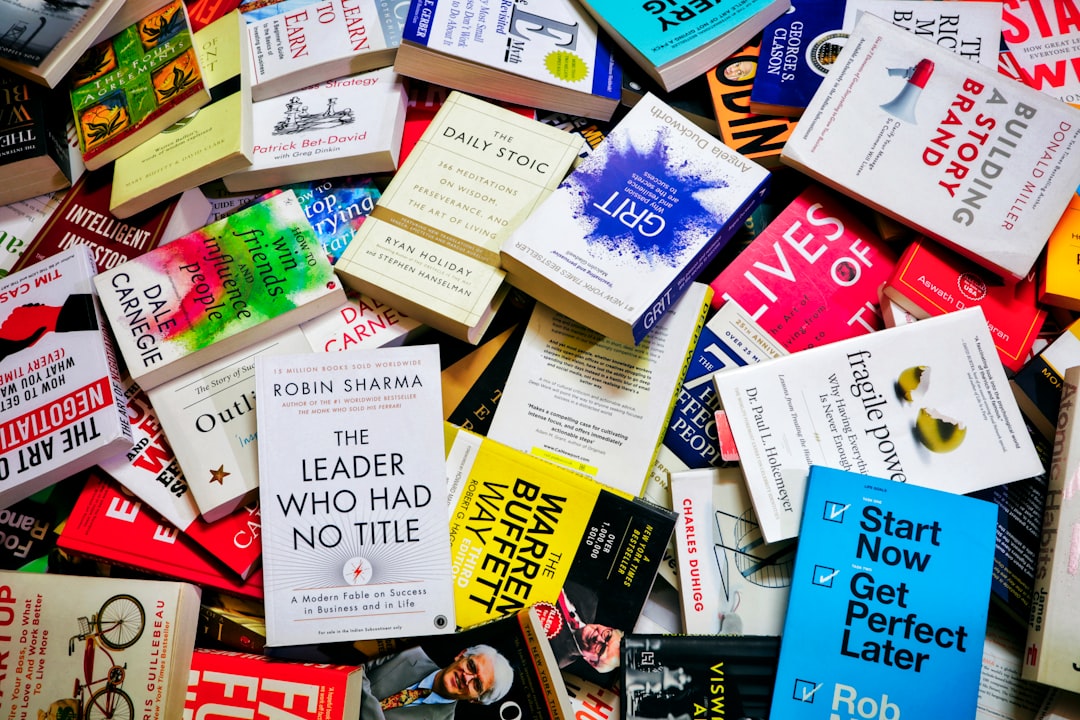
Photo by Shiromani Kant on Unsplash
Last Tuesday, I read a story about a man who hadn't spoken to his daughter in eleven years. It was 847 words long. By the time I reached the final sentence, I was crying at my kitchen table—actually crying—over a complete narrative arc that took me less time to finish than my morning commute.
That's flash fiction. And it's becoming something of a literary revolution that most readers have completely overlooked.
When Less Becomes Everything
Flash fiction occupies a strange territory in the publishing world. It's typically defined as any story under 1,500 words, though some editors draw the line at 1,000. Compare that to a novel's average length of 70,000-100,000 words, and you're looking at something that represents roughly 1-2% of a traditional book's real estate.
Yet within that constraint lives something fierce. Something unforgiving. Something that refuses to waste a single word.
Consider what happened to Brandon Sanderson when he wrote "Warbreaker." At 190,000 words, it's a massive fantasy epic with intricate magic systems, complex characters, and multiple plotlines. It's brilliant. But a flash fiction writer gets one scene. Maybe two if they're being generous with their word count. That writer must establish character, conflict, resolution, and emotional resonance in the space of a Twitter thread—an extremely long Twitter thread, but still.
This constraint breeds a different kind of creativity. When you have unlimited words, you can describe every room your character enters, every thought that crosses their mind, every backstory thread that connects to the main plot. When you have 800 words? You learn to make every single word do three jobs simultaneously.
The Psychology of the Punch
There's legitimate neuroscience behind why flash fiction hits so hard. Short narratives trigger a cognitive phenomenon researchers call "narrative compression." Our brains are wired to seek patterns and completion. When we encounter a beginning, middle, and end packed tightly together, our minds work overtime to fill in the gaps.
You're not just reading a story. You're actively reconstructing it, completing it, making it personal. The author gives you the skeleton; you provide the flesh.
Take Lydia Davis, a writer who's basically the Radiohead of flash fiction—experimental, demanding, and somehow perfect. Her story "Break It Down" is barely two pages. It's about a man calculating the cost of his affair to the minute. There's no dramatic confrontation, no action sequence, no climactic revelation. Yet in those 250 words, Davis excavates an entire relationship's worth of resentment, mathematics, and quiet desperation. Readers don't just understand what happened; they feel implicated in it.
This is why flash fiction often produces stronger emotional responses than longer works. A 90,000-word novel might move you. A 900-word story can demolish you because it removes all the scaffolding. There's nowhere to hide, nowhere to skim, nowhere to let your attention wander while the author establishes world-building details.
The Economics of Efficiency
From a writer's perspective, flash fiction represents something almost radical: the democratization of storytelling. You don't need a publishing deal, a massive advance, or months of revisions to tell a complete story.
Markets for flash fiction have exploded over the past decade. Magazines like Granta, The Sun, and Ploughshares all run flash sections. Online platforms like Wattpad, Medium, and dedicated flash fiction journals publish hundreds of stories monthly. Some pay nothing. Some pay $5 per word. A few elite markets pay $1 per word, which means a 1,000-word story could net a writer $1,000.
That's legitimately good money for something you could write in an afternoon.
But it's not really about the economics, is it? It's about the possibility. A person who's never published anything can write a brilliant story in a weekend and have it appear in a legitimate literary journal within months. Try doing that with a novel.
Why Readers Keep Missing Out
Here's the frustrating part: most readers never encounter flash fiction. It exists primarily in literary journals, small press anthologies, and online magazines that require active searching to find. If you're getting your stories from bestseller lists and major book chains, you'll probably never stumble across it.
This means thousands of incredible complete narratives exist in the literary ecosystem, undiscovered and underappreciated by the general reading public.
The short story has always occupied this strange middle ground—longer than poetry, shorter than novels, somehow considered less legitimate than both. And flash fiction? Flash fiction is the short story's scrappy younger sibling, the one everyone underestimates.
If you want to understand unreliable narration or how writers manipulate reader emotion, studying how unreliable narrators work provides essential context. Flash fiction writers use this technique constantly—they have to, because they can't afford to waste words on exposition.
The Invitation
The beauty of flash fiction is its radical accessibility. Not just to write—though that's true. But to read. You can consume a complete, satisfying narrative in the time it takes to drink your coffee. You can experience genuine literary innovation without committing to weeks of reading.
The man and his daughter I mentioned earlier? Their 847-word reconciliation affected me more deeply than some 500-page family sagas because the writer refused to let the story become anything other than essential.
That's the superpower we've been sleeping on. In a world obsessed with bigger, longer, more—sometimes the most radical act is saying: this is all I need. This is all you need. This moment, perfectly contained.
Now go find some flash fiction and prove me right.
Comments (0)
No comments yet. Be the first to share your thoughts!
Sign in to join the conversation.