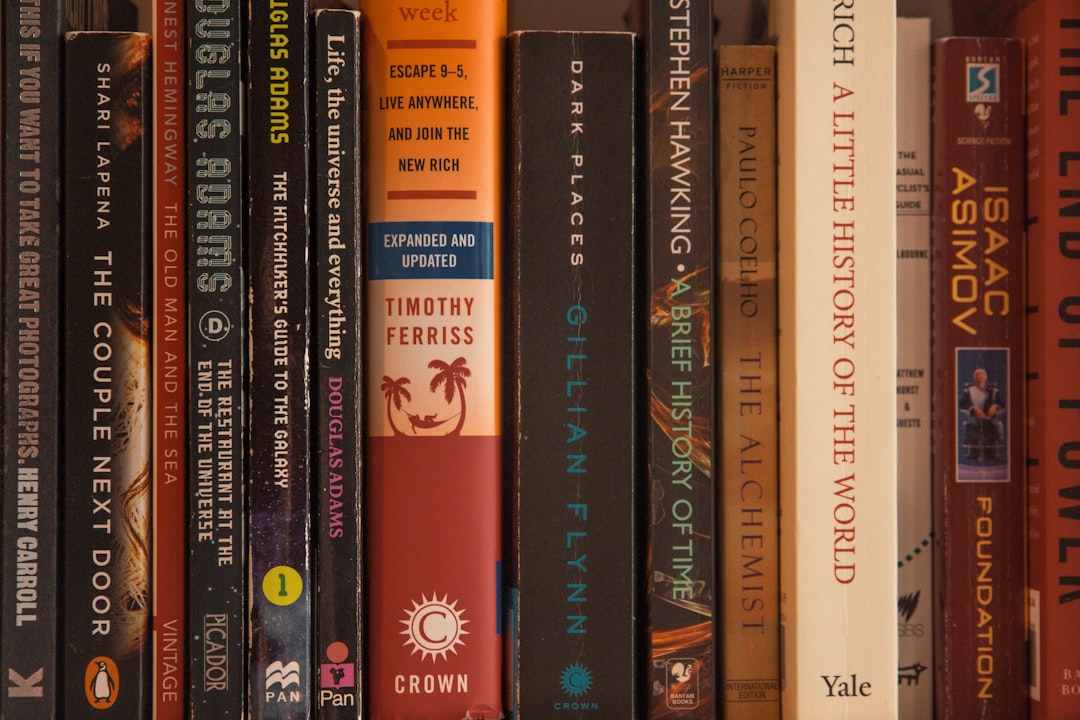
Photo by Stephen Phillips - Hostreviews.co.uk on Unsplash
When Letters Were Everything
Before email inboxes and text message threads, letters were the primary way humans documented their inner lives. So it makes perfect sense that some of the most psychologically complex novels ever written are told almost entirely through correspondence. Jane Austen's "Lady Susan" uses letters to reveal a morally ambiguous protagonist whose charm contradicts her ruthlessness. Samuel Richardson's "Pamela" introduced readers to a heroine's thoughts through her desperate written pleas. These weren't gimmicks—they were windows into consciousness before stream-of-consciousness writing was even a thing.
The epistolary novel dominated the 18th and early 19th centuries because it solved a problem writers still grapple with today: how do you show someone's authentic self? A letter is inherently performative, yet simultaneously confessional. The writer knows someone might read it, yet writes as if they won't. This contradiction creates tension that modern fiction desperately needs.
Why Readers Crave Authenticity Through Artifice
Here's the paradox that makes epistolary fiction so compelling: a letter is a constructed thing. Someone sat down, chose specific words, shaped their thoughts into language. It's not a raw stream of consciousness. And yet, we read letters differently than we read other narrative prose. We believe them.
This might be because letters feel like theft. When we read someone's letter, we're accessing something meant for another person, not us. There's no narrator standing between us and the writer. No authorial voice explaining motivations or describing scenes. Just words on a page, the closest thing fiction can offer to direct contact with a human mind.
Recent epistolary novels prove this format still works. "The Wager" by David Mametsch uses court-martial documents and letters to examine the unreliability of historical truth itself. "Remarkably Bright" by Catherine Silvers weaves email and traditional letters to show how the same events look completely different depending on who's describing them. These aren't experimental novels for the sake of experimentation—they're using the letter form because it's the best tool for their stories.
The Format That Forces Specificity
One reason epistolary fiction feels more authentic than conventionally narrated work is purely technical: letters demand specificity. When a character writes "I saw him yesterday at the market," we don't get flowery description. We get what mattered enough to mention. The character decides what's important. Not the author, not the reader. The character.
This creates a kind of honesty that's hard to fake. Compare a scene described by an omniscient narrator with the same scene described in a character's letter written weeks later. The letter version will feel more true, even if it's technically less detailed. Why? Because the character writing remembers what stuck with them, not what a writer calculated would be cinematically interesting.
Think about how differently you understand a situation when someone text you about it versus when you hear them describe it to someone else. The private message contains different information, reveals different priorities. This is what epistolary fiction exploits. Each letter is a private message we're never supposed to see, which paradoxically makes us trust it completely.
Modern Authors Bringing Letters Back From the Dead
Interestingly, epistolary fiction nearly disappeared in the 20th century, replaced by first-person narration and omniscient storytelling. But younger authors are resurrecing it precisely because those formats have become oversaturated and tired.
Annabel Monaghan's recent novel uses overlapping letters to show how the same love story plays out completely differently depending on whose perspective you're reading. It's not a gimmick. It's the only way to tell that particular story. Some writers have mixed formats—part letter, part diary entry, part text message—creating a fragmented portrait of characters from multiple angles. Others use letters as the entire narrative engine, with plot emerging purely from what characters choose to share.
The format also addresses something unreliable narrators attempt but often fail at: showing readers contradicting truths simultaneously. When two characters write letters about the same event, you don't wonder who's "really" telling the truth. You understand that both perspectives are valid. Both are real. Both are incomplete. This mirrors how we actually experience life—through fragmented reports from people we partially trust.
Why This Matters Right Now
We're living in an era of infinite narrative voices. Every person documents their life on social media. We curate, we perform, we construct. And we're exhausted by it. Ironically, reading carefully constructed letters from fictional characters might be exactly what we need. Letters are honest precisely because they're artificial. They acknowledge the performance while refusing to abandon the person underneath.
The epistolary novel is experiencing a quiet revival because it solves problems contemporary fiction struggles with. It creates intimacy without sentimentality. It reveals character through choice, not exposition. It allows for multiple truths to exist simultaneously. And most importantly, it feels human in a way that feels increasingly rare.
If you haven't read a letter-based novel recently, now's the perfect time. Pick one up. You'll be holding something that's part puzzle, part confession, part performance—and entirely alive.
Comments (0)
No comments yet. Be the first to share your thoughts!
Sign in to join the conversation.