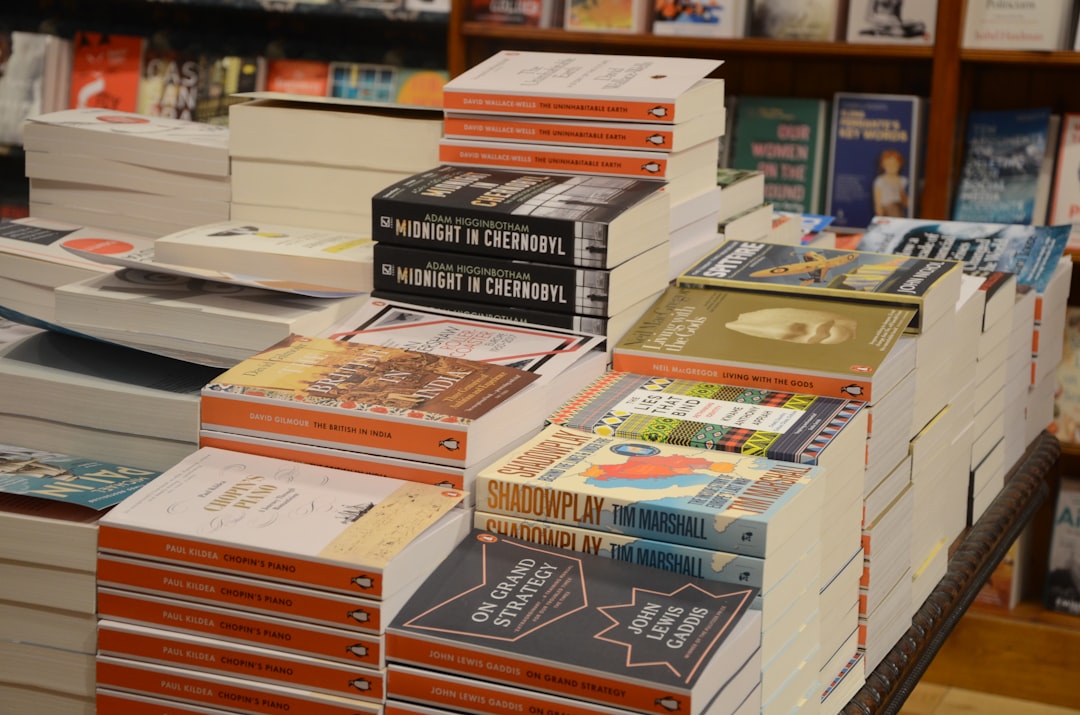
Photo by Geilan Malet-Bates on Unsplash
Stephen King finished "The Stand" in 1978 and immediately panicked. He'd just written the apocalyptic magnum opus that would define his career, and now he had to write something else. Anything else. The weight of expectation—both from publishers and readers—nearly crushed him before he'd written a single sentence of his next book. This wasn't writer's block in the traditional sense. It was something far more insidious: the sophomore curse.
Ask any author who's survived the jump from debut to second novel, and they'll tell you the same thing. The first book is written in obscurity. You can fail spectacularly, and only your beta readers and your therapist will know about it. The second book? That one comes with an audience, a track record, and the terrifying knowledge that people are actually paying attention.
The Psychology of High Stakes
Psychologically, the second novel represents something the first never could: proof that you weren't a one-hit wonder. Your debut might have been lightning in a bottle, a perfect storm of timing and luck that will never strike twice. Publishers know this. Readers know this. And worst of all, you know it too.
Consider what changed between manuscript and published book. Your first novel was completed in private. You revised it based on feedback from people who believed in you, not people who invested $50,000 in marketing. Then suddenly, it's out in the world. Reviews arrive—some glowing, some brutal. Sales numbers either meet expectations or disappoint. Readers debate your characters on Reddit. And now, with all this data sitting in your brain like an unwelcome passenger, you have to write another story.
The numbers bear this out. According to a 2019 survey of 312 published authors conducted by the Authors Guild, nearly 67% reported experiencing significantly more anxiety while writing their second novel compared to their first. That anxiety directly correlated with decreased productivity—authors took an average of 18 months longer to complete their sophomore effort.
When Success Becomes the Enemy
Paradoxically, massive success can be worse than modest success. When Colleen Hoover's "It Ends with Us" became a TikTok sensation and sold millions of copies, her second novel "It Starts with Us" (published years later) faced impossible expectations. She wasn't just writing a good book anymore—she was trying to replicate a phenomenon. The pressure to repeat lightning makes you write differently, more cautiously, trying to identify the secret sauce that made the first book work.
This overthinking is death to fiction. Stories need spontaneity, surprise, and a willingness to disappoint. When you're too aware of what made your first book succeed, you start writing by formula. You include "the thing readers loved" even when it doesn't serve the story. You avoid risks because risk might alienate your newly acquired fanbase.
Conversely, some authors swing hard in the opposite direction. They decide their second book must be completely different, so different that their readers don't recognize it. They abandon what made them distinct in the first place, chasing some imaginary "legitimacy" or "literary credibility." This rarely works either.
The Financial Reality Nobody Discusses
There's also a brutally practical element to sophomore slump. Your first novel was written while you had another job, or while living lean, or both. You had nothing to lose financially. The second novel is often written with expectations of income—expectations placed on you by agents, publishers, and sometimes a family depending on you to produce commercial fiction on schedule.
Write for money instead of passion, and the words know it. They become stiff. Self-conscious. You find yourself padding scenes with marketable content rather than organic narrative. The joy drains out of the process, replaced by a constant mental calculation: "Will this scene sell copies?"
This is why some successful debuts come from genuinely unexpected places. Rainbow Rowell wrote "Eleanor & Park" while working at a newspaper, treating it as a side project. Brandon Sanderson self-published before his breakthrough. Many debut authors were simply writing the story they needed to write, not the story they thought would sell.
How the Best Authors Broke Free
So how do you escape the sophomore curse? The authors who managed it share a surprising common trait: they acknowledged the pressure and then deliberately ignored it.
Neil Gaiman has talked extensively about writing "American Gods" after the success of "Neverwhere." He made a conscious decision to write the book he wanted to write, not the book he thought would capitalize on his newfound fame. It was a risk. It was also brilliant. Margaret Atwood wrote "The Edible Woman," then "Surfacing," then eventually "The Handmaid's Tale"—each book different from the last because she refused to be trapped by genre expectations.
Practical tactics help too. Some authors write their second book under a different name to sever the psychological connection. Others deliberately write in a new genre to force themselves out of formula. A few have taken multi-year breaks between books, letting the weight of expectations settle and fade.
The most consistent advice from authors who've beaten the curse: write drunk (or in flow state), edit sober. Don't let the editor's voice—that internalized voice of expectation and commercialism—into the first draft. Get the messy, authentic story out first. The market analysis comes later.
The Real Truth About Second Novels
Here's what almost nobody tells new authors: your second book doesn't need to be as good as your first. It needs to be different. It needs to be honest. It needs to show that you're not a fluke, which means showing that you have more than one story in you—not a better version of the same story, but an entirely different one.
If you're working on a second novel right now, you're likely experiencing some version of this curse. The doubt. The comparison. The sense that somehow, everyone's watching and judging. They might be. That's actually okay. The books that survive the sophomore curse aren't the ones written to please an audience. They're the ones written because the author had no choice—because the story was so real, so urgent, so necessary that commercial viability became irrelevant.
Write like nobody's reading. Publish like everybody is. And remember that the second act of any story is always the hardest part to write—whether it's your career or your manuscript. But that's also where the real magic happens. You've proven you can finish one book. Now prove you can finish two. And that proof, that persistence, matters more than any sales figure ever will.
For more on the psychological weight authors carry into their work, check out The Unreliable Narrator Trap: Why Authors Keep Getting Caught Lying to Readers—a deep look at how writer anxiety influences storytelling choices.
Comments (0)
No comments yet. Be the first to share your thoughts!
Sign in to join the conversation.