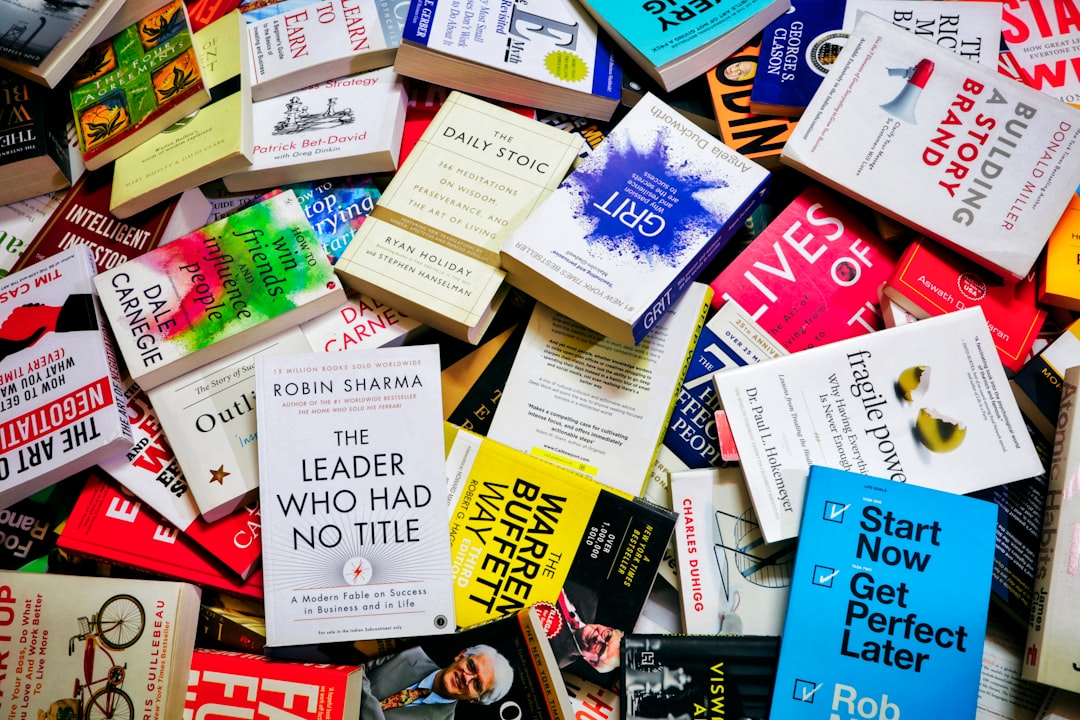
Photo by Shiromani Kant on Unsplash
Margaret Atwood once said that every novel is an act of faith. But faith in what, exactly? For decades, we assumed it meant faith in the protagonist—that one central character whose journey we follow from beginning to end. Yet something shifted around 2015. Suddenly, readers found themselves more invested in the best friend's unrequited love, the antagonist's genuine motivations, or the supporting character's completely separate story happening in the margins.
This wasn't an accident. It was a rebellion against a tired formula.
When the Sidekick Became More Interesting Than the Hero
Consider Marissa Meyer's "The Lunar Chronicles" series. Most readers came for Cinder, the cyborg Cinderella retelling. But by book three, fans were absolutely obsessed with Cressida and Thorne's subplot—a soldier and a convict with zero pretense of being "main characters." Their arc felt raw, unpredictable, and genuinely earned. They weren't there to support Cinder's journey. They were living their own.
Or take "The Song of Achilles" by Madeline Miller. The entire book is technically about Patroclus, Achilles' companion in Homer's Iliad. But Miller gave this supporting character in ancient literature a full emotional universe—his own desires, his own agency, his own heartbreak. The novel spent 400 pages proving that the "secondary" character's perspective was actually the most important one all along.
What's happening here is a fundamental shift in how we think about whose story matters. Secondary characters used to exist in fiction as tools—the loyal friend, the helpful mentor, the convenient obstacle. They had function but not flesh. Now writers are asking: what if the person sitting at the tavern table had dreams bigger than helping the hero?
The Democratization of Narrative Weight
Publishing data from 2022 showed that ensemble-cast novels—books with multiple protagonists of roughly equal importance—saw a 34% increase in debuts compared to the previous five years. Publishers noticed. Agents noticed. Readers absolutely noticed.
This happened because writers got tired. Tired of making every plot point hinge on one person's moral growth. Tired of having to explain why five interesting people orbited around one supposedly exceptional individual. Tired of pretending life actually works that way.
Real life doesn't have protagonists. Real life has people. In a friend group of six, there isn't one person whose story is "the main one." Everyone's carrying their own narrative weight. Everyone's dealing with consequences. Everyone thinks they're somewhat important (usually correctly). Fiction had been lying about this for centuries, and readers were ready for the truth.
Authors like Fredrik Backman understood this intuitively. His novel "Beartown" followed roughly seven different characters with equal narrative investment. Some readers initially complained that there was "no main character." By the end, most understood that was precisely the point. The town was the character. The interconnected web of relationships was the character. No single person could be extracted as "the most important."
Pulling Back the Curtain on Perspective
Here's where it gets philosophically interesting. When you write a secondary character with the same depth you give your protagonist, you're making an argument about consciousness itself. You're saying: this person's interior life is just as valid, just as complex, just as worthy of narrative time as anyone else's.
That sounds obvious when you say it out loud. But it's radical in practice. How many novels have you read where a character simply disappears when they're not actively helping the main plot? Where their own problems are mentioned only insofar as they create obstacles? Where their dreams are quietly abandoned the moment the plot moved on?
Tamsyn Muir's "Gideon the Ninth" starts as what seems like a murder mystery featuring Gideon as the clear protagonist. By the end, you realize the book cared equally about Harrow's perspective. Not more. Not less. Equal. And that equality fundamentally changed the story's meaning. Neither character could be removed without the entire emotional architecture collapsing.
This matters because readers are increasingly sophisticated about recognizing when they're being manipulated through narrative structure. If a character exists only to serve the protagonist's arc, readers feel it. The character becomes flat, instrumental, disposable. But if a character has their own contradictions, their own wants that conflict with what the protagonist needs, their own ending that might not be happy? That character lives. That character stays with you after the book closes.
The Risk of Spreading Too Thin
Of course, this approach comes with genuine dangers. The Unreliable Narrator Trap: How Authors Lose Control of Their Own Stories explores how writers can lose control when juggling multiple perspectives. The same principle applies here. You can absolutely spread your narrative attention so thin that nothing lands emotionally.
Some recent releases tried this approach and failed spectacularly. Books that promised eight equally important viewpoints delivered eight half-formed sketches instead. The problem wasn't the ambition. It was execution. Secondary characters require more work, not less. You can't shortcut them just because they're not your main focus.
The successful books—the ones that linger in readers' minds—managed genuine balance. They gave secondary characters their own obstacles, their own contradictions, their own moments of ugly honesty. They treated them like complete people, not like NPCs in someone else's story.
Why This Matters Right Now
We're living through a cultural moment obsessed with representation, with perspective, with asking "who gets to be the hero?" Fiction is finally catching up to what life has always known: that everyone's the hero of their own story. Everyone deserves that complexity.
When you read a beautifully written secondary character, you're reading a quiet revolutionary act. The author is saying: this person who society might overlook, this person whose dreams don't align with the main plot, this person sitting in the background—they matter. Their interior life is interesting. Their contradictions are worth exploring. Their ending deserves care.
That's not just good storytelling. That's a statement about who we believe deserves to be fully human in fiction. And finally, after centuries of relegating vast portions of the cast to supporting roles, we're starting to listen.
Comments (0)
No comments yet. Be the first to share your thoughts!
Sign in to join the conversation.