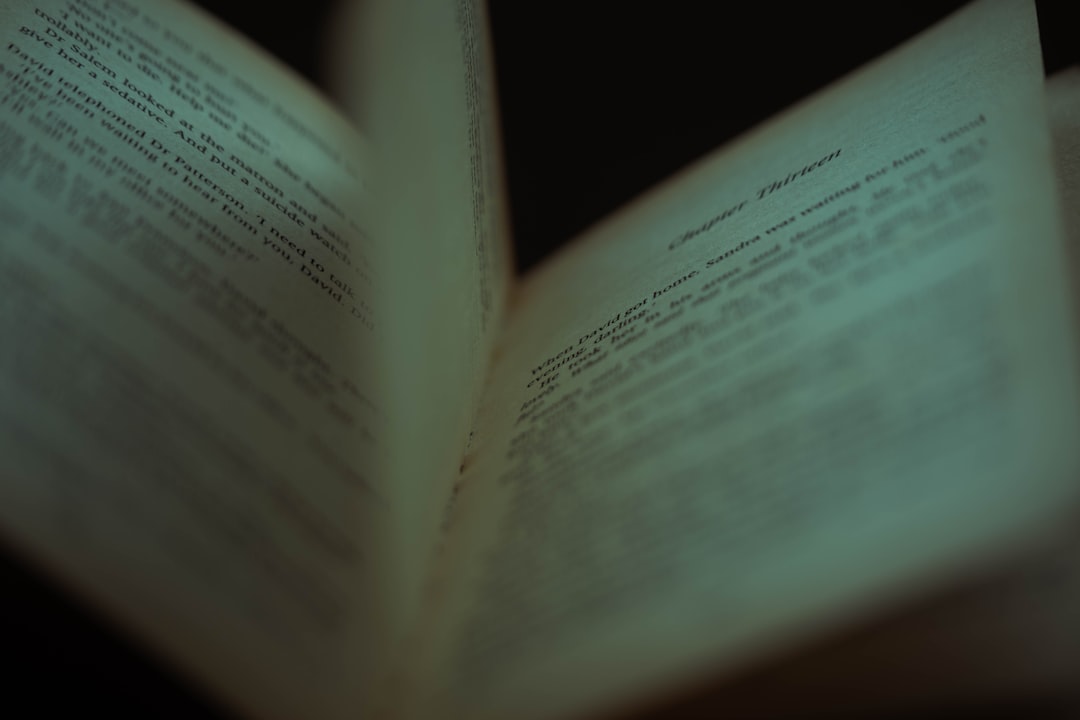
Photo by godwin leones on Unsplash
When you think of modern fiction, you probably picture a narrator's voice guiding you through a story. But somewhere around 2019, something curious started happening in publishing. Authors began dusting off an old technique that should have stayed buried in Victorian parlors—and it worked spectacularly. Epistolary fiction, the art of telling a story entirely through letters, emails, diary entries, and messages, made a comeback so strong that you can barely browse a bookstore without tripping over a thriller written as text conversations or a romance told through handwritten notes.
The thing is, this format feels almost radical in our current moment. We live in an age of omniscient narrators and tight third-person perspectives. Yet somehow, reading a story assembled from fragmented correspondence creates a type of tension and intimacy that traditional narrative structures struggle to match. It's weird. It shouldn't work. And yet it absolutely does.
Why Letters Feel More Real Than Reality
Before we talk about why this format is having its moment, let's understand what makes it so magnetic. When you read someone's private letter or text message, you're not getting filtered information. You're getting raw thought. You're witnessing someone at their most unguarded.
Consider the success of *The Thursday Murder Club* by Richard Osman, which incorporates letters, emails, and documents alongside narrative sections. The letter from one character to another doesn't just convey plot information—it reveals desperation, humor, vulnerability, and hope all at once. A traditional paragraph of exposition would announce these things. A letter shows them. The distinction matters more than you'd think.
This is actually rooted in psychology. Research on communication shows that we process handwritten or personally written content as more authentic and credible than third-party narration. When a character writes to you directly, your brain categorizes it differently. It feels like evidence rather than story. And in an era where readers are increasingly skeptical of traditional authority structures—including the authority of an all-knowing narrator—this matters.
The epistolary format also creates what literary theorists call "narrative distance." There's space between the reader and the truth. You're reading someone's interpretation of events, which means you're doing interpretive work yourself. You're actively deciding what you believe. This engagement is addictive.
The Modern Twist: From Quills to DMs
Bram Stoker wrote *Dracula* as a series of letters and diary entries in 1897. For over a century, that format remained largely confined to historical fiction and Gothic literature. Then smartphones happened. And suddenly, epistolary fiction had new tools.
Authors realized that emails and text messages could do what letters did—but faster. More urgently. The choppy rhythm of text-speak creates its own momentum. A message that says "Call me. Please" carries different weight than the same sentiment in a letter. The immediacy is terrifying.
Take *Reportedly* (2022), which uses news articles, interviews, and transcripts to tell its story. Or consider how many thriller writers now use group chat threads as plot devices. The fragmentary nature of digital communication mirrors the fragmented way we actually experience crisis in real life. You don't get the full picture all at once. You get pieces. Contradictions. Gaps where crucial information is missing.
Publishers have noticed. According to data from Goodreads, searches for "epistolary novels" increased 340% between 2018 and 2023. That's not a natural fluctuation. That's a trend.
The Unreliability Problem (And Why It's Perfect)
Here's where things get interesting. Because epistolary fiction is built on individual perspectives, it naturally accommodates unreliable narrators better than most formats. Each letter-writer has their own bias, their own secrets, their own version of truth.
In a traditional narrative, an unreliable narrator sometimes reads as a gimmick. The author has to keep winking at you, dropping hints that something's off. But in epistolary fiction, multiple perspectives create unreliability naturally. Person A writes one account. Person B writes another. They contradict. You have to figure out what actually happened. If you want to explore this concept further, The Unreliable Narrator's Comeback breaks down exactly why modern readers are increasingly drawn to narrators we can't trust.
This format also solves a problem that plagues a lot of contemporary fiction. Many readers complain about exposition—those moments where a character explains backstory to another character who presumably already knows it. It's awkward. Artificial. But in epistolary fiction, exposition comes naturally. If you're writing a letter to someone unfamiliar with your situation, you explain yourself. It feels organic.
The Challenges Authors Actually Face
Of course, nothing is perfect. Epistolary fiction is genuinely difficult to execute.
The biggest challenge is pacing. You can't control how quickly a reader processes information when it's fragmented. Some readers skip around. Some read emails out of order. Some get frustrated that they have to piece together what happened instead of being told directly. This is intentional on the author's part, but it's risky. You're asking readers to work, and not everyone wants to.
Action sequences are also notoriously difficult in this format. Try writing a thrilling car chase as a series of text messages. Now try making it suspenseful. See the problem? Most epistolary novels handle this by including immediate, visceral letters written right after the action—creating a sense of raw urgency that mirrors the event itself.
There's also the matter of voice. If your novel contains letters from five different characters, each one needs a distinct voice. This isn't optional. Readers will notice if all your letters sound the same. That means each character needs their own vocabulary, syntax, concerns, and even punctuation habits. It's exhausting. It's also why the best epistolary fiction often features two or three main letter-writers rather than a dozen.
What This Format Can Do That Others Can't
Ultimately, epistolary fiction persists because it offers something genuine. It creates intimacy without requiring you to be inside someone's head. You're reading their words, not their thoughts. The distinction feels important in an era of constant vulnerability exposure and oversharing. There's something respectful about a letter format—you're seeing what someone chose to reveal, not what an author chose to expose.
The resurgence of epistolary fiction isn't nostalgia. It's not writers being precious about old-fashioned techniques. It's writers discovering that fragmentary, personal, contradictory evidence-based storytelling feels more honest than polished narrative omniscience. In a world drowning in filtered content and carefully curated presentations, a novel told through letters—messy, immediate, real—is actually radical.
That's why this format isn't going anywhere. Until we stop using email, until we stop texting, until we stop leaving digital traces of our private selves, writers will find ways to weaponize those traces as fiction. And readers will keep coming back for more.
Comments (0)
No comments yet. Be the first to share your thoughts!
Sign in to join the conversation.