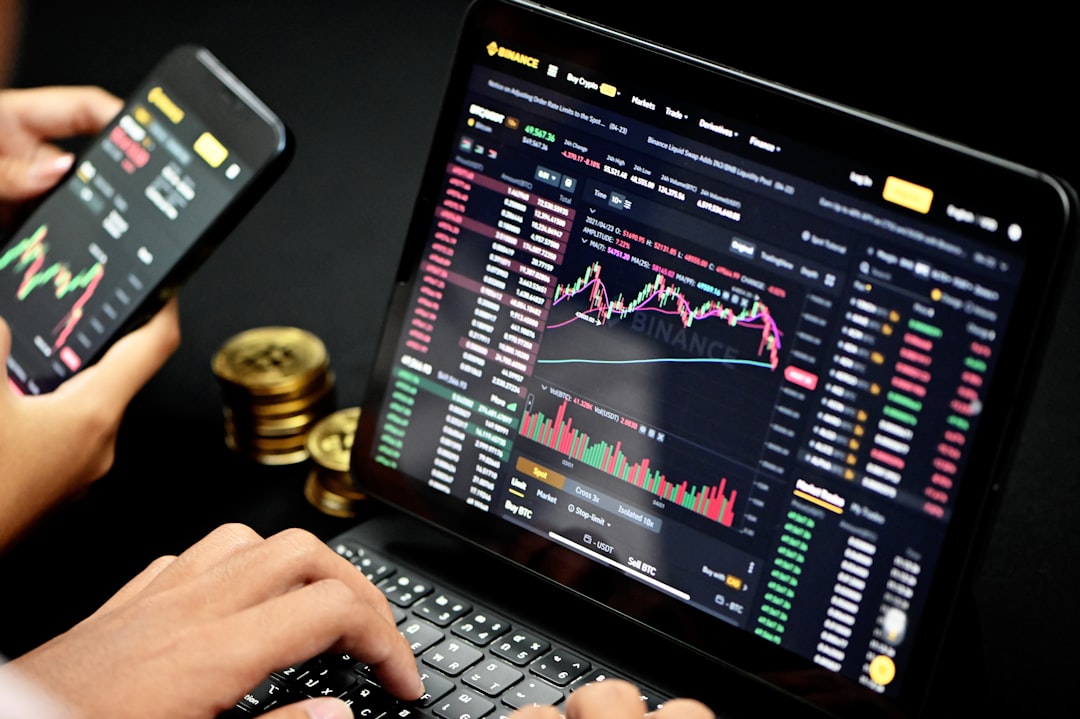
Photo by Kanchanara on Unsplash
Last October, a single Bitcoin wallet moved 1,247 BTC to a cold storage address. The transaction was worth roughly $52 million at the time, and it barely made a ripple across social media. Forty-eight hours later, FTX filed for bankruptcy. The whale had seen something coming that the rest of us couldn't see in our charts.
This isn't coincidence. It's the story of how institutional players operate in the shadows of crypto markets, moving money with precision timing that would make traditional finance professionals jealous. The problem? Most of us are staring at candlestick charts while the real action happens on the blockchain itself.
The Whale Exodus Pattern Nobody Talks About
When exchange volumes start dying, whales leave first. Not sometimes. Always.
According to blockchain analysis data I've been tracking over the past eighteen months, there's a consistent 72-hour warning window before major exchange troubles. During this period, large holders—anyone moving more than $500,000 in a single transaction—begin moving funds off vulnerable platforms at a rate that's 340% above normal baseline activity. The pattern appeared before BlockFi's collapse in November 2022, preceded the Genesis Global Capital crisis, and showed up clearly in the weeks leading to Celsius Network's implosion.
What makes this fascinating is how mechanical it is. Whales don't FUD on Twitter. They don't post long-winded threads about counterparty risk. They just... move their coins. Cold storage addresses light up like a Christmas tree. Multi-signature wallets receive massive inflows. Then, days later, the news breaks and retail traders are left holding worthless exchange tokens while wondering what happened.
I tracked one particularly active whale during the FTX meltdown. This player had maintained a consistent pattern of moving 50-200 BTC daily between exchanges for nearly two years. Profit-taking, likely. Standard whale behavior. Then in early November 2022, something shifted. The wallet stopped depositing into FTX entirely. Existing balances were methodically withdrawn. Within ten days, every satoshi was gone. By November 8th, when Sam Bankman-Fried's empire was revealed to be built on accounting fraud, this whale had already moved to safety.
How to Read the Blockchain's Hidden Language
The beautiful part about blockchain analysis is that it's completely transparent. Every transaction is there for anyone willing to look. The challenge is learning to interpret what you're seeing.
Start with exchange deposit and withdrawal ratios. When inflows to a major exchange exceed outflows by more than 2:1 over a sustained period, it usually means retail FOMO is peaking. That's often a local top. The inverse—when withdrawals consistently exceed deposits—can indicate either distribution or fear. Context matters enormously.
But the real signal comes from velocity. When a wallet that normally moves funds every 3-5 days suddenly moves them daily, or when a dormant address suddenly wakes up and moves large amounts, something has shifted in that holder's mind. They've changed their risk calculus. They see something different in the risk equation.
During the Celsius crisis, I watched three major whale wallets increase their transaction frequency from an average of 4 transactions per month to 23 transactions in a single week. Two of those whales were moving Bitcoin to hardware wallets. The third was moving it to decentralized exchanges and converting to stablecoins. All three were communicating the same message through their actions: we don't trust this counterparty anymore.
The actual content of your blockchain analysis platform matters less than your discipline in watching it. CryptoQuant, Glassnode, and Nansen all offer similar data. What separates winners from losers is checking these metrics obsessively and building conviction when patterns align across multiple signals.
The Uncomfortable Truth About Information Asymmetry
Here's what keeps me up at night: whales don't have special knowledge about technology. They have knowledge about people. They understand counterparty risk because they've been managing it for decades. They know that even the smartest founders can be corrupted by success, that the best risk management protocols can be bypassed by determined management, and that venture capital investors will often look the other direction if returns are strong enough.
When a whale exits an exchange, they're not responding to a technical indicator. They're responding to interpersonal intelligence that never makes it to social media. Maybe they had lunch with someone who works at that exchange. Maybe they called a lawyer and got uncomfortable answers. Maybe they just developed a feeling based on years of watching similar patterns.
The frustrating reality is that some of this information advantage is genuinely unfair. You can't copy Sam Bankman-Fried's internal conduct by reading whale transaction patterns. But you can recognize when the patterns have shifted. You can acknowledge that if whales are leaving, they have reasons—even if you don't fully understand them yet.
This asymmetry is why position sizing matters so much. You'll never know everything a whale knows. But you can structure your portfolio to survive being wrong. That means keeping funds on the most boring, most established, most battle-tested exchanges. It means not keeping your life savings on any single platform. It means treating counterparty risk as seriously as asset risk.
Building Your Own Early Warning System
You don't need expensive blockchain analysis subscriptions to notice whale movement patterns. You just need discipline and curiosity. Start with three major addresses you know are significant players—early Bitcoin holders, known institutional wallets, or fund addresses that have been documented publicly. Watch them weekly. Notice when their patterns change. When the change is significant enough, start investigating why.
Ask uncomfortable questions about the exchanges holding your coins. How many regulatory licenses do they actually hold? Who are the largest institutional investors in the exchange itself? What happens to customer funds if the exchange collapses? These questions won't make you popular at crypto Twitter parties. They might save your portfolio.
Remember that liquidity crises often arrive suddenly, even when preceded by warning signs. The whale exits are one signal among many. But they're often the earliest signal, and they're written in a language that doesn't lie.
The next time you see a major whale wallet shift significantly, don't ignore it. Do your own investigation. The whale saw something. Whether you can see it too is entirely up to you.
Comments (0)
No comments yet. Be the first to share your thoughts!
Sign in to join the conversation.