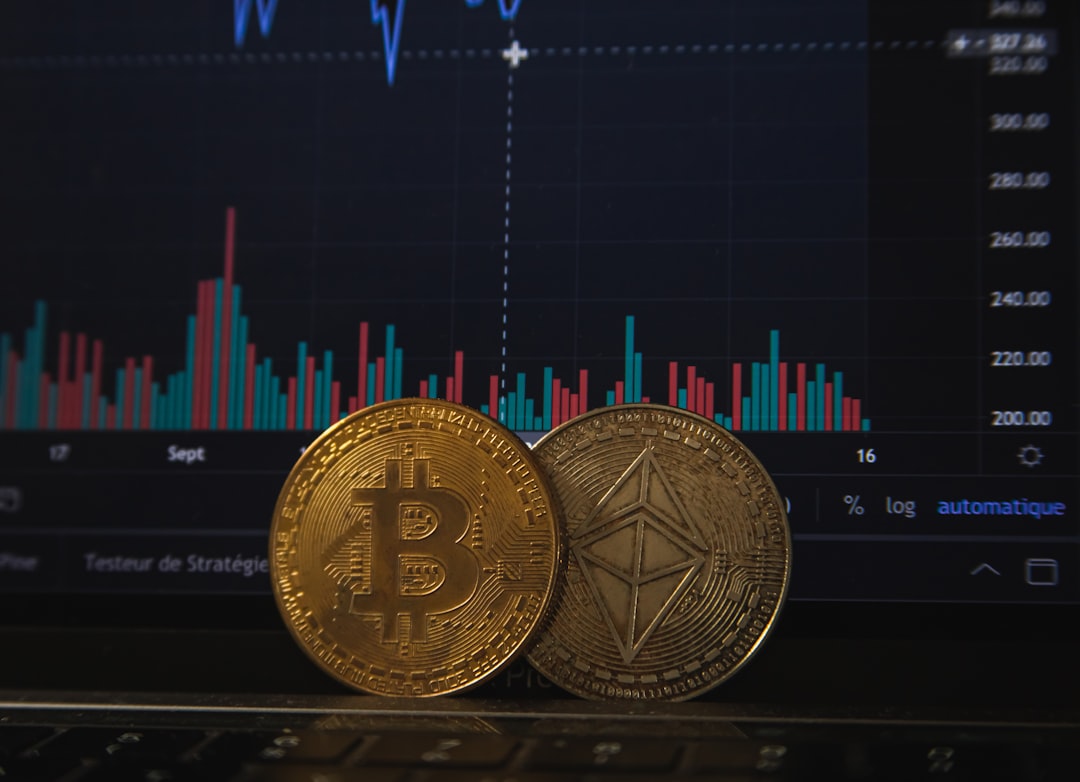
Photo by Pierre Borthiry - Peiobty on Unsplash
Last January, a developer named Casey Rodarmor quietly released something called Ordinals—a way to permanently inscribe data onto the Bitcoin blockchain. Most people ignored it. By November 2023, people were paying $500 just to mint a single inscription. Bitcoin's mempool flooded. Transaction fees skyrocketed. And suddenly, everyone wanted to know: what the hell happened?
The answer reveals something uncomfortable about Bitcoin's future. And it's already reshaping how miners, whales, and developers think about the network.
The Ordinal Theory Explained: Why Bitcoin Became a Canvas
For fifteen years, Bitcoin did one thing exceptionally well: secure transactions. Every block, miners verify payments. Every transaction moves value from one wallet to another. Clean. Simple. Boring.
Ordinals flip this on its head. Instead of just recording transactions, Ordinals assign unique serial numbers to individual satoshis—the smallest unit of Bitcoin. Then you can attach data to those satoshis. Text. Images. Entire files. This data lives forever on the blockchain because it's literally embedded in Bitcoin's base layer.
Think of it like this: before Ordinals, Bitcoin was a mailbox. You could only send letters. Ordinals turned it into a museum wall where you can hang pictures, and those pictures stay there permanently because they're carved into the wall itself.
The technical innovation matters less than what people actually did with it. They minted NFTs directly onto Bitcoin. Digital art, memes, profile pictures—all stored permanently on the most secure network in human history. Within months, over 100 million inscriptions existed on the chain. Over $1 billion traded hands.
The Numbers Are Staggering (And Frankly, Concerning)
By mid-2024, Ordinals inscriptions consumed roughly 40-50% of Bitcoin's blockspace. Let that sink in. Half of Bitcoin's available transaction capacity was being used to store images and text instead of moving money.
A single Bored Ape inscription sold for 10 Bitcoin in March 2024—roughly $400,000 at the time. Meanwhile, regular Bitcoin users watched their transaction fees double, then triple. A standard payment that cost $2 suddenly cost $15. For moving actual money.
The Bitcoin community fractured almost immediately. On one side: maximalists who saw Ordinals as feature, not bug. They argued that if people voluntarily paid premium prices to inscribe data, the market was working correctly. Miners were earning more. The network was more valuable. On the other side: traditionalists who saw it as network spam. They pointed out that Bitcoin was literally created to move money cheaply. Ordinals seemed to undermine that entire mission.
Joyce Wang, a researcher at the Bitcoin Policy Institute, put it bluntly: "We're watching a fundamental debate play out in real-time about what Bitcoin should be. A currency? A settlement layer? A storage system? The answer determines Bitcoin's entire future."
Why Whales Actually Love Ordinals (Even If Most Bitcoin Users Don't)
Here's what's interesting from a game theory perspective. Wealthy participants—the whales who actually move price—have strong incentives to push Ordinals adoption.
Bitcoin originally valued itself on being "digital gold." Scarce. Secure. Unchangeable. But gold doesn't do anything. It just sits there. Ordinals gave Bitcoin a second value proposition: it could be a permanent storage medium. That attracted a completely different buyer class—artists, collectors, people building on Bitcoin who previously ignored it.
A whale who bought Bitcoin when it was $200 doesn't benefit much from new users trying to pay coffee with it. Those users compete for blockspace, drive up fees, and actually make Bitcoin less useful as currency. But a whale who can afford $500 transaction fees to inscribe digital art? They benefit enormously. Higher fees mean higher Bitcoin valuations (in theory). More prestige uses mean more institutional interest. More mystique attracts more money.
It's a wealth concentration mechanism dressed up as innovation.
The Hidden Problem Nobody Talks About
This gets darker. Ordinals created an unexpected vector for similar schemes. If you can inscribe images, you can inscribe executable code. You can inscribe malware. You can inscribe information that some jurisdictions consider illegal.
A researcher discovered that someone had inscribed the source code for child sexual abuse material directly onto the Bitcoin blockchain. It's there now. Forever. On 10,000+ nodes worldwide. You can't delete it. Bitcoin's immutability feature—once a strength—becomes a burden when the data is genuinely harmful.
This connects to broader concerns about how cryptocurrency's permanence and privacy features create jurisdictional nightmares. Governments don't love the idea that anyone can inscribe anything onto a globally distributed ledger.
What Happens Next?
The Ordinals debate won't resolve quickly. Bitcoin can't hard fork without massive community disagreement. Developers can't prevent inscriptions without fundamentally changing how the protocol works. So we're stuck in this weird limbo where Bitcoin simultaneously serves as both a payment network and a permanent data storage system.
The most likely outcome? Bitcoin continues bifurcating into two separate communities. One focuses on large-value settlement (like international bank transfers). One focuses on cultural and artistic uses. The Lightning Network handles small payments. Ordinals handle permanent storage.
Whether that's Bitcoin's brilliant future or its slow decline depends entirely on whether you think a technology should do one thing exceptionally well, or many things adequately.
Comments (0)
No comments yet. Be the first to share your thoughts!
Sign in to join the conversation.