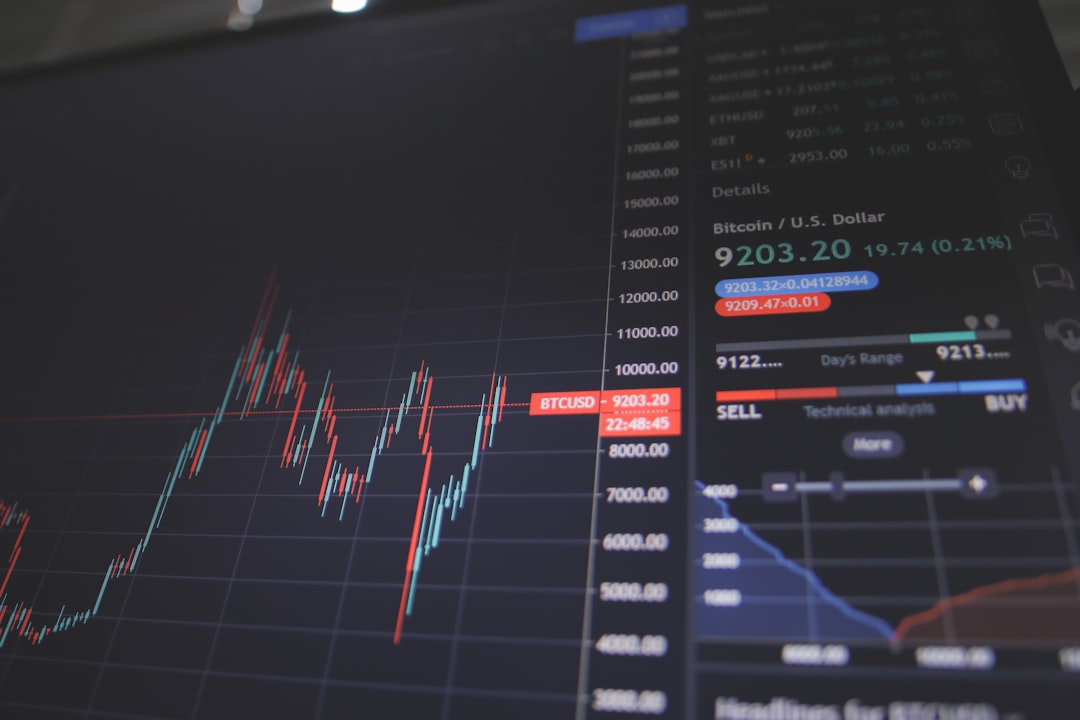
Photo by Nick Chong on Unsplash
When you picture a Bitcoin miner, you probably imagine some basement-dwelling enthusiast with a rig humming away in the corner. That image is dead. Today's mining operations look more like power plants than hobbyist setups, and the most successful ones are doing something unexpected: they're becoming landlords.
Core Scientific, one of the largest public mining companies in North America, operates over 80,000 mining machines across multiple facilities. But here's the thing—they don't just mine Bitcoin anymore. They're renting out excess power and infrastructure to other crypto companies, traditional tech firms, and even AI startups. This isn't an accident. It's a calculated pivot driven by razor-thin margins and an industry searching for stability.
The Power Problem That Created an Opportunity
Bitcoin mining is fundamentally a game of efficiency. Your profit depends on the cost of electricity divided by the computational power you're running. As Bitcoin's price has become more volatile, miners have learned a hard lesson: you can't survive on mining revenue alone when the price of Bitcoin can drop 50% in a month.
This is why large-scale mining operations started securing long-term power contracts. A facility like Riot Platforms' 750-megawatt operation in Texas locks in electricity rates years in advance. But here's the kicker—these operations often pull way less power than they're contracted to purchase. Why? Because they need to account for volatility. When Bitcoin prices crash, they can't justify running every single machine.
That unused power? It's money sitting on the table. So miners did what any business would do: they monetized it.
From Miners to Infrastructure Providers
Marathon Digital Holdings made headlines when they announced they'd leased space and power to other cryptocurrency operations. But the real sophistication came from companies like Hut 8, which began offering what amounts to colocation services—you bring your hardware, they provide the power, cooling, and security.
The economics are compelling. If a miner has contracted for 100 megawatts but only needs 70 for Bitcoin mining, they can lease that remaining 30 megawatts at a premium. A typical colocation rate in crypto-friendly jurisdictions runs between $0.05 and $0.08 per kilowatt-hour. That's significant recurring revenue with minimal marginal cost.
But the real transformation is happening beyond crypto. AI companies are now some of the biggest customers for mining infrastructure. When NVIDIA GPUs became scarce, AI startups started looking for facilities that could handle massive power draws and cooling requirements. Guess what Bitcoin mines already had? Exactly that infrastructure, proven and tested.
Why This Threatens Mining's Original Vision
There's an irony here that deserves attention. Bitcoin was supposed to democratize finance and power away from centralized authorities. Yet the industry's economic evolution is concentrating power (literally) in the hands of a shrinking number of large operators.
A solo miner in 2024 has almost zero chance of profitability. The network's difficulty adjustment ensures that as hash rate increases, individual miners earn proportionally less. Most small operations either quit or join mining pools. The pools, in turn, are often operated by the largest firms. It's consolidation disguised as community.
Now these mega-operators are becoming infrastructure providers to AI companies, traditional data centers, and other industries. They're no longer purely crypto businesses. They're energy companies first, Bitcoin operations second. This has fascinating implications for how the industry might be regulated—are they crypto companies or utilities? The answer increasingly matters.
The Real Question: Is This Sustainable?
Whether this model actually works long-term depends on several factors. First, Bitcoin's price needs to stay high enough that mining remains viable. If BTC crashes below $30,000 and stays there, even the most efficient operations will struggle. The colocation revenue helps, but it doesn't completely decouple miners from Bitcoin's price.
Second, power costs are rising in many jurisdictions. Texas, the new mining capital of North America, benefited from deregulation and cheap natural gas. But those rates are changing. Miners in other regions are watching their electricity costs climb, making the infrastructure model less profitable.
Third—and this is the part most people miss—regulatory pressure is mounting. As Bitcoin mining operations become regional power consumers, local governments are paying attention. Some jurisdictions have already implemented taxes or restrictions on crypto mining. If you're betting your business on long-term power contracts in a politically uncertain environment, that's a real risk.
What's fascinating is that this evolution wasn't inevitable. It emerged from the collision of two realities: mining's inherent volatility and the growing infrastructure needs of other industries. It's a perfect example of how market pressures shape business models in ways founders didn't predict.
The miners who'll thrive in the next five years won't be the ones with the most efficient ASICs. They'll be the ones with the most flexible infrastructure, the best power contracts, and the ability to pivot toward whatever industry needs massive computational capacity. Whether that's Bitcoin mining or AI training is almost beside the point.
If you're curious about other hidden vulnerabilities in crypto operations, you should check out Solana's MEV Problem: Why Your Transactions Aren't Safe, Even When You Think They Are—it reveals how infrastructure decisions cascade through entire networks in ways most people don't realize.
Comments (0)
No comments yet. Be the first to share your thoughts!
Sign in to join the conversation.