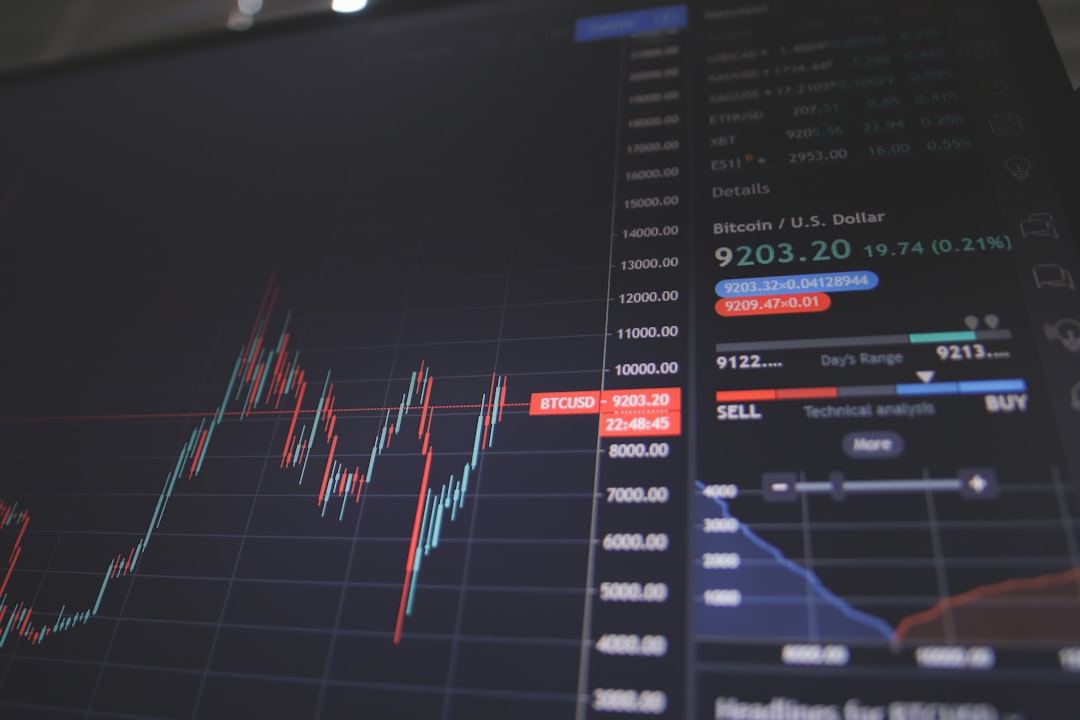
Photo by Nick Chong on Unsplash
Last Tuesday, I watched a Discord server explode in real-time. Someone had just liquidated their entire portfolio on a leverage trade. Not because of a market crash or a hack, but because they'd set their stop loss at 2% and the coin they bought—one that had been relatively stable—experienced a single wick down that lasted maybe three minutes before bouncing back up 15%. By then, it was too late. The bot had already executed. $47,000 gone in 180 seconds of panic-selling.
This isn't a rare story in crypto. It's the norm. And almost nobody talks about it.
We get plenty of coverage about blockchain technology, regulatory breakthroughs, and the next hot altcoin. But the actual mechanics of why people lose money? The psychological landmines? The technical mistakes that separate successful traders from statistical failures? Those conversations happen quietly, usually after the damage is done.
The Overconfidence Premium Nobody Warns You About
Here's something that studies keep proving but people keep ignoring: the worst traders are the overconfident ones. Not the careful ones. Not the skeptics. The people who think they've figured it out.
A 2023 study tracking crypto traders across multiple exchanges found something fascinating. The traders who made the most confident trades—the ones who went all-in on single positions, who used maximum leverage, who trusted their gut on a coin nobody's heard of—those traders underperformed by an average of 38% annually compared to traders who used modest position sizing and strict risk management.
Think about that number for a second. It's not a 2% underperformance. It's not even 10%. It's thirty-eight percent annually. If you started with $100,000 and you're that overconfident trader, you'd have roughly $62,000 left after a year. Your more cautious neighbor who did basically nothing but buy and hold Bitcoin would probably be up.
The mechanism is simple but brutal. Overconfident traders take larger positions. Larger positions mean larger swings. Those swings catch them emotionally off-guard. Emotional traders make worse decisions. Worse decisions lead to larger losses. It's a downward spiral that feels invisible from the inside because you're constantly telling yourself the next trade will be the one that saves you.
The Leverage Trap That Feels Like Genius Until It Doesn't
Leverage is the crypto equivalent of being handed the keys to a Ferrari when you've never driven a car before. It feels incredible right up until the moment you're upside down in a ditch.
I know traders who've turned $5,000 into $150,000 using 10x leverage on a single position. I also know traders who've turned $150,000 into $0 using the exact same strategy. The difference wasn't skill. It was timing. The first trader got lucky. The second one didn't. Both will tell you they were brilliant—one will just be richer.
The math on leverage is unforgiving. If you have a 10x leveraged position and the asset moves 10% against you, you're completely liquidated. Not down 10%. Not down 50%. Liquidated. Wiped out. Over. On many exchanges, if the market moves fast enough, you might actually end up owing money after your liquidation fee is applied.
Here's what really gets people: the first time you use leverage and it works, your brain gets a hit of dopamine that's almost identical to the dopamine hit you'd get from winning at slots. Your amygdala—the part of your brain that handles fear—starts to shut down. You feel invincible. That's exactly when you're most dangerous.
Entry Timing: The One Thing You Can't Control That Everyone Thinks They Can
Every trader thinks they can time the market. Almost no trader can. And yet we keep trying.
Bitcoin hit $69,000 in November 2021. People who bought at that price lost money for roughly three years before getting back to break-even. If you looked at just the first six months, people who bought at $69,000 were down 50%. Can you imagine the panic? The regret? The constant checking of the price at 3 AM because you can't sleep?
Then there were people who bought Bitcoin at $15,000 in January 2018 and didn't sell until 2023. They watched their investment lose 85% in a single year. They watched it lose 60% in a single month. Most sold. Of those who held, most regretted not selling and rebuying lower. Only the people who literally forgot about their investment or were too stubborn to care ended up in the green.
The lesson isn't complicated: time in the market beats timing the market. But knowing something intellectually and actually living through a 60% drawdown are completely different experiences. Your knowledge means nothing when you're staring at a red portfolio at 2 AM and you can still sell. Most people do.
The Hidden Cost That Destroys More Accounts Than the Market Does
Here's the thing that almost never makes it into trading guides: trading fees, slippage, and poor execution cost money. A lot of money. More money than most people realize.
Let's say you're making ten trades a week. Each trade costs you 0.1% in fees and roughly 0.1-0.3% in slippage (that's the difference between your expected price and the actual price you got). That's 0.2-0.4% per trade. Over ten trades, you're down 2-4% just from the mechanics of trading. If you're using leverage or margin, you're paying interest on top of that. If you're swapping between coins on decentralized exchanges, the slippage can be 1-3% per trade in volatile markets.
Now here's the brutal math: if you're down 3% from fees before the market even moves, you need the market to move 3% in your direction just to break even. Most retail traders don't have a 3% edge. So they're starting underwater before they even begin.
Professional traders factor this in. They know their fees. They know their slippage. They know their exact break-even point. Retail traders just... trade. They think they're making a 5% profit when they're actually making a 1% profit. They think they're losing 10% when they're actually losing 14%. The fees are invisible because they're automatic, so they feel invisible.
What Actually Works (Spoiler: It's Boring)
The traders who actually make money long-term do a few simple things repeatedly. They don't do it because it's exciting. They do it because it works.
They size positions so that their largest possible loss is maybe 2-3% of their portfolio. They use stop losses, and they actually stick to them. They study the market for at least six months before trading real money—most skip this step and it costs them immediately. They have a written plan that they follow even when it feels wrong. They keep detailed records of every trade and why they made it. They update that plan based on what actually happened, not based on what they wish had happened.
Most importantly, they accept that some trades will lose money and some will make money, and the point is just to be right more often and bigger than they're wrong and smaller. That's it. That's the entire secret. It's not sexy. It's not going to make you a crypto millionaire in six months. But it actually works.
For more context on how market psychology plays into broader crypto failures, you might want to read Stablecoin Collapse: Why USD Coin's Recent Struggles Expose a $130 Billion Vulnerability, which explores how misplaced confidence in seemingly safe assets can evaporate overnight.
The crypto market will always be there. The question isn't whether you'll get another chance to trade. The question is whether you'll still have money left to trade with when that chance comes.
Comments (0)
No comments yet. Be the first to share your thoughts!
Sign in to join the conversation.