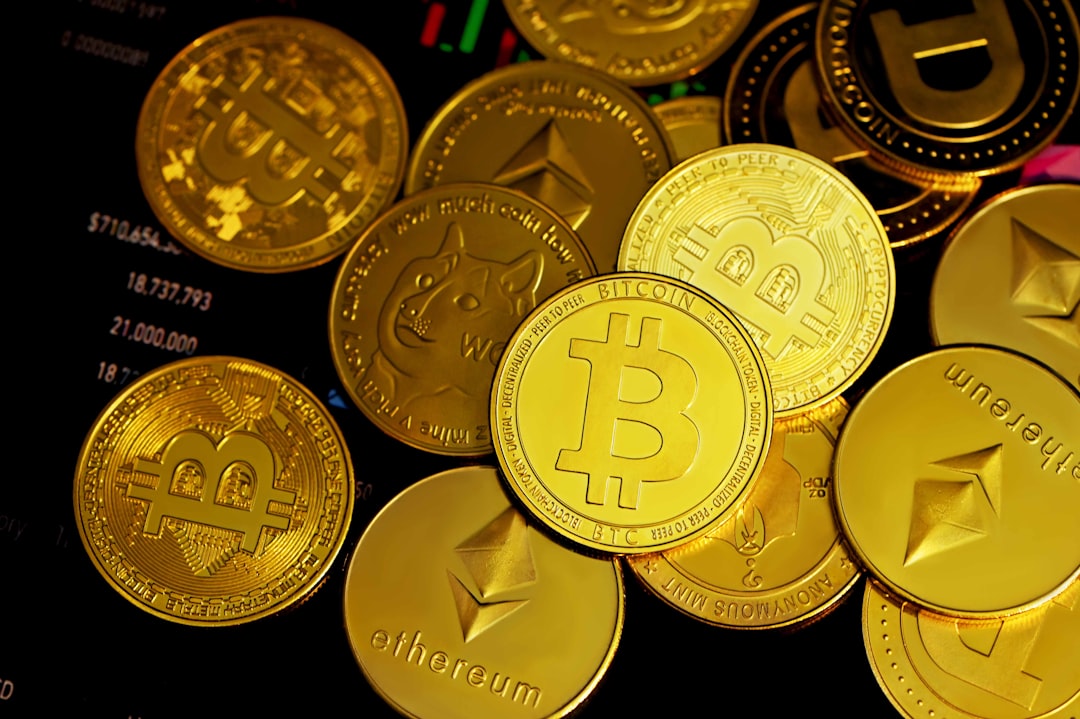
Photo by Kanchanara on Unsplash
It's 2023, and somewhere on Twitter, a user named @CryptoGains2023 is still posting screenshots of their "5,000% APY" yield farm positions. The posts get maybe three likes. No comments. Everyone scrolled past because we've all seen this movie before, and it never ends well.
Back in 2020 and 2021, yield farming was supposed to be crypto's answer to traditional finance's pathetic savings account rates. While your bank paid you 0.01% interest, DeFi promised the moon. Hundreds of thousands of retail investors flooded into protocols like Yieldfarming.insure, Curve Finance, and countless others, chasing triple-digit returns. Some made fortunes. Most lost everything. And the entire industry never really reckoned with why.
The Mathematics of Impossible Promises
Here's the thing about yield farming that nobody wanted to admit: the math was always broken. If a protocol was offering 1,000% APY—and yes, these existed—it wasn't because they'd discovered some magical money-printing machine. It was because they were paying you in their own token, which was simultaneously being printed into existence at an astronomical rate.
Take SushiSwap as a real example. In its early days, the protocol offered staggering yields to liquidity providers. The catch? You were being paid in SUSHI tokens, the protocol's native governance coin. While you were getting "paid," the total supply of SUSHI was expanding exponentially. By the time you converted those rewards back into stable coins or Bitcoin, the token's price had cratered, and your gains had evaporated.
This wasn't a bug. It was the entire business model. New protocols needed to bootstrap liquidity somehow, and offering "yield" in their own inflating token was the path of least resistance. It created the illusion of returns while actually redistributing value from later participants to earlier ones—a structure that bears a troubling resemblance to something your grandmother might have warned you about.
The Implosion Heard 'Round the Blockchain
By late 2021, cracks were showing everywhere. But the real earthquake came in May 2022 when Luna and its sister protocol Terra collapsed spectacularly. Terra had promised 20% APY through its Anchor Protocol—reasonable-sounding compared to others, which should have been the first red flag. The protocol was essentially running a Ponzi scheme, using fresh deposits to pay old investors. When it broke, $40 billion vanished in days.
The Luna implosion was the moment retail investors started asking questions they should have asked much earlier: where was this money actually coming from? The answer, for nearly all yield farming protocols, was "nowhere sustainable."
Compound, one of the more legitimate DeFi lending protocols, had offered 40-50% APY on certain positions during peak mania. Reasonable investors understood these rates would compress as the protocol matured and competition increased. What they didn't anticipate was how far they'd compress. Current yields on Compound are closer to 2-5% annually—useful, but about as exciting as a money market fund.
What Actually Survived the Bloodbath
Not everything in DeFi was a con. Some protocols made it through the purge, though not at the yields their early promoters had promised. Curve Finance, which focuses on stablecoin swaps, has proven more durable than most. Its yields have normalized to somewhere between 5-15% annually, which is still meaningfully better than traditional finance but grounded in actual protocol revenue rather than token inflation games.
Aave, another major lending protocol, emerged relatively intact. Its yields have similarly compressed from the euphoria phase to something more sustainable. And here's what's interesting: users stuck around. Because the protocol actually worked. You could deposit crypto and borrow against it. The returns weren't magical, but they were real.
The key difference between survivors and casualties? The winners built systems where returns came from actual economic activity—transaction fees, lending spreads, arbitrage opportunities—rather than from endlessly minting new tokens. It's a lesson that feels painfully obvious in hindsight but apparently required $40 billion in burned capital to teach.
The Current State: Boring But Legitimate
If you check DeFi yields today, you might feel disappointed. ETH staking yields around 3-4%. Most lending protocols offer 2-8% depending on the asset. It's not remotely thrilling. But that's actually a sign that the industry is maturing.
Here's what changed: protocols now understand they can't offer unsustainable yields without eventually blowing up. Users have learned—mostly through expensive mistakes—to be suspicious of "free money." And the remaining players competing on actual utility rather than yield porn are the ones that built real businesses.
Of course, new yield farming schemes pop up every month. There's always a new "community-driven" protocol promising revolutionary returns. The human desire to believe you've found the magic ATM never fully disappears. But the ecosystem is better equipped to recognize and dismiss obvious scams faster now. When a new protocol with a cute mascot token launches and immediately offers 5,000% APY, the community at least knows what questions to ask.
The yield farming era taught crypto one valuable lesson: there's no such thing as a sustainable high-yield investment that comes from nowhere. Returns have to come from somewhere—actual business activity, economic value, or users' capital entering the system. The moment you accept that, you stop being a mark and start being an investor.
If you're curious about how other high-risk crypto strategies are evolving, check out our breakdown of staking's hidden costs—another yield strategy that sounds simpler than it actually is.
Comments (0)
No comments yet. Be the first to share your thoughts!
Sign in to join the conversation.