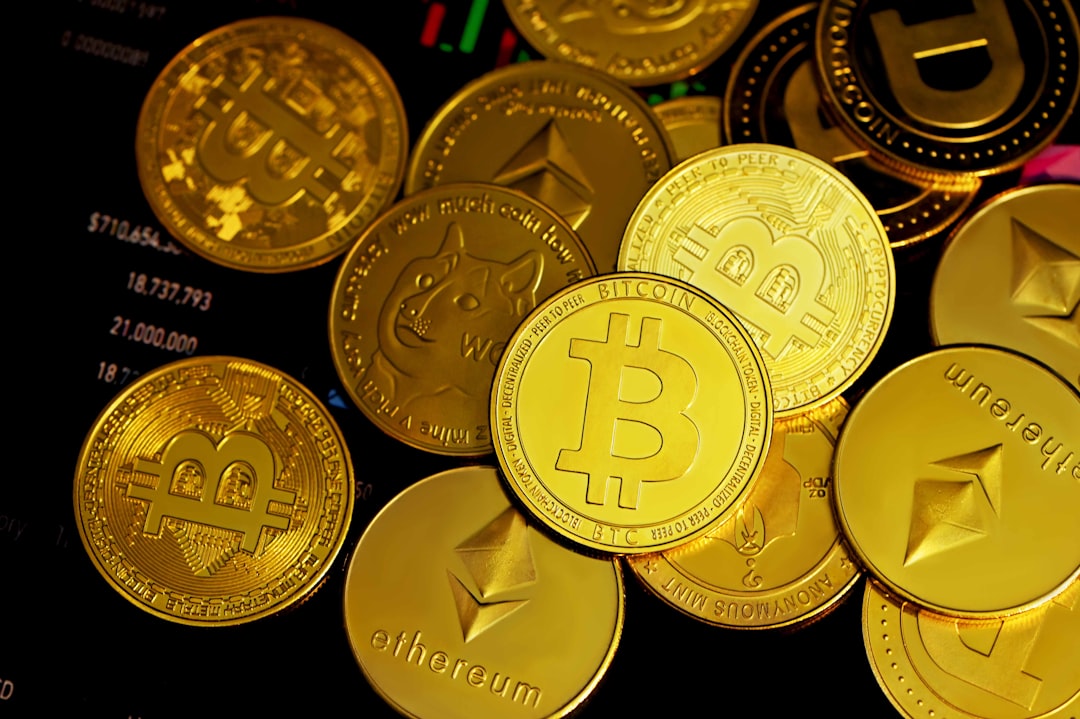
Photo by Kanchanara on Unsplash
The Moment Everything Shifted
On August 6th, 2024, Circle made a quiet announcement that sent shockwaves through the crypto world: they were removing USDC from the Solana network. No drama, no press conference. Just a tweet stating that deposits and withdrawals would cease, and existing USDC would be redeemed at face value through a bridge contract.
For most people, this seemed like a technical adjustment. For people who actually understand what stablecoins are supposed to do, it was a wake-up call. Circle wasn't just tweaking code—they were telling the entire ecosystem that the traditional banking system still calls the shots, and they're not afraid to enforce it.
Why Circle Actually Made This Move
The official story? Circle wanted to consolidate their stablecoin offerings. They already supported USDC on multiple chains, and Solana's USDC became redundant. Clean, logical, corporate-speak.
But here's what really happened. The SEC had been circling stablecoin issuers like a hawk. Circle, having learned lessons from the spectacular collapse of FTX and the subsequent regulatory hammer drops, decided to play it safe. By concentrating USDC on fewer, more "compliant" chains like Ethereum and Polygon, they reduced their regulatory surface area. Solana, despite being brilliant technology, still carries a shadow of association with Sam Bankman-Fried's disaster.
Tron's USDC still exists on the network, but even that's under increasing pressure. What Circle was really doing was practicing risk management—the old-fashioned banking kind that crypto was supposed to make obsolete.
The Stablecoin Illusion Meets Reality
Here's the uncomfortable truth nobody wants to admit: stablecoins aren't as stable as their marketing suggests. They're confidence games, elegant ones built on institutional promises.
USDC, for all its legitimacy compared to sketchy competitors like Tether (which still won't submit to a real audit), ultimately depends on Circle not going bankrupt and not losing access to the $30+ billion in reserves backing it. When the Fed raised interest rates, Circle's cash holdings became less attractive. When banking relationships tightened post-SVB collapse, Circle's operational costs skyrocketed. These aren't theoretical concerns—they're quarterly realities affecting the viability of the entire system.
The move off Solana, then, wasn't about technology. It was about Circle hedging its bets. If Solana faces regulatory attack, they don't want USDC tied to its fate. If Circle's banking relationships get cut (like what happened to Silvergate), they want fewer networks to manage during the chaos.
What This Means for the Broader Ecosystem
Solana's DeFi ecosystem just lost one of its most critical liquidity providers. Projects building on Solana that relied on USDC for trading pairs, lending protocols, and user onboarding suddenly had to scramble. Some migrated to bridged versions of USDC. Others switched to alternatives like USDT (Tether) or Marinade's mSOL. None of these are perfect replacements.
The real damage, though, is philosophical. One of crypto's core promises was that once you had your money on-chain, nobody could touch it. No banks could freeze your accounts. No governments could seize your assets. No corporations could decide your network was no longer convenient.
Except Circle just did exactly that. They moved USDC off a network unilaterally. Sure, they gave people a redemption period, and they compensated existing holdings. But the principle was shattered. Your stablecoin's existence on your preferred blockchain is contingent on a corporation's cost-benefit analysis.
The Uncomfortable Next Chapter
This pattern will likely repeat. As regulatory pressure increases and banking relationships become pickier, stablecoin issuers will continue consolidating around "safe" networks. Ethereum will probably remain the fortress. Polygon might keep most of its tokens. But every alternative network should start preparing for the possibility that one morning they'll wake up to find their stablecoin support collapsing.
Some builders are responding by creating decentralized stablecoins—think DAI on Ethereum or USK on Cosmos. These theoretically can't be removed because nobody owns them centrally. But they have their own problems: complexity, collateralization requirements, and the fact that they're still young enough to be untested in real crises.
The irony is sharp. We built crypto to escape the arbitrary decisions of centralized financial institutions. Yet here we are, watching stablecoin issuers behave exactly like traditional banks—making strategic decisions about which networks deserve their services and which don't. The difference is that when traditional banks do it, at least there are regulators asking questions. In crypto, it's just corporate pragmatism dressed up as protocol upgrades.
If you're building something that depends on stablecoin liquidity, you might want to start planning for redundancy. If you're holding stablecoins on any network other than Ethereum, consider whether your chosen network is "safe" enough to matter in the eyes of issuers. And if you believed stablecoins would be the bridge between traditional finance and crypto, well—you're watching that bridge get reinforced in ways that strongly favor the traditional side.
For more on how centralized decisions reshape crypto ecosystems, check out why institutional players are making their own strategic bets on which networks matter.
Comments (0)
No comments yet. Be the first to share your thoughts!
Sign in to join the conversation.