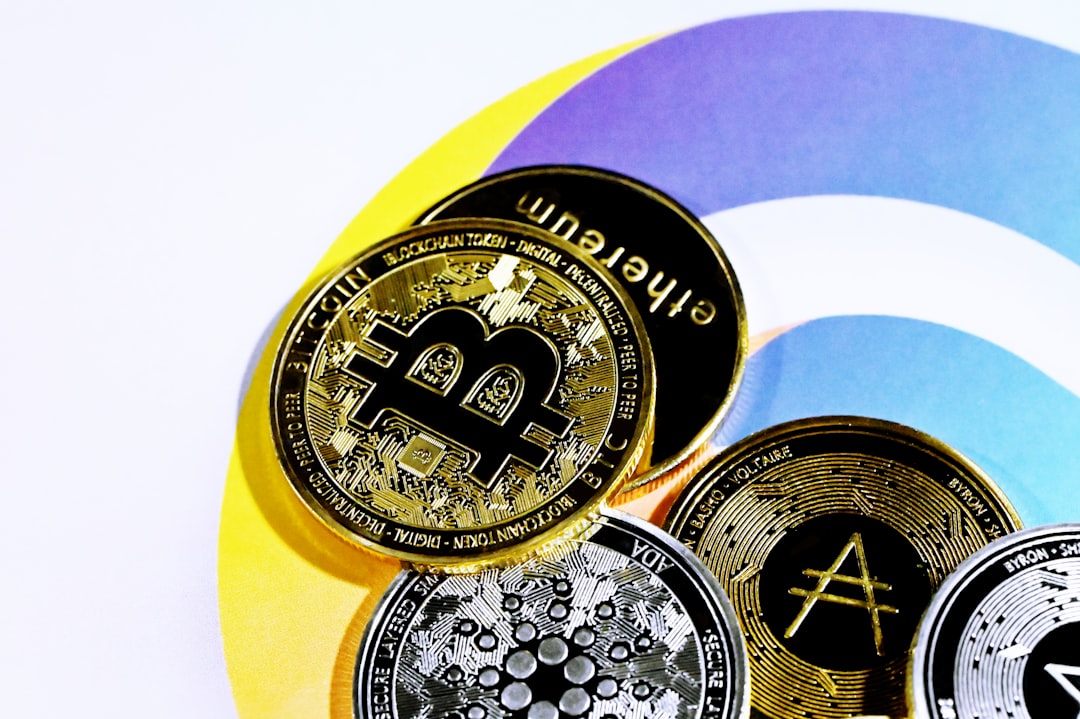
May 7th, 2022. The day the crypto world watched in real-time as $40 billion in value evaporated in less than 48 hours. Terra's Luna token plummeted from $80 to practically nothing, dragging its sister token UST down from its promised $1 peg to fractions of a cent. Thousands of retail investors who believed they'd found a safe harbor lost their life savings. What followed wasn't just a market crash—it was a reckoning.
The Terra collapse wasn't some unpredictable black swan event. It was a predictable catastrophe hiding behind clever marketing and mathematical impossibility.
The Mechanism That Should Have Never Worked
UST was an algorithmic stablecoin, which is basically the crypto equivalent of building a bridge out of hopes and prayers. Here's how it worked: UST was supposed to maintain its $1 value through a mechanism involving Luna tokens. If UST traded below $1, you could burn $1 worth of UST and receive $1 worth of Luna. Theoretically, this arbitrage would keep the peg stable.
The problem? This entire system relied on Luna maintaining significant value. As UST lost faith and people rushed to exit, the protocol minted billions in new Luna tokens to maintain the peg. The supply exploded. Luna's price collapsed. And suddenly, a $1 of UST couldn't get you anywhere near $1 of Luna tokens.
It was a doom loop in real-time. And almost nobody in mainstream crypto was willing to admit the math didn't work.
Terra founder Do Kwon had dismissed critics for months. "If UST loses the peg, I will have failed," he'd tweeted confidently. He failed spectacularly. Yet what's infuriating is that critics had been warning about this precise failure mode for over a year before the collapse. The warnings weren't obscure—they were public, detailed, and rooted in basic mathematics. The crypto industry collectively ignored them because Terra was generating too much hype and too much money.
Why Stablecoins Still Matter (And Why We Need Better Ones)
Here's what Terra's implosion taught us: stablecoins are essential infrastructure for crypto markets, but we've been building them like children playing with blocks.
Stablecoins enable trading without constantly converting to fiat currency. They provide a temporary resting place for volatile assets. They're the rails that make decentralized finance even remotely feasible. But when the stablecoin backing those rails is engineered by someone who thinks bankruptcy is just a "social engineering problem," you have a systemic crisis waiting to happen.
The market moved toward more secure models. USDC, Tether's USDT, and other centralized stablecoins—where actual dollars or dollar equivalents are held in reserve—suddenly looked a lot less boring. Yes, they require trusting institutions. But they don't require trusting physics-defying mathematics. After UST collapsed, USDC's market cap actually grew. People realized that boring, backed-by-real-assets stablecoins were a feature, not a bug.
That said, the quest for a truly decentralized stablecoin hasn't died. MakerDAO's DAI uses over-collateralization—you lock up $2 in crypto to mint $1 in stablecoins. It's not elegant, but it works because the math is sound. It survived the Terra collapse. It's still standing.
The Broader Pattern Nobody Wanted to See
Terra wasn't an isolated incident. It was a symptom.
The entire crypto market in 2021-2022 was running on a fuel of speculative excess. Low interest rates made risk-taking seem rational. Venture capital was throwing billions at blockchain projects without meaningful due diligence. Celebrity endorsements replaced technical analysis. Yield-farming schemes promised 20% annual returns—a figure that should have triggered every alarm bell in existence.
Terra just happened to be the most spectacular domino in the sequence. But it knocked over others. Three Arrows Capital, a major hedge fund that had heavily invested in Luna, went bankrupt. That triggered cascading failures through FTX, BlockFi, and Celsius. One flawed stablecoin design rippled through the entire ecosystem like a structural failure in a dam.
What's remarkable is how much of this was preventable through basic skepticism. The crypto industry has a cultural problem: we worship growth and innovation while dismissing caution as cowardice. Anyone asking hard questions about Terra's mechanism wasn't celebrated for critical thinking—they were dismissed as a "hater." That social dynamic meant that obvious risks weren't just underestimated. They were actively scorned.
What Actually Changed
Did the Terra collapse fix crypto's problems? Not entirely. But it did shift incentives.
Regulators finally had concrete evidence that self-regulation wasn't working. Lawmakers started writing actual legislation instead of vague guidance. Investors became slightly more skeptical. The phrase "but what if the peg breaks?" suddenly seemed like a legitimate question instead of FUD.
More importantly, the collapse highlighted something that had been true all along: stablecoins backed by actual reserves are boring for a reason. They work. They don't go to zero. They won't make you rich, but they also won't vaporize your savings.
The irony is that this lesson—that boring and sound is better than clever and broken—is true across finance, not just crypto. It's just that crypto's culture had temporarily lost sight of it. Terra forced us to remember.
If you're interested in other major infrastructure failures in crypto, The Solana Saga: Why One Network's Outages Keep Crushing Millions in Value provides another case study in how fundamental technical issues can compound into larger systemic problems.
The Lesson for Your Portfolio
If you're considering investing in crypto, the Terra collapse offers one clear principle: understand the mechanism. If you can't explain how a project maintains its value without using the words "trust" or "hype," it's probably not worth your money. Sustainable value comes from either real utility, real backing, or both. Everything else is speculation wearing a technical disguise.
The crypto space is filled with genuinely useful innovations. But it's also filled with extremely clever people building extremely fragile things. Learning to tell the difference isn't pessimism. It's survival.
Comments (0)
No comments yet. Be the first to share your thoughts!
Sign in to join the conversation.