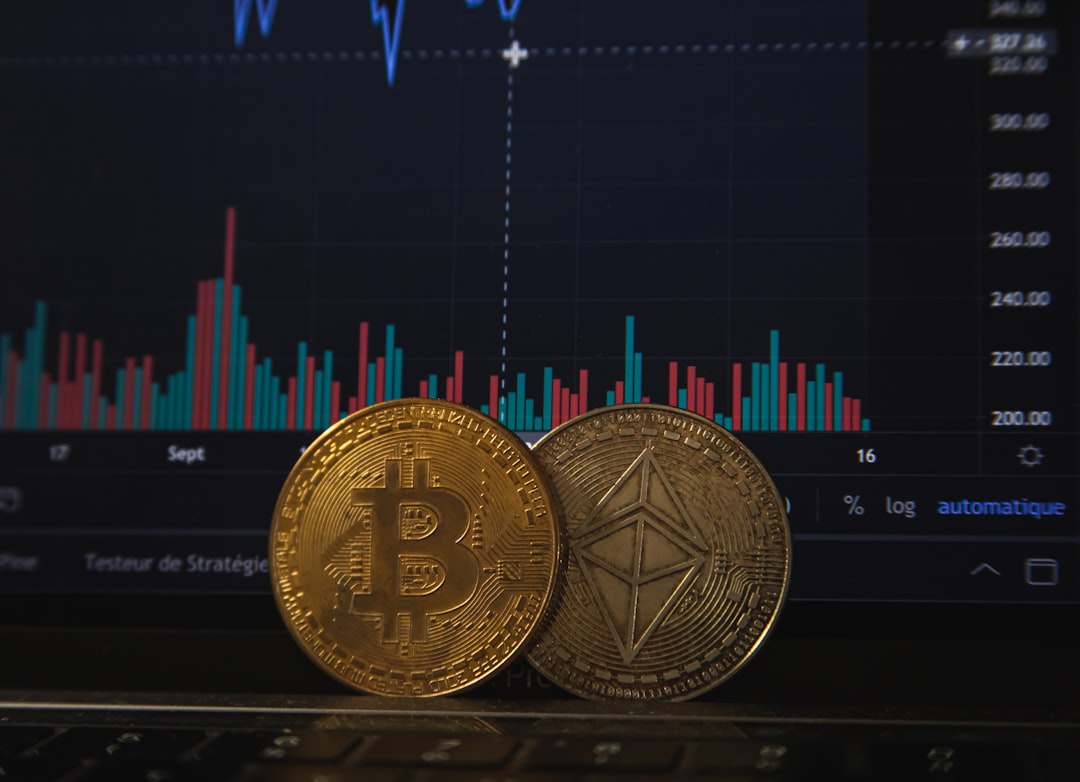
Photo by Pierre Borthiry - Peiobty on Unsplash
Sarah checked her email in 2023 and found something bizarre: a receipt from Coinbase dated January 2014. She'd bought 50 ETH for roughly $1 per coin as a joke, stashed the private key in an old password manager file, and completely forgotten about it. When she finally regained access to that wallet, those 50 coins were worth $85,000. She wasn't alone in this experience. Thousands of crypto's early believers have stumbled upon digital fortunes they'd written off as losses years ago.
The Accidental Hodlers Who Changed Everything
This phenomenon reveals something fascinating about cryptocurrency adoption: the people who made the most money often had the least intention of doing so. They weren't trying to get rich. They were experimenting with weird internet money, lost the passwords, gave up, and then—boom—a decade later they're unexpectedly wealthy.
Vitalik Buterin and his co-founders launched Ethereum in July 2015 when crypto was still viewed as a fringe technology. The earliest adopters weren't sophisticated traders running algorithms. They were programmers testing smart contracts, curious technologists playing with decentralized applications, and people who bought a few coins because they believed in the vision. No spreadsheets. No investment theses. Just conviction and digital wallets.
What makes this different from traditional investment stories is the amnesia factor. When you buy Apple stock in 2000, you keep the certificate (or digital record) somewhere visible. But private keys? They lived in notebooks, password managers, email drafts, and USB drives in desk drawers. People forgot them. Hard drives got thrown away. Exchanges went bust and took wallets with them. Yet by some miracle, many of these coins still exist on the blockchain, waiting patiently for their owners to remember.
The Psychological Quirk That Created Wealth
Behavioral finance has a concept called "loss aversion." Most people feel the pain of losses twice as strongly as the pleasure of gains. So when someone bought Ethereum at $5 in 2015, watched it plummet to $0.50, and assumed they'd lost their money—they simply moved on. They didn't check the price daily. They didn't worry about recovering the investment. They forgot about it emotionally, which paradoxically made them better investors than people who obsessively checked price charts.
Compare this to someone who consciously tried to time the market. They probably sold during the 2017 crash. Or the 2018 downturn. Or the 2022 collapse. They experienced every painful drawdown and made emotional decisions at exactly the wrong moments. The accidental hodlers never had to face that psychological pressure because, to them, the money was already gone.
This inverts every rule of modern investing. The "set it and forget it" approach—often dismissed as lazy—actually outperformed active management by miles. Not because of skill. But because of surrender. The moment you stop trying to optimize, you stop making mistakes.
What This Tells Us About Crypto's Current Moment
Today's crypto market is nothing like 2015. Ethereum now has a market cap exceeding $200 billion. Millions of daily users. Enterprise adoption. Smart contracts powering billions in value. There are no more forgotten millionaires waiting to be made—everyone's watching.
But the story of accidental hodlers carries a critical lesson for current participants: conviction matters more than timing. The people who got rich weren't timing market cycles. They weren't using technical analysis or studying on-chain metrics. They had a thesis—that decentralized systems would matter—and they held through the valleys because they believed it.
Right now, we're seeing a resurgence of that early-2010s energy. New blockchain platforms are emerging. Layer-2 solutions are scaling Ethereum. Bitcoin is being debated as a reserve asset by corporations and governments. And once again, there's a mix of believers and skeptics. The believers who genuinely understand the technology and stop checking prices every hour? They might be tomorrow's accidental millionaires.
Of course, this doesn't mean you should blindly ignore your investments or believe every new token that promises to revolutionize something. But it does suggest that obsessive portfolio management—minute-by-minute trading, panic selling at every dip, constantly optimizing—is probably making you poorer, not richer.
The Broader Principle
The accidental wealth creation in early Ethereum reveals something uncomfortable about markets: you don't get rich by being smarter than everyone else or by executing perfect trades. You get rich by having conviction in something others don't, and then having the discipline (or the forgetfulness) to hold when everyone's panicking.
If you're interested in understanding how fundamental shifts in market structure create wealth opportunities, you should also read about why Bitcoin's realized price just cracked $30,000 and what it means for the next bull run. That analysis explores the metrics successful long-term holders actually track.
The moral of the story? The best investment decision you can make today might be deciding which projects you actually believe in for the next decade—and then doing something else. Check back in 2035. Odds are good you'll be pleasantly surprised.
Comments (0)
No comments yet. Be the first to share your thoughts!
Sign in to join the conversation.