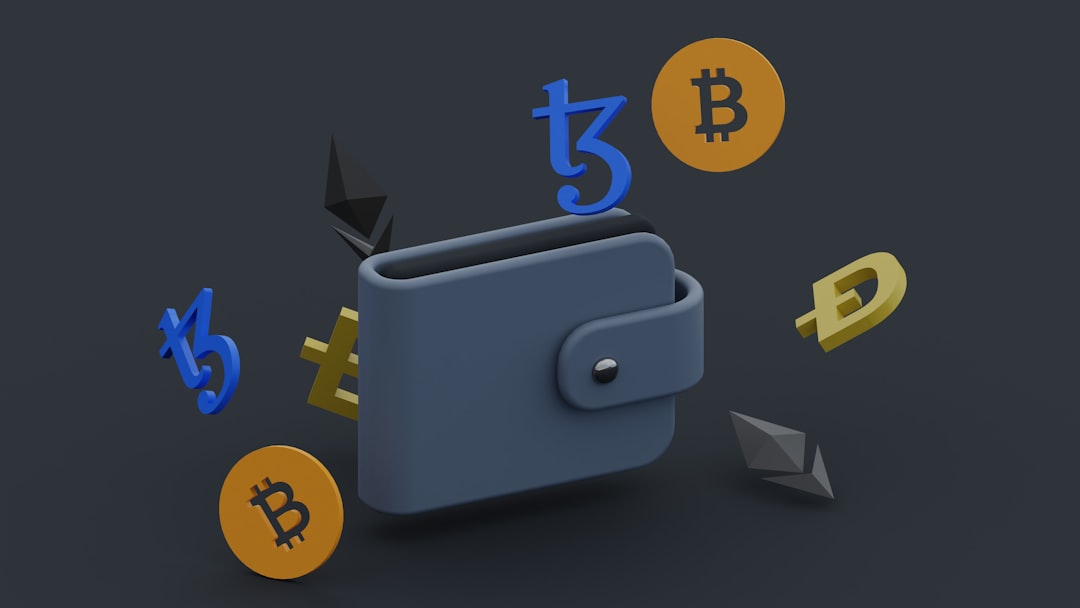
Photo by Shubham Dhage on Unsplash
The notification hit Sarah's phone at 2 AM. Her $85,000 in UST stablecoins—money she'd saved for a down payment on her first house—had evaporated in less than 48 hours. She wasn't a reckless gambler or a crypto bro obsessed with 1000x returns. She was a 34-year-old nurse from Portland who'd simply wanted a 19% yield on her emergency fund. By morning, that emergency fund was gone.
Sarah's story isn't unique. It's become the defining narrative of 2022-2024, except most people never heard about the thousands of Sarahs scattered across crypto exchanges worldwide. The implosion of Terra Luna, the FTX catastrophe, and more recently the silent collapse of various algorithmic stablecoins have collectively wiped out over $150 billion in retail investor wealth. Yet the conversation keeps circling around the same tired questions: Is crypto dead? Should we ban blockchain? These questions miss the point entirely.
The real issue isn't crypto itself. It's that stablecoins—supposedly the "safe" onramp to digital assets—have become financial weapons of mass destruction, and regulators are playing catch-up with a technology that operates on moonshot economics and wishful thinking.
The Stablecoin Illusion That Nearly Broke Markets
Let's be clear about what stablecoins are supposed to do. They're cryptocurrencies designed to maintain a stable value—usually pegged to the US dollar or other fiat currencies. The idea is smart: combine the speed and borderless nature of crypto with the predictability of traditional currency. In theory, you get the best of both worlds.
In practice, you get a financial instrument held together by increasingly desperate mechanisms.
There are three main types of stablecoins. Collateralized stablecoins back every coin with actual reserves—if you hold $1 of USDC, there's theoretically $1 sitting in a bank vault somewhere. These actually work, and USDC has maintained its peg remarkably well despite multiple market apocalypses. Then there are algorithmic stablecoins, which maintain their value through complex monetary policy mechanisms and smart contracts that would make a central banker weep with confusion. And finally, there are hybrid models that promise the safety of reserves with the efficiency of algorithms. Spoiler alert: that's where things get weird.
Terra Luna was the crown jewel of algorithmic stablecoins. The protocol used two tokens—LUNA and UST—in a mechanism designed to maintain UST's $1 peg through arbitrage incentives and automated market maker mechanics. On paper, it was elegant. In reality, it was a house of cards that required eternal growth and eternal faith in the system.
When that faith cracked in May 2022, UST lost its peg spectacularly. The mechanics that were supposed to protect the system instead accelerated its collapse. LUNA, which had reached $80 in early 2022, dropped to $0.0001. Eighteen billion dollars disappeared in a week. Think about that number. Eighteen billion. Not million. Billion.
Why The Banks Are More Terrified Than You Realize
Here's what keeps traditional finance executives up at night: stablecoin collapses are beginning to pose systemic risks to the broader financial system.
When FTX imploded, it wasn't because users suddenly realized crypto was fake—it was because the company had secretly borrowed billions in customer deposits and gambled them away on increasingly absurd bets. The collapse of FTX revealed that even the "trusted" custodians of crypto assets were operating with the risk management standards of a college poker game. But the scarier revelation came later: banks had extended credit to crypto firms based on stablecoin holdings they believed were safe. When those stablecoins became worthless overnight, the cascading losses extended well beyond the crypto ecosystem.
Silvergate Bank, which had positioned itself as the bridge between crypto and traditional finance, collapsed partly because it had overextended itself on crypto deposits that evaporated during the winter market of 2022-2023. Signature Bank and Silicon Valley Bank followed. Were they killed by crypto directly? Not exactly. But they were killed by their belief in the stability of "stablecoins" that proved decidedly unstable.
The Federal Reserve, the SEC, and the Treasury Department have started paying attention. In June 2023, the President's Working Group on Financial Markets released recommendations essentially calling for stablecoins to be eliminated or heavily regulated. Europe moved faster, implementing strict MiCA regulations that require stablecoin issuers to maintain full reserve backing and comply with banking regulations. The message was clear: something had to change.
The Victims Nobody's Counting
But here's what frustrates those of us watching this unfold: the policy discussions focus on systemic risk to the financial system, not on Sarah and the hundreds of thousands like her who lost everything.
The bankruptcy courts handling FTX, Three Arrows Capital, and Celsius Network are still sorting through claims. Many creditors will recover cents on the dollar. Some will get nothing. The damage assessment is ongoing, but the human cost is already clear. Suicides. Lost homes. Families torn apart. A GoFundMe page for one Genesis Global Capital investor raised $300,000—not because it was a worthy cause, but because the community wanted to literally crowd-fund someone's refund.
What makes this worse is how predictable it all was. The mechanisms behind Terra Luna's collapse weren't hidden. Anyone who spent an afternoon reading the code could see the vulnerabilities. The problem wasn't opacity—it was that yields of 19-20% attracted people who had no reason to understand the underlying mechanics because they'd been conditioned by a decade of near-zero interest rates to accept any number that looked higher than what banks offered.
For a deeper look at how regulatory blind spots enable crypto fraud, check out Bitcoin's Lightning Network Is Finally Going Mainstream—Here's Why Your Grandmother Might Actually Use It, which explores how infrastructure improvements could prevent future disasters through better design rather than prohibition.
What Actually Needs To Happen
The solution isn't banning crypto or stablecoins. That's regulatory theater that would just push everything offshore and make things worse. The solution is acknowledging a hard truth: you cannot have a stablecoin without either real reserves or government backing. Period.
Collateralized stablecoins like USDC work. They're boring. They offer minimal yield. But they've never lost their peg and they've survived every market catastrophe since 2018. The lesson is obvious but unpopular: safety and excitement are mutually exclusive.
Regulators need to ban algorithmic stablecoins pretending to be safe. They need to require real-time reserve verification for collateralized coins. And they need to force yield platforms to clearly disclose that high returns require risk, not pretend that financial engineering can overcome the laws of probability.
Most importantly, they need to protect retail investors from their own pattern-seeking brains. Humans are terrible at probability calculations. We see a 19% yield and our brains short-circuit. That's not a personal failing—it's neurology. Regulation should account for that.
Sarah might never recover her $85,000. But if regulators actually enforced sensible rules, the next Sarah might be spared. That's not much of a victory. But in the wreckage of the stablecoin wars, it's the only victory worth fighting for.
Comments (0)
No comments yet. Be the first to share your thoughts!
Sign in to join the conversation.