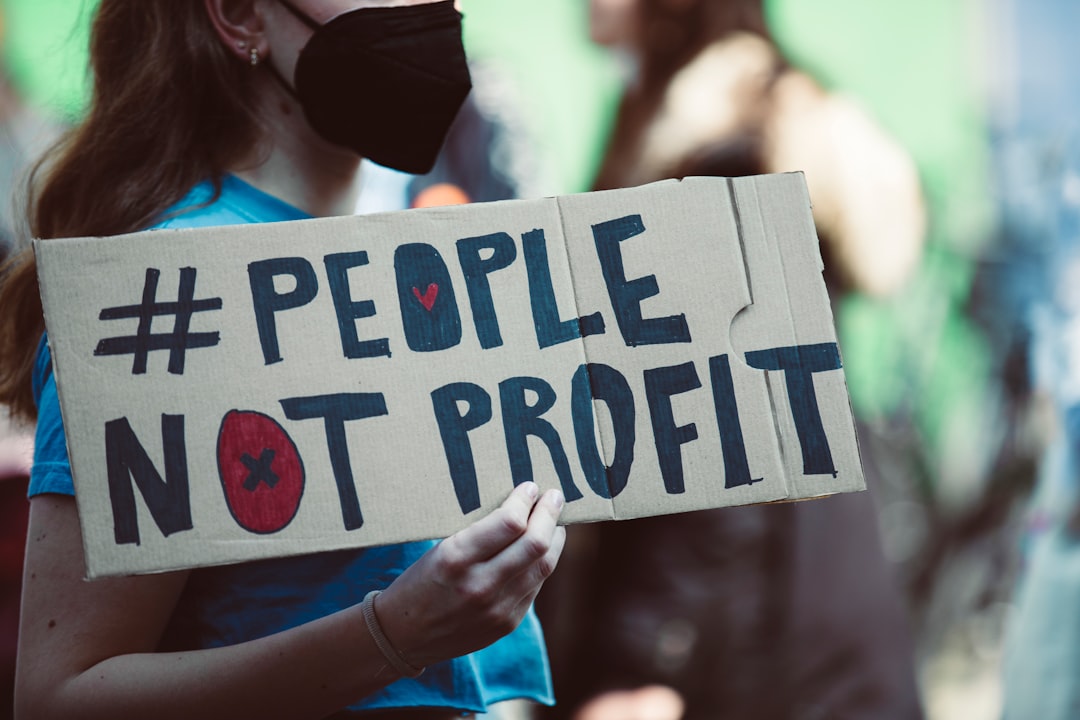
Photo by Markus Spiske on Unsplash
You call your internet provider at 2 PM on a Tuesday. You're calm. Reasonable. You just need to ask about your bill. The automated voice promises you'll be helped by the next available representative. Then it starts. That ethereal pan flute melody. The one that sounds like it was composed in 1987 and last updated sometime during the Clinton administration. Within 90 seconds, you're fantasizing about throwing your phone out the window. Within three minutes, you're seriously considering switching providers based purely on spite.
This isn't coincidental. This is design.
The Science of Sonic Torture
Companies spend actual money researching and selecting hold music, and they're doing it wrong on purpose—or at least, in a way that benefits them far more than it benefits you. Studies on hold music are weirdly specific. A 2008 analysis found that people without hold music perceived they'd waited 10 minutes when they'd only waited 4 minutes. With bad music? They perceived they'd waited 14 minutes when it was only 4. The solution seems obvious: play silence or good music. But companies don't.
Why? Because the longer you feel like you're waiting, the more grateful you become when someone finally picks up. You're no longer upset about the actual problem. You're just relieved the hold music has stopped. It's psychological judo. They've weaponized annoyance.
The music selection itself reveals the strategy. These aren't songs you love. They're not even songs you like. They're specifically chosen to be tolerable enough that you don't immediately hang up, but irritating enough to make you uncomfortable. They're often tinny, compressed, and presented in this bizarre audio quality that sounds like it's being transmitted through a potato. That's not a technical limitation anymore—that's branding.
The Specific Crimes Against Your Ears
Let's talk specifics, because this matters. If you call Comcast, you'll hear a piece that sounds like a music box with commitment issues. It's in an odd key. It loops every 47 seconds. Forty-seven. Not 45. Not 50. The randomness of that specific number is somehow more maddening than a round number would be. Your brain anticipates a reset that never comes at the moment you expect it.
Bank of America uses this gently lilting guitar number that's been processed through so many compression algorithms it sounds like it's being played underwater by a robot who's tired of their job. AT&T—oh, AT&T—they have this piece that somehow manages to be both repetitive and chaotic simultaneously. It's like they hired someone specifically to create the audio equivalent of a spinning pinwheel of death.
Here's what really gets people: the volume inconsistency. You'll be listening at a reasonable level, then suddenly there's a burst of loudness that makes you jolt. This isn't accidental either. There's an industry term called the "Lombard Effect"—when background noise is present, people unconsciously speak louder. By making hold music slightly quieter, then surprising you with volume spikes, companies are actually training you to be more compliant when you finally speak to a representative. You've been acoustically softened up.
The Economic Incentive to Annoy You
Here's the infuriating part: companies could fix this immediately. They could pay Spotify $50 a month and have access to millions of good songs. They could play a quiet, well-produced jazz station. They could literally play nothing. Instead, they choose music that makes you want to commit crimes.
The reason is pure economics. A company with bad hold music gets fewer people hanging up while on hold. These people eventually get through to a representative—a representative who's now psychologically compromised and more willing to accept whatever resolution is offered, just to end the call. From a business perspective, irritating hold music is a feature, not a bug.
Some companies actually charge for the ability to skip hold music. Capital One offers a "skip the wait" feature. Verizon will let you request a callback instead of holding. But these are presented as premium services, not basic human decency. The ability to not be tortured is luxury tier.
The Real Complaint No One's Making
What really infuriates people isn't that the music is bad. It's that it's deliberately bad, and we're all pretending this is normal. You'd never accept this in any other context. Imagine going to a doctor's office where the waiting room had a strategically irritating alarm clock in the corner, set to go off every 47 seconds. The doctor's office would lose patients. But a phone company? We just accept it.
Companies test this stuff. They have entire departments dedicated to customer experience metrics. They know exactly how much acoustic discomfort they can apply before you hang up. It's a finely tuned system of psychological warfare dressed up as "ambient background music."
The most maddening part? There's no accountability. You can't rate the hold music experience. There's no survey at the end asking "How annoying was our audio experience?" That's intentional too. If you could rate it, they'd have to acknowledge it exists, and then they'd be obligated to improve it.
What This Says About Us
We've normalized this situation so completely that complaining about it feels petty. But it's not petty. It's a small, everyday example of how companies optimize for their own convenience at the cost of your sanity. And we just... accept it.
The particularly cruel part is that this disproportionately affects people with less power—people who can't afford to just cancel their service and switch, people who have to call customer service because something's actually wrong, people who don't have alternative providers in their area. Hold music is a tax on the powerless.
If you're looking for other ways companies quietly disrespect your time and money, check out how brands are using shrinkflation to steal from your breakfast—at least cereal doesn't assault your ears while it does it.
The next time you're on hold, listening to that familiar loop of despair, remember: this is intentional. This is someone's deliberate choice. And they're betting you'll be too annoyed to complain once you get through. Don't let them win. Call back and specifically mention the hold music. Make them acknowledge it exists. Make them uncomfortable about it. Because comfort and decency shouldn't be premium services.
Comments (0)
No comments yet. Be the first to share your thoughts!
Sign in to join the conversation.