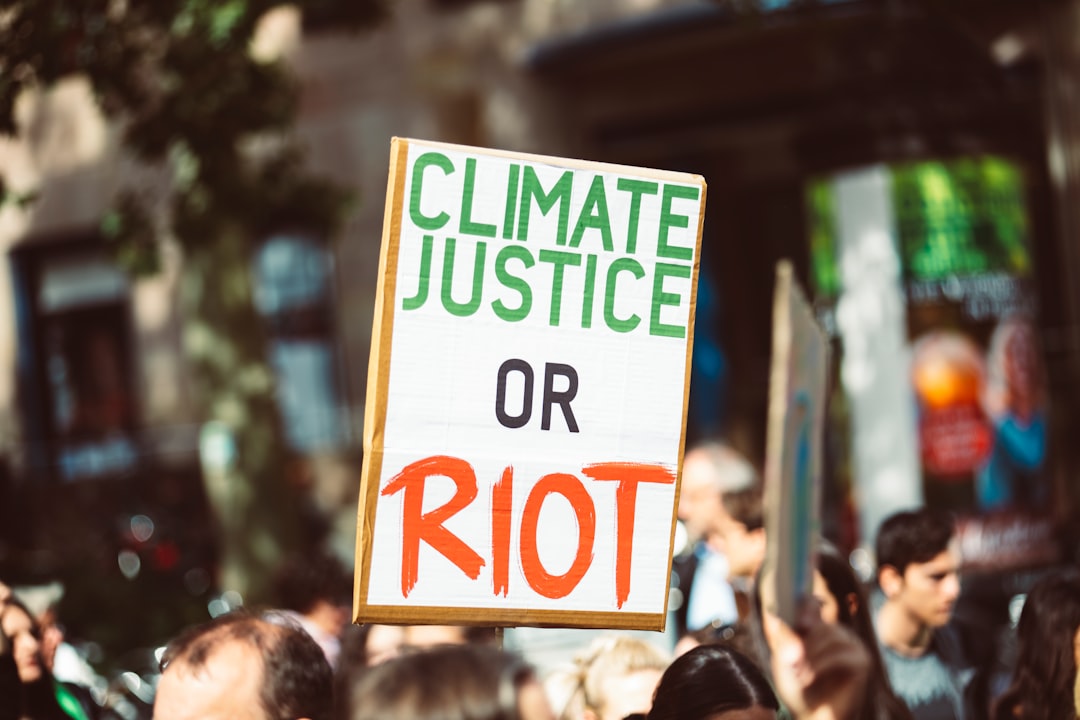
Photo by Markus Spiske on Unsplash
I stood at the baggage drop counter at Denver International Airport, watching my carry-on get slapped with a "checked baggage" sticker. The agent smiled apologetically and informed me that would be $35. My crime? The overhead bin was full, and apparently that meant I'd be subsidizing someone else's travel upgrade. I wasn't angry about the fee itself—I was furious that I'd been tricked into thinking it was free in the first place.
This is the modern airline experience. A deceptive game where the advertised price is merely a suggestion, and the real cost emerges only after you've already committed to your travel plans.
The Bait-and-Switch That Changed Air Travel Forever
When Spirit Airlines first introduced unbundled fares in 2007, the industry collectively raised an eyebrow. They were charging passengers for checked bags, carry-on bags, seat selection, even beverages. Everyone thought it would fail. Instead, it became the blueprint for every airline's future.
Fast forward to 2024, and the numbers tell a staggering story. According to data from the Department of Transportation, U.S. airlines collected over $6.2 billion in baggage fees alone in 2023. That's not including seat selection, boarding priority, or seat changes. The average economy passenger checking a single bag now pays more in hidden fees than they do in fuel taxes.
What makes this particularly infuriating is how the fees are hidden until the very last moment. You'll search for flights on Google Flights or Kayak, see a price of $189, and think you've found a deal. By the time you reach the payment screen, you've added $70 in baggage fees, $15 for your preferred seat, $10 for a bottle of water, and suddenly you're paying $294 for what was advertised as $189.
The major carriers—American, United, Delta, Southwest (until recently)—have standardized this practice. The first checked bag costs $35-$40. The second is $45. Want your bag to arrive on the same day you do? That'll be extra. It's systematic. It's predatory. And it's completely legal.
The Carry-On Trap That Even Frequent Flyers Can't Escape
Here's where it gets absurd: airlines are now charging for carry-on luggage on budget-friendly fares. Basic Economy passengers flying on Spirit, Frontier, or Allegiant often can't even bring a standard rolling suitcase into the cabin—they're limited to a personal item the size of a small backpack. Want actual luggage? That's $25-$40, depending on how far in advance you pay.
Southwest famously built its brand on "free checked bags," and for 30 years, that was genuinely their differentiator. Families loved them. Travelers loved them. Then they realized other airlines were making billions from baggage fees while they were missing out. In late 2023, Southwest announced plans to introduce paid seat selection and other ancillary charges. The airline that sold itself as "a company that happens to fly planes" finally admitted it was just like everyone else.
The psychological games are relentless. Airlines know that by the time you realize you're paying for your carry-on bag, you've already committed to the flight. You're not going to find another flight and start your search over. You're trapped. And they know it.
The Domino Effect: How Baggage Fees Created Chaos
There's an unintended consequence to all this baggage nickel-and-diming that airlines didn't anticipate—or perhaps did, and didn't care about. When you charge people to check bags, you inevitably get more carry-on luggage. Every gate area now looks like a refugee camp of oversized suitcases shoved into overhead bins meant for smaller bags.
Boarding times have doubled. Delays have become routine. Earlier this year, a flight from Atlanta to Miami had to make an unscheduled stop in Jacksonville because there simply wasn't room to store everyone's carry-on luggage safely in the cargo hold. That's right—we're literally running out of storage space in airplanes because people are avoiding the baggage tax.
Flight attendants report more confrontations than ever before, often over luggage disputes. Someone with a bag that technically violates size restrictions, someone who paid for a seat but not bag access, someone who bought "basic economy" and feels cheated. The fee structure has created an entire secondary tier of arguments that didn't exist when luggage was simply included.
And if you think you can pack light? Good luck. The personal item allowance has shrunk over time. What counted as a "personal item" in 2010 would be considered a "small carry-on" today. Airlines have literally redefined the category to force more paid upgrades.
The Environmental and Social Justice Angle Nobody's Talking About
Here's something that really bothers me: baggage fees disproportionately hurt low-income travelers and families. A solo business traveler checking a bag? They just expense it. A family of four heading to Disney World? That's four checked bags at $35-$40 each, plus carry-on upgrades for at least two of them. Now that $400 flight is $600. It effectively prices out entire demographics from air travel.
There's also the environmental impact. Checked bags are weighed and tracked. Passengers are incentivized to overpack carry-on luggage because they're paying extra not to check anything. This adds weight to aircraft, increases fuel consumption, and increases emissions per passenger. The baggage fee system has actually made air travel less efficient and more polluting.
What Can Actually Be Done About This?
Several European countries have moved toward protecting consumers. The EU, for instance, requires that baggage allowances be clearly displayed upfront in search results, not hidden until checkout. Some proposals in Congress would require the same transparency in the U.S., but the airline lobby is too powerful. They've donated millions specifically to prevent these regulations.
The most effective consumer protest would be voting with your wallet. Southwest's recent reputation damage came entirely from this announcement—their stock price dipped, travel blogs erupted, and frequent flyers expressed genuine betrayal. That hurt. Airlines understand money.
For now, the advice remains: fly with airlines that haven't yet monetized every molecule of your travel experience, pack obsessively light, and understand that the price you see on the screen is never the price you'll actually pay. That's not travel. That's Stockholm syndrome with wings.
If this resonates with you, you might also appreciate The Subscription Cancellation Gauntlet: Why Companies Make It Harder to Quit Than to Join, which explores similar hidden-fee tactics across other industries.
Comments (0)
No comments yet. Be the first to share your thoughts!
Sign in to join the conversation.