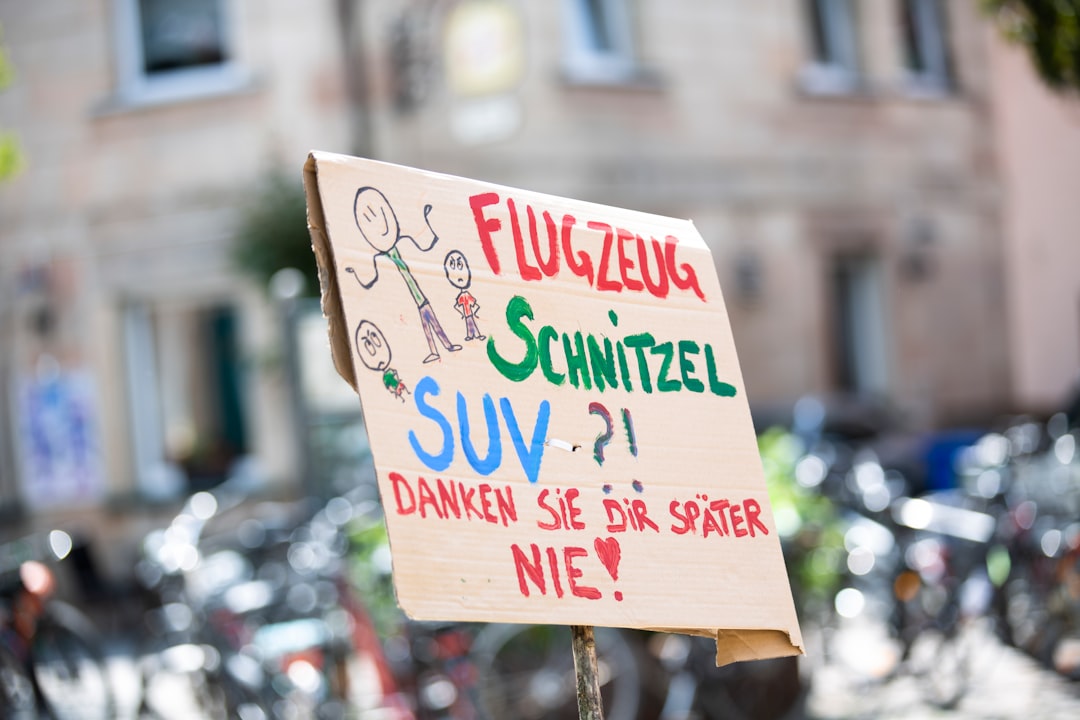
Photo by Markus Spiske on Unsplash
Last Tuesday, my friend Marcus discovered a $14.99 charge on his credit card from a streaming service he'd signed up for two months ago. He didn't remember activating it. He certainly didn't remember the "free trial" converting to a paid subscription. When he finally tracked down the cancellation button buried in the settings menu—three levels deep under "Account" and "Preferences"—the company informed him that they "couldn't process cancellations online" and directed him to call during business hours. The whole ordeal took forty minutes of his life that he'll never get back.
Marcus isn't alone. According to AARP research, 24% of consumers have reported being stuck in unwanted subscriptions after free trials expired, with the average person losing $200 per year to forgotten subscriptions. The frustration isn't just about money. It's about the deliberate friction companies engineer into a process that should take thirty seconds.
The Art of Making Signup Seamless (And Cancellation Invisible)
Here's what bothers me most about the free trial ecosystem: the hypocrisy is stunning. When you're interested in a service, companies make signing up absurdly easy. One click. Sometimes not even a click—just your existing Apple ID or Google account, and you're in. No confirmation email. No "Are you absolutely sure?" prompt. Nothing that might cause you to hesitate.
But cancellation? That's treated like you're asking to withdraw a million dollars from Fort Knox.
I tested this myself with three different streaming services in 2024. Here's what I found:
Service A: Cancellation button exists only on the mobile app, not on the web version. The button says "Pause" instead of "Cancel," which is deliberately vague. Tapping it takes you to a five-screen guilt-trip sequence asking why you're leaving, with options like "Too expensive" that immediately offer discounts to keep you subscribed.
Service B: The cancellation link appears nowhere in the app or on the main website. You have to go to "Help," then "Account Issues," then "Billing Problems," then find a link that says "Contact Us." That contact form doesn't actually cancel your subscription—it just lets you send a message to support, where someone will eventually reply (in 3-5 business days) asking for confirmation.
Service C: Cancellation requires calling a phone number. Their website explicitly states cancellations cannot be processed online. When I called at 2 PM on a Tuesday, I was on hold for twelve minutes before reaching someone. The representative immediately asked if I wanted to reduce my subscription tier instead of canceling. When I insisted, she said, "The system is down right now. Can you call back tomorrow?"
This isn't incompetence. This is strategy. Companies call it "friction by design."
The Money That Wasn't Supposed to Come Out
Free trial conversions to paid subscriptions represent a staggering portion of these companies' revenue. A 2023 CNBC investigation found that some streaming services rely on free trial-to-paid conversion rates as high as 40-50% of their customer acquisition. But here's the kicker: many of those conversions happen because customers simply forget or can't figure out how to cancel.
Consider this: if a company has 500,000 free trial users and converts just 30% to paid subscribers through the free trial period, that's 150,000 new paying customers. If even 20% of those people forget to cancel before their first charge hits, that's 30,000 people paying for something they meant to cancel. At an average of $15 per month, that's $5.4 million monthly from "mistakes."
It's not actually a mistake, though. It's a calculated business model. The company knows roughly what percentage of users will forget. They've modeled the revenue impact. They've probably run A/B tests on cancellation button placement to optimize (minimize) cancellations. Some of this might technically be legal under the ROSCA (Restore Online Shoppers Confidence Act), which requires "clear and conspicuous" cancellation options. But "legal" and "ethical" aren't the same thing.
When "Free" Really Means "Expensive If You Forget"
The psychological manipulation here is brilliant in the way that villains in movies are brilliant—technically impressive but fundamentally wrong. Free trials work because they trigger a phenomenon called the "endowment effect." Once you've started using a service, you perceive it as yours. Canceling it feels like losing something, even if you never intended to keep it. Companies exploit this by making the cancellation process so annoying that you think, "Maybe I'll just keep it this month and deal with it later." You never deal with it later.
Even worse is the sleeper subscription pattern. You sign up, you use the service for a month, it charges you, and six months later you're still charged every month. Spotify alone received over 11,000 complaints to the Better Business Bureau in 2023, with a significant portion related to subscription billing issues.
Some people argue that users should "just keep track" of their subscriptions. That's fair, but it ignores the reality that companies deliberately made it hard to know when you signed up, when the trial ends, and where to go to cancel. Expecting users to solve a puzzle that the company intentionally created is shifting blame unfairly.
The Regulatory Wake-Up Call (Finally)
Good news: governments are starting to notice. In 2023, the FTC cracked down on Amazon Prime's cancellation process, requiring the company to make cancellation as easy as signup. California's recent consumer protection bills have also tightened requirements around free trial disclosures.
But here's the thing: these regulations wouldn't be necessary if companies simply treated customers with respect. If canceling a free trial required one button, took 10 seconds, and didn't involve a guilt-trip sequence or a call to customer service, none of this would be controversial.
For related frustrations with the modern subscription economy, check out The Hidden Fees Killing Your Gym Membership: Why Canceling Costs More Than a Year of Classes. Same playbook, different industry.
What You Can Actually Do About It
If you're trapped in this system, start by checking your bank and credit card statements monthly. Set phone reminders for seven days before trial periods end. Use a dedicated email for trial signups so you can search and find trial confirmation emails. Some services will actually let you cancel via email if you can prove you signed up.
More importantly: complain. To the company, to your credit card company, to the Better Business Bureau. These complaints create a paper trail that regulators use when they go after companies.
The free trial isn't going away. But the friction around cancellation? That's something we can collectively push back against. It just requires refusing to accept "it's complicated" as an answer.
Comments (0)
No comments yet. Be the first to share your thoughts!
Sign in to join the conversation.