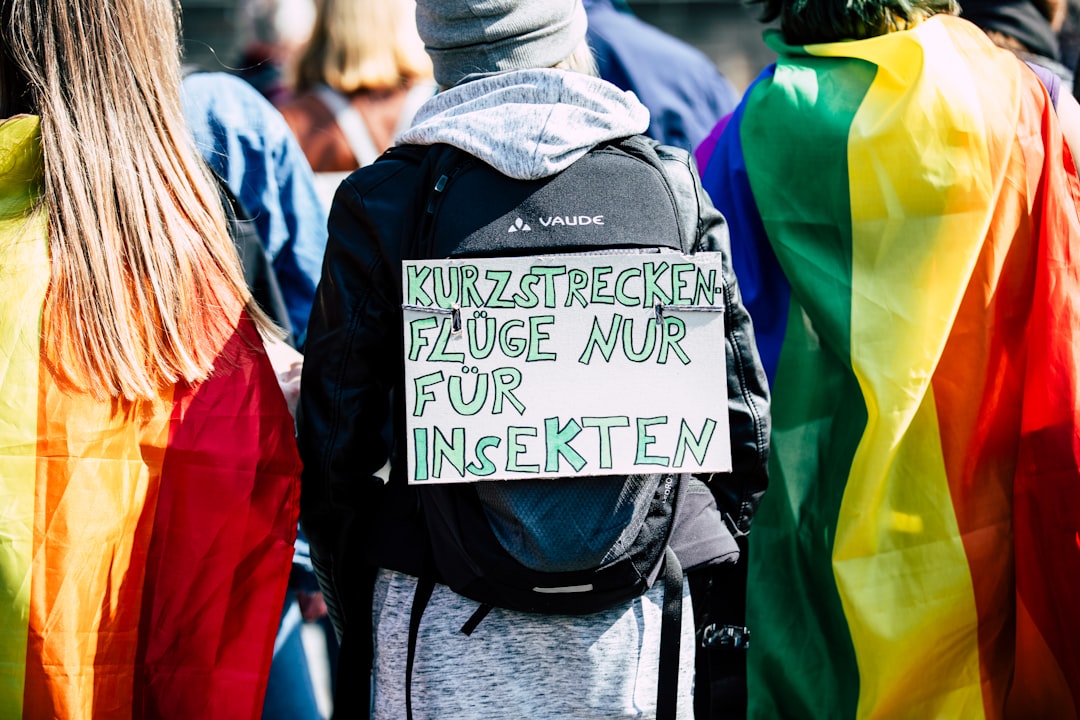
Photo by Markus Spiske on Unsplash
Last Tuesday, I booked a flight from Denver to Portland for $287. Seemed reasonable. Then came the part where I tried to select my seat. Every single available seat in economy was labeled with a red "$15" tag. Even the dreaded middle seat in the back row near the bathrooms cost extra. I scrolled through the entire plane. Nothing was free. Bewildered, I clicked on the airline's help section, where I discovered the fine print: "Basic Economy fares do not include seat selection."
This is the new normal, and it's infuriating.
The Seat Selection Shell Game Has Gone Too Far
Airlines have perfected a bait-and-switch operation so smooth it barely registers as dishonest anymore. They advertise a rock-bottom price that catches your eye. You fill in your departure city, arrival city, dates. Everything looks straightforward. Then you hit "continue" and suddenly discover that the price was only half the story.
United, American, Southwest, Delta—they've all adopted variations of this strategy. The difference is subtle but devastating. Basic economy fares explicitly exclude seat selection. Standard economy supposedly includes it. But when you arrive at the seat map, virtually every seat shows a charge. The "free" seats? They either don't exist, or they're the ones nobody wants: middle seats in the last five rows, seats with no recline, seats near the laundry closet of a bathrooms that smells like a chemical spill.
I'm not exaggerating about the smell. I've been there.
Why This Feels Like Fraud (Because It Kind Of Is)
Here's what bothers me most: airlines know exactly what they're doing. They've hired entire teams of user experience designers to perfect this system. They've run A/B tests on the wording. They've calculated to the penny how much additional revenue they extract from passengers who feel trapped into paying fees they didn't expect.
When I booked my Denver flight, the airline's website showed me the price in giant letters: $287. It never said "plus seat selection fees" at that stage. It never warned me that every seat would cost extra. I only discovered this painful fact after I'd already committed to the date, the time, and the airline. At that point, I had three choices: pay the extra fee, sit in a middle seat, or start my whole search over and potentially pay more elsewhere.
This is manipulation dressed up as capitalism. And it works because passengers have learned to accept it as the cost of flying.
The statistics back this up. Airlines collected approximately $5.2 billion in ancillary fees in 2022—a number that's grown every single year. Seat selection and baggage fees account for roughly 40% of that total. That's money we didn't budget for when we saw the advertised price.
The Particularly Nasty Part: Family Separation
Want to know where this system becomes genuinely cruel? When you're flying with children and the airline's seat-assignment system automatically splits your family across the cabin.
A friend of mine, Rebecca, flew with her two kids last summer. She booked three tickets on the same reservation for $189 each. When she got to the seat selection screen, she discovered that the system had automatically assigned her to a middle seat in row 22, her six-year-old to a window in row 8, and her ten-year-old to an aisle in row 15. Three different sections of the plane. When she called to complain, the agent said she could pay $25 per seat to move everyone together. That's an extra $50 to sit with her own children on a flight she'd already paid for.
She paid it, of course. What choice did she have?
What the Airlines Will Tell You (And Why It's Nonsense)
If you've ever complained to an airline about this, you've probably heard the same defense: "We offer competitive pricing. Customers who want seat selection can choose our standard economy tier." Usually this tier costs $40-60 more than the basic fare.
But here's the trap inside the trap: even standard economy doesn't guarantee you'll get a decent seat. I've booked standard economy multiple times and still ended up with middle seats in rows 24-31. The "free" seat selection only guarantees you can select from what's available—which, by the time you book, is often nothing good.
The airlines have also gotten sneaky about timing. If you book far in advance, you might actually get a decent free seat in standard economy. But if you book within two weeks of your flight, the good seats are mysteriously unavailable, and you're back to paying extra.
The One Thing That Might Actually Change This
Here's the frustrating part: nothing is technically illegal about any of this. The prices are disclosed, eventually. You do get to the seat map, and you can see the fees. Airlines aren't breaking laws; they're just exploiting the fact that most people don't read the fine print until they're already emotionally invested in the booking.
The only real accountability would come from government regulation or from passengers actually shopping around and penalizing airlines that do this most aggressively. But since most of us are price-focused on the initial search result and don't account for the hidden fees until it's too late, the system persists.
If you want to see how deep the airline fee problem goes, check out how similar hidden-cost schemes work in shipping and delivery. It's the same psychology at play: advertise a low number, surprise the customer with fees later, rely on their sunk-cost fallacy to get them to pay anyway.
My advice? When you see that $287 flight price, immediately add $30-50 to what you think you'll pay. Budget for a seat you can actually live in for four hours. And if you're flying with family, call the airline directly before booking to confirm they won't separate you—and ask them upfront what that's going to cost. At least then you'll know what you're actually paying for.
Comments (0)
No comments yet. Be the first to share your thoughts!
Sign in to join the conversation.