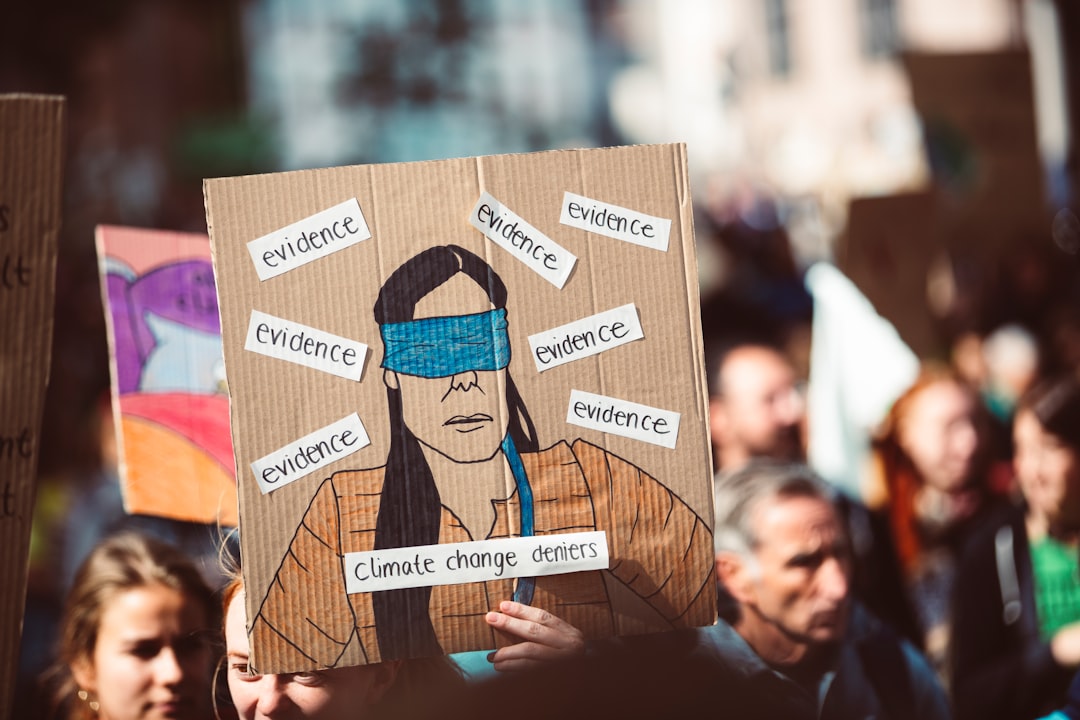
Photo by Markus Spiske on Unsplash
Last month, I watched a grown man argue with a gate agent for seven minutes about his assigned middle seat. He'd paid for his ticket weeks in advance, yet somehow he was entitled to nothing but a narrow slice of cushion wedged between two strangers. The gate agent, clearly exhausted by this conversation's thousandth iteration that day, simply shrugged. "That's the seat you got," she said. And just like that, he shuffled off to endure five hours of regret.
This scenario plays out in airports worldwide, thousands of times daily. The airline industry has transformed seat selection from a neutral lottery into a psychological warfare campaign against passengers. What was once a minor inconvenience has become a carefully engineered money extraction machine disguised as a travel experience.
When Did Sitting Become a Luxury We Have to Negotiate For?
Airlines didn't always charge separately for seat selection. That's a relatively recent development, introduced around 2007 when airlines started hemorrhaging money and discovered an entirely new revenue stream hiding in their own cabins. United Airlines, naturally, was among the pioneers. They realized customers would pay extra not to feel like sardines, and once the door opened, every other carrier rushed through it.
Today, the numbers are staggering. In 2022, U.S. airlines collected approximately $2.6 billion in ancillary fees, and seat selection fees represented a significant chunk of that. That's $2.6 billion collected specifically for allowing people to choose where they sit on a metal tube hurtling through the sky at 35,000 feet.
The strategy is diabolically simple: basic economy fares come with assigned middle seats in the back. Want a window? Aisle? Something vaguely resembling leg room? That'll cost you. And because these seats are strategically scattered throughout the plane, you can't avoid them. You can't book a flight thinking, "Well, everyone on this plane probably paid the same price." Someone paid $89 extra to recline without kicking the seat in front of them. Someone else saved $200 by accepting the seat equivalent of purgatory.
What really bothers people—and this is documented in countless consumer complaint surveys—is the illusion of fairness that accompanies the illusion of choice. Airlines present seat selection as a generous option, a benefit you can add to your booking experience. They don't frame it as extortion, though functionally, that's what it is. You can sit where you want, provided you're willing to pay what they've decided that privilege costs.
The Legroom Lie: How Airlines Redefined "Standard" Seating
Here's where it gets genuinely frustrating. Domestic aircraft seat pitch—that's the distance from one seat to another—has decreased while fares have increased. In the 1990s, standard economy seat pitch was 35 inches. Today? Many carriers have reduced it to 31 inches. That's four inches of space that simply vanished, like a magic trick where you're the one who gets sawed in half.
Airlines claim this is about efficiency and fuel economy. Technically, they're not lying. Cramming more seats into a fuselage does reduce per-passenger fuel costs. But they're not passing those savings to consumers. Instead, they've redefined what "standard" means. The seats that used to be normal are now marketed as premium economy or economy plus, commanding higher prices.
Passengers over 6 feet tall have started booking entire middle seats just to have a place to put their legs. People with anxiety disorders report genuine dread before flying because they can't guarantee an aisle seat. Families traveling together spend hundreds of dollars just ensuring they sit near each other—a feature that used to be included automatically.
Southwest Airlines briefly captured customer loyalty by offering free seat selection, allowing passengers to board with assigned groups and choose seats freely. Every other airline looked at Southwest's success and concluded, "Yes, but what if we made them pay for convenience instead?" Because that's how the industry thinks. Not in terms of customer satisfaction, but in terms of untapped revenue sources.
The Transparency Problem: Why Your Seat Price is a Mystery
Mysteriously, airlines don't publish their seat selection pricing in a way that lets you compare them across carriers. When you're booking a flight, the fee appears during checkout, often presented as a mandatory add-on rather than an option. You've already committed to the airline, already blocked out the dates, and now they're asking if you want the indignity of choosing your own seat.
The fees vary wildly. A window seat on a 3-hour flight might cost $15 with one carrier and $45 with another. There's no standardization, no logic, no way to know the pricing structure until you're already in the purchase funnel. It's intentional obfuscation designed to prevent comparison shopping.
What makes this particularly maddening is that airlines have all the data. They know exactly how many premium seats they can sell. They know exactly how much you're willing to pay for an exit row or a bulkhead seat. They use sophisticated algorithms to adjust pricing in real-time based on booking patterns. You might see a $25 charge for a particular seat at noon, and by evening, that same seat costs $35.
The Domino Effect: How One Policy Breaks Everything
Families booking flights together face a nightmare scenario. You buy four economy tickets, but to ensure everyone sits together, you're forced to pay upgrade fees for each seat. That $299 family flight suddenly costs $650. Children—actual small humans who cannot legally sit alone—are sometimes separated from their parents unless additional fees are paid.
This connects to a broader problem that extends beyond just airlines. Like other industries using hidden fees to obscure true costs, airlines are weaponizing ancillary charges to make advertised prices meaningless. A $199 flight isn't $199. It's $199 plus seat selection, plus baggage, plus whatever other charges they've invented since you last flew.
The cumulative effect is a system that feels deliberately designed to frustrate passengers. You can't predict your final cost. You can't compare prices fairly. You can't guarantee basic comfort without paying premium prices. And the entire industry has adopted the same strategy, leaving consumers with zero alternatives.
What Actually Needs to Happen
Some countries have started regulating airline fees more strictly. The European Union requires seat selection fees to be displayed upfront and prohibits forcing basic seats on customers unfairly. The U.S., predictably, has done almost nothing.
Real change would require either regulation or competition. Since we're unlikely to get meaningful regulation anytime soon, competition is our only hope. And that means supporting airlines that don't engage in these practices, even if they're slightly less convenient or less frequent on your preferred routes.
Until then, we'll keep watching passengers argue with gate agents, clicking through fee screens reluctantly, and accepting that flying has become a luxury activity for people who can afford to pay for the privilege of sitting down without suffering.
Comments (0)
No comments yet. Be the first to share your thoughts!
Sign in to join the conversation.