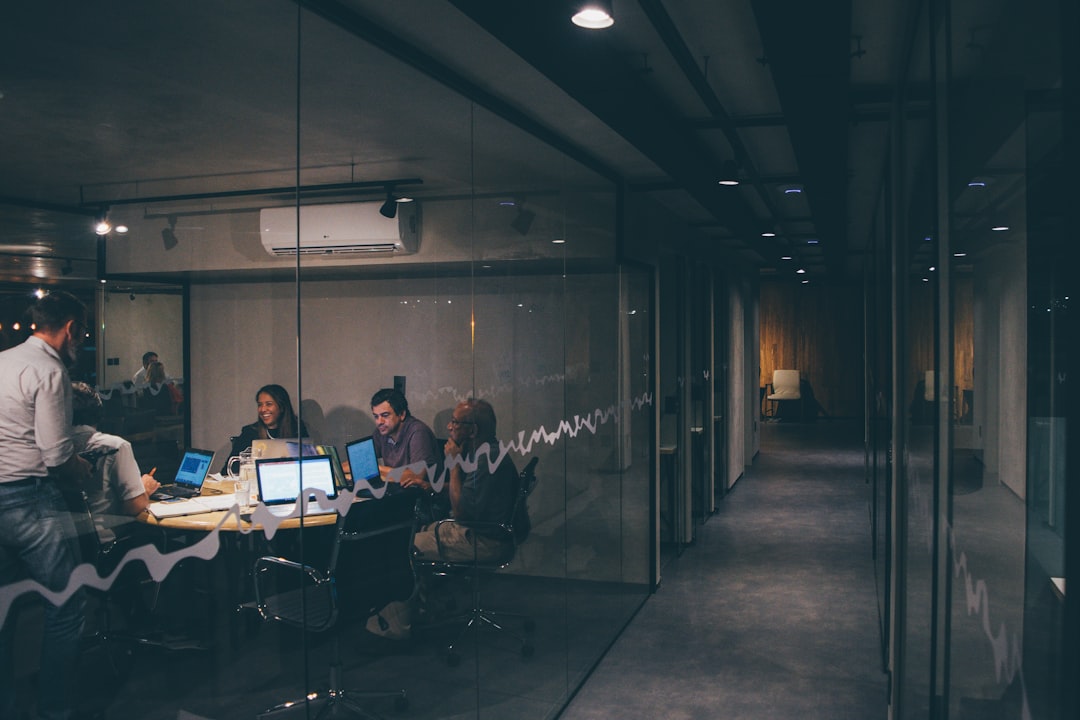
Photo by Mario Gogh on Unsplash
Sarah used to love her job. She'd arrive at 8:30 AM, settle into her desk, and tackle the day's most challenging tasks before lunch. Then her company moved to an open floor plan. Within six months, she was job hunting.
"I couldn't focus for more than fifteen minutes at a time," she told me over coffee. "Someone was always tapping me on the shoulder, dropping by to chat, or just sitting nearby crunching chips loudly. I went from finishing projects early to missing deadlines."
Sarah's experience isn't unusual. It's becoming the norm. And yet, companies continue doubling down on open offices and "open door policies" as management philosophy, convinced that transparency equals innovation and that accessibility equals stronger teams. The data tells a different story.
The Seductive Promise That Never Delivers
The open office concept exploded in popularity after tech giants like Google and Facebook swore by it. The pitch was irresistible: tear down the walls, eliminate hierarchical physical structures, and watch spontaneous collaboration spark magic. Business leaders got drunk on this vision.
Between 2000 and 2017, the percentage of office workers in open plans jumped from 15% to over 70%. Companies spent billions on renovations, knocking down walls and installing trendy communal spaces with ping pong tables and craft beer on tap. They branded it as liberation from "cubicle culture."
But here's what happened in practice: study after study showed that open offices actually decrease face-to-face interaction. A study by Harvard Business School researchers found that when companies moved to open layouts, spontaneous interactions dropped by 70%. People put in earbuds. They hunched over desks trying to signal "don't talk to me." They worked nights and weekends when the office was quiet, just to get things done.
The irony is bitter. The exact structure designed to maximize collaboration had the opposite effect. Workers became more isolated and anxious, not less.
What Open Door Policies Actually Cost You
Let's talk about the financial reality your CFO probably isn't quantifying.
A worker interrupted every three minutes loses an average of 23 minutes to regain full focus on their original task. That's not my opinion—that's based on research from UC Irvine. Multiply that across a team of even just 20 people, and you're losing roughly 115 hours of productive work per week. Over a year, that's the equivalent of losing three full-time employees. To productivity loss. From interruptions.
Throw in the costs of decreased employee retention (replacing an employee costs 50-200% of their annual salary, depending on the role), increased sick days from stress and burnout, and declining work quality, and your "cost-saving" open office is hemorrhaging money.
Add to this the mental health burden. A 2023 survey found that 54% of workers in open offices reported high stress levels, compared to 27% of those in private offices. Your insurance premiums go up. Your disability claims increase. Your best performers start looking elsewhere.
One tech company I spoke with did the math after losing three senior engineers within months of their office redesign: the open plan renovation cost $2.3 million. The replacement and training costs for those three people? $1.8 million. The lost institutional knowledge and project delays? Immeasurable. They spent $4+ million to achieve the opposite of what they intended.
The Uncomfortable Truth About Accessibility
There's a seductive virtue to the open door policy from a leadership perspective. It sends a message: "I'm approachable. I'm not some distant executive hiding in a corner office."
But accessibility without boundaries isn't accessibility—it's dysfunction masquerading as democracy.
Consider what happens to a manager's day in an open office: instead of blocking time for strategic thinking or one-on-one coaching, they're fielding constant interruptions. Instead of giving their full attention to the person sitting across from them, they're aware of being watched and heard by everyone within earshot.
I interviewed a director at a financial services firm who spent nearly two hours of an eight-hour day handling walk-up questions. None were emergencies. Most could have been handled via email or scheduled meetings. "I was drowning in reactive work," she said. "I never got to the important projects that required real thinking."
The employees who suffer most? Introverts, people with ADHD, and anyone doing work that requires deep concentration. They're implicitly told they're "not collaborative enough" if they need quiet time. Instead of inclusion, the open office creates a hierarchy where extroverts thrive and anyone else struggles.
What Actually Works Instead
Here's what forward-thinking companies are doing now:
Segmented spaces. Cisco, Microsoft, and others moved to hybrid office designs with quiet zones, focused work areas, collaboration rooms, and social spaces. People choose their environment based on the task. Revolutionary concept, right?
Scheduled collaboration time. Instead of "always open," companies block specific times for meetings and collaboration. Outside those windows, interruptions are minimized. Slack's CEO set a company policy: no meetings before 10 AM, giving people two focused hours.
Async-first culture. Companies like Zapier and Automatic built cultures where decisions don't require everyone in a room. Documentation, written proposals, and asynchronous feedback replaced constant real-time interruptions.
Trusting your people. An open door doesn't need to mean an open office. Many companies now use a simple framework: doors can be closed when needed. It's not punishment—it's professional. When someone's working on something complex, respect that.
The Bottom Line
Your open office likely costs you more in productivity loss and turnover than any office renovation could save in real estate.
Your open door policy might signal good intentions but often signals poor management of boundaries and time.
The best companies aren't the ones with the trendiest office designs—they're the ones that actually listen to their employees about how they work best. They combine collaboration when it matters with uninterrupted focus time when it's needed.
Sarah eventually found a company with quiet work areas and scheduled meeting times. Her productivity skyrocketed. She's not the only one.
If you're wondering why your team seems stressed, unproductive, and looking for other jobs, maybe it's not them. Maybe it's the environment you've built around them. The good news? You can change it. Start by asking your people what they actually need. Most will tell you the same thing: the freedom to work without constant interruption.
For more on how to build a culture that actually retains talent, check out The Brutal Truth About Networking That Your MBA Professor Never Told You—it covers the real relationship-building strategies your employees actually need.
Comments (0)
No comments yet. Be the first to share your thoughts!
Sign in to join the conversation.