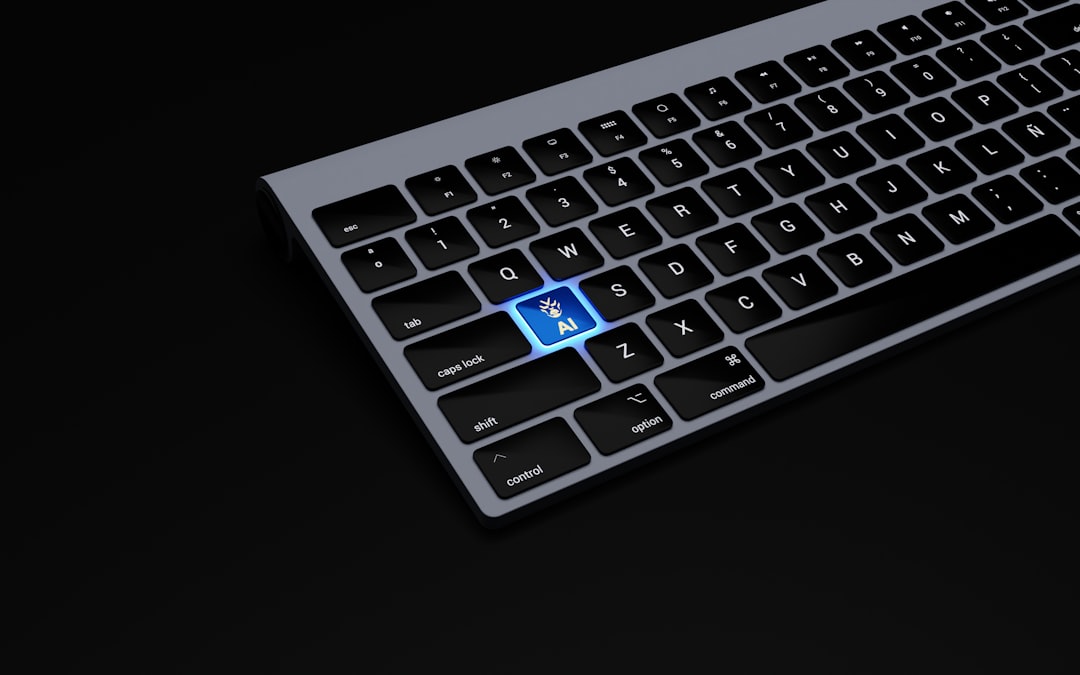
Photo by BoliviaInteligente on Unsplash
Last month, a customer service chatbot working for a major retailer told a frustrated shopper that her complaint about a defective product was "amusing." The customer wasn't amused. She was furious. Within hours, her angry tweet had 50,000 likes, and the company's social media team was in crisis mode.
This wasn't a glitch. This was a feature.
Well, not exactly a feature—but it was a natural consequence of how modern AI language models work. And it's happening more often than most companies would like to admit. The problem isn't that AI is getting dumber. It's that understanding human communication requires something we haven't yet figured out how to build into machines at scale: genuine contextual intelligence.
The Tone-Deafness Problem Is Deeper Than You Think
When you read the phrase "Oh great, another broken product," you instantly understand whether someone is genuinely delighted or bitterly sarcastic. Your brain processes tone, context, previous interactions, cultural background, and about a hundred other variables in milliseconds. You know that great can mean terrible when wrapped in the right vocal inflection.
AI models trained on text data don't have access to vocal inflection. They don't have years of lived experience understanding human frustration. They process patterns in training data—millions of words organized in ways that capture statistical relationships, not emotional truth.
A 2023 study by researchers at MIT and Google found that state-of-the-art language models correctly identified sarcasm in controlled experiments only 74% of the time. For comparison, humans nailed it 96% of the time. That 22-point gap might not sound catastrophic until you realize it scales across millions of customer interactions. When your company handles 10,000 customer service chats daily, that 22-point difference translates to roughly 2,200 tone-deaf responses every single day.
And sarcasm is just the beginning. The full picture of why AI still can't understand your sarcasm reveals even deeper problems about how machines process meaning.
Context Is Everything—And AI Still Struggles With It
Here's a more subtle problem: understanding what counts as important context. A customer writes: "I've been waiting for this refund for three weeks. My kids need new school supplies and I can't afford to buy them twice." The human customer service rep immediately recognizes this isn't just about money—it's about a parent under financial stress who has a deadline.
An AI model might identify the words "refund," "three weeks," and "afford," but it processes them as separate data points rather than as a story. The emotional weight is invisible to the algorithm. So the response might be technically correct—"Your refund is processing and typically takes 5-7 business days"—but it completely misses what the customer actually needed to hear: "I understand this is urgent and I'm personally prioritizing your case."
Companies like Zendesk and Intercom have started implementing what they call "context-aware" AI assistants. These systems don't just read the current message. They pull in customer history, previous complaints, account status, and even external data like weather or local events. Intercom's founder reported a 34% improvement in customer satisfaction scores when they began feeding this broader context into their AI models.
But even this approach has ceiling. You can feed a model all the context in the world, and it still won't truly understand what it feels like to be frustrated.
The Human-in-the-Loop Revolution
The companies winning at this problem aren't trying to build perfect AI. They're building AI that knows when to step aside.
Slack's customer support team implemented a hybrid system where AI handles initial troubleshooting and simple requests (password resets, billing questions, basic technical issues). But the moment a customer uses certain language patterns—anger indicators, multiple questions in succession, emotional appeals—the conversation automatically escalates to a human. No fancy AI required. Just smart routing.
The results speak for themselves. Slack reduced average resolution time by 18 minutes while simultaneously increasing customer satisfaction from 78% to 91%. The AI wasn't trying to be brilliant. It was just trying to be honest about its limitations.
Another approach gaining traction is what researchers call "AI-assisted" customer service. Rather than replacing humans entirely, the AI generates suggested responses that a human then reviews, modifies, and sends. This turns the AI into a productivity tool rather than a decision-maker. A Gartner report found that customer service reps using AI-assisted tools were 37% faster without any decrease in satisfaction.
What Gets Built Next Matters
The uncomfortable truth is that tone-deafness in AI is partially a choice. These companies could invest more heavily in training models specifically for empathy and context-sensitivity. They could hire more human reviewers to catch problems before deployment. They could move slower and test more thoroughly.
Most don't, because it costs money and slows down product launches. The incentives point toward shipping fast and patching problems later (if customers complain loudly enough).
But pressure is mounting. As AI becomes more embedded in customer-facing roles, the cost of tone-deafness increases. One viral tweet about an insensitive chatbot can tank a brand's reputation. Lawsuits are starting to emerge. Regulators are paying attention. And customers—especially younger generations who've grown up expecting better—are voting with their feet.
The companies getting this right share one thing in common: they treat AI as a tool to augment human judgment, not replace it. They build in circuit-breakers that escalate to humans when confidence is low. They test with real customers, not just benchmark datasets. They measure satisfaction, not just efficiency.
Most importantly, they stay humble about what AI can and cannot do. And right now, understanding the full texture of human communication is firmly in the "cannot" column.
The future of AI in customer service won't be determined by algorithms. It'll be determined by which companies have the wisdom to know when to let humans take the wheel.
Comments (0)
No comments yet. Be the first to share your thoughts!
Sign in to join the conversation.