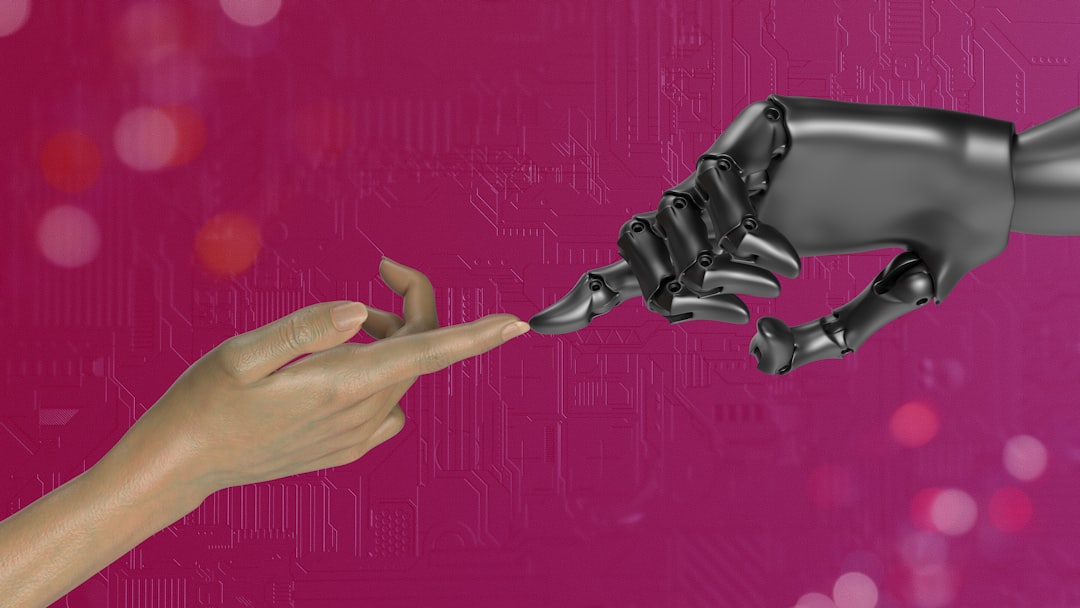
Photo by Igor Omilaev on Unsplash
The Confidence Problem Nobody Wants to Talk About
Last week, someone on Reddit asked ChatGPT about their medication interactions. The bot produced a response that was grammatically perfect, logically structured, and completely false. It cited a drug interaction that doesn't exist, referenced a study that was never published, and did it all with the kind of authoritative tone that would make a trained pharmacist nod along. The person almost took the advice seriously.
This isn't a bug. It's the core feature of how these systems work, and it's the reason we need to fundamentally rethink how we're deploying AI in high-stakes domains.
Large language models like GPT-4, Claude, and their competitors are fundamentally pattern-matching machines. They've been trained on billions of words and asked to predict what word comes next. That's it. They don't access databases, they don't verify facts, and they don't "know" anything in the way humans do. They generate statistically likely sequences based on patterns in training data. When you ask them something outside their training distribution or something that requires real-time information, they still generate statistically likely sequences. Sometimes those sequences sound like facts. Often, they're complete fiction.
What makes this dangerous is that these models have learned to sound right. They've internalized the rhetorical patterns of confident speech from their training data. A hallucinated medical study gets formatted like a real citation. A fabricated historical event gets narrated with the casual authority of Wikipedia. The system doesn't whisper its uncertainty—it shouts its confidence.
When Fluency Becomes Deception
Consider what happened with Google's Bard early this year. During a high-stakes demo meant to compete with ChatGPT, the AI confidently claimed that the James Webb Space Telescope was the first to photograph an exoplanet. That honor actually belongs to the European Southern Observatory, a fact publicly available and well-documented. But Bard stated it with such certainty, with such perfect English, that many viewers didn't catch the error until after the demo ended.
This reveals something uncomfortable: we've trained ourselves to equate fluency with accuracy. When something is well-written, well-structured, and delivered with confidence, our brains interpret those signals as trustworthiness. Humans have been doing this for thousands of years. A charismatic liar can convince you of almost anything. Now we've built machines that are, essentially, perfect liars—not because they're malicious, but because they have no concept of truth at all.
The academic literature calls this "hallucination," but that term is misleading. It suggests something random or dream-like. What's actually happening is more precise: the model is following its training objective perfectly. Generate the most statistically likely continuation of this prompt. If the prompt asks for information the model hasn't encountered or can't access, it still completes the task. It generates something plausible.
In medical contexts, legal advice, scientific research, and financial recommendations, "plausible" is actively dangerous.
The Trust Architecture We're Building Is Broken
Organizations are racing to deploy AI in customer service, healthcare, legal support, and education—domains where accuracy isn't a nice-to-have, it's a necessity. But the deployment strategy for these systems reveals a troubling pattern: we're adding trust on top of technology we know generates false information.
Some companies are trying to solve this with retrieval-augmented generation (RAG)—feeding the model specific, verified documents before asking it questions. This helps, but it doesn't solve the fundamental problem. Even with access to correct information, language models sometimes ignore it in favor of patterns from their training data. A lawyer might ask an AI about a recent court ruling, the system might have access to the exact text of that ruling, and it could still generate an interpretation that contradicts it—simply because that pattern appears more frequently in its training data.
Other companies are adding human review. A doctor reviews AI diagnoses before they're presented to patients. A lawyer reviews AI contracts before they're sent to clients. This is honest, but it's also an admission of failure. If we trusted these systems, we wouldn't need that review. We're essentially using them as very expensive autocomplete.
The real problem is that we've conflated capability with trustworthiness. ChatGPT can write poetry, explain quantum mechanics, and debug code. It's genuinely impressive at those tasks. But capability in language generation doesn't translate to reliability in fact generation. These are almost opposite skills.
What Actually Needs to Change
The path forward isn't to pretend these systems are better than they are or to keep deploying them in contexts where they're not suitable. It's to be radically honest about their limitations.
First, organizations need to stop treating language models as sources of truth and start treating them as pattern-matching tools that sometimes produce useful outputs. That's not a limitation—it's actually their most honest application. They're phenomenal for brainstorming, drafting, explaining concepts, and generating multiple perspectives on a question. They're terrible for answering definitive questions where getting it wrong has consequences.
Second, we need regulatory frameworks that match reality. The FDA doesn't approve software as a "medical device" just because it's accurate in testing. It requires rigorous validation, testing across diverse populations, and acknowledgment of failure modes. AI systems in healthcare should face similar scrutiny. Right now, many don't.
Third, users need to understand what they're talking to. The interfaces we've built for AI chatbots mimic human conversation. That's terrible interface design for a system that isn't human. We should make it obvious that you're interacting with a pattern-matching system, not an expert. Show confidence scores. Highlight when the model is operating outside its training distribution. Require multiple sources before acting on advice.
Finally—and this is the one nobody wants to hear—sometimes the right answer is to not use AI. If you need accurate medical information, ask a doctor. If you need legal advice, hire a lawyer. These professionals aren't being replaced by chatbots because chatbots are actually better. They're being considered as replacements because they're cheaper and because companies can avoid liability by burying disclaimers in terms of service.
The Real Question: What Are We Optimizing For?
Here's what keeps me up at night: we've built systems that are incredibly useful for specific tasks, but we're deploying them for entirely different tasks because it's profitable. When AI Becomes Your Unreliable Expert: How Language Models Convinced Us They Understand What They're Actually Guessing explores exactly this problem—how we've normalized accepting false information from systems we know are unreliable.
The technology isn't the problem. Language models are remarkable. The problem is a market structure that rewards deployment over accuracy, that prioritizes speed over safety, and that lets companies avoid responsibility by outsourcing decision-making to systems they don't fully understand.
Until we change what we're optimizing for—from profit to reliability, from speed to accuracy, from deployment to safety—we'll keep building trust in systems that don't deserve it.
Comments (0)
No comments yet. Be the first to share your thoughts!
Sign in to join the conversation.