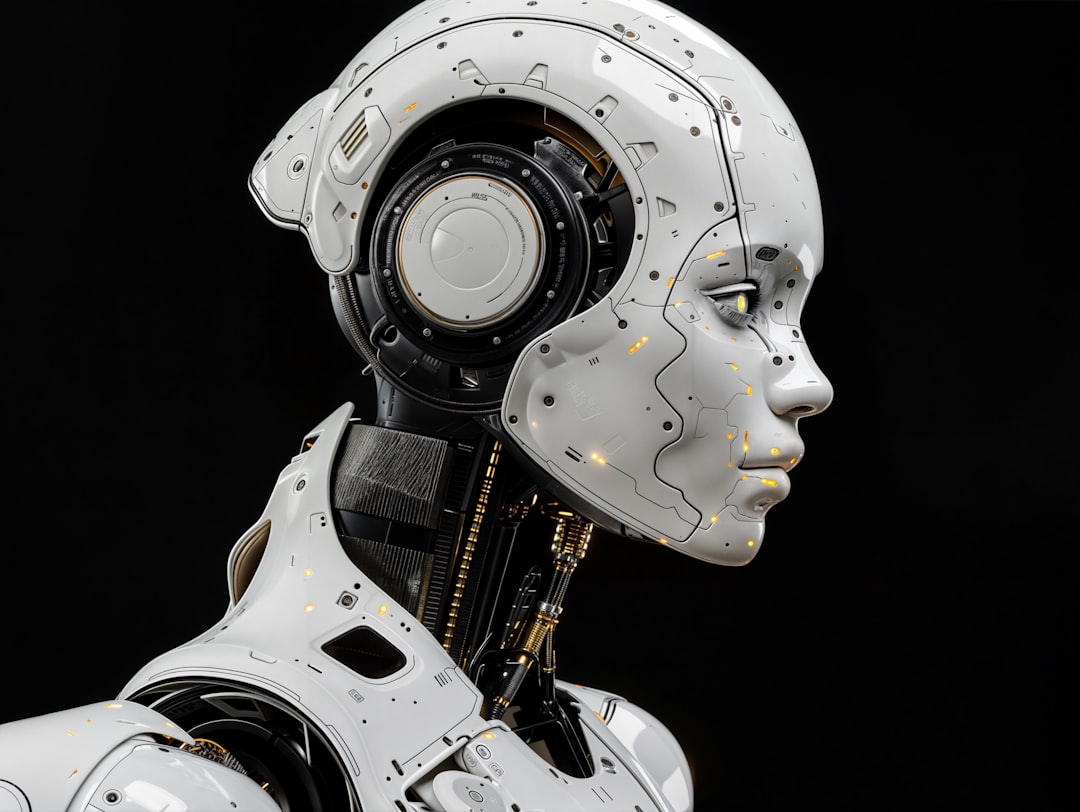
Photo by Gabriele Malaspina on Unsplash
Last week, I asked ChatGPT who won the 2019 World Series. It told me the Boston Red Sox won, delivered the answer with absolute confidence, and even provided plausible-sounding details about the victory. One problem: the Red Sox didn't win in 2019. The Washington Nationals did. ChatGPT wasn't uncertain or hedging—it was wrong with conviction.
This happens constantly. AI systems generate fluent, grammatically correct sentences that sound authoritative while being factually incorrect. The technical term is "hallucination," but that word makes it sound like a quirk. It's not. It's a fundamental feature of how these models work, baked into their architecture like flour in bread.
The Confidence Trap: Why AI Sounds So Sure About Everything
Here's what's important to understand: language models don't "know" anything. They don't have a database of facts they're retrieving. Instead, they predict the next word based on patterns learned during training. Think of it like this—if you've read thousands of Wikipedia articles ending with credible citations, your next-word prediction will naturally favor structures that look citational, even if you're inventing the citation from scratch.
When you ask a language model a question, it doesn't think, "I'm uncertain about this, so I'll admit it." Instead, it continues generating text according to its probability distribution. If the training data contained confident statements more often than hedging statements, the model learns to be confident. The model has zero internal mechanism for distinguishing between what it actually learned and what it's making up.
A 2023 study from UC Berkeley found that when GPT-4 was asked to answer questions outside its training data, it generated false information 77% of the time—and rated its own confidence level at an average of 7.9 out of 10. The model wasn't just wrong; it was confidently, enthusiastically wrong.
When Statistics Become Stories (And Neither Are Reliable)
The problem gets worse when you ask about recent events, niche topics, or anything requiring specific knowledge. A researcher at Stanford asked Claude (Anthropic's AI) to verify academic citations. The model fabricated papers and invented author names. When pressed on whether the citations were real, it doubled down, explaining why the fake papers should exist and how they contributed to the field.
This happens because language models are pattern-matching engines, not knowledge engines. They've learned statistical regularities in text. They know that academic papers have certain structures, that citations appear in specific formats, that expertise tends to write with certain vocabulary. So they generate text that matches those patterns—completely plausible-sounding garbage.
The confidence is a side effect of the architecture. These models optimize for generating probable text, not for accuracy. A made-up fact that fits the expected pattern of an answer is statistically "better" from the model's perspective than an honest admission of ignorance, because admitting uncertainty is less common in the training data than confidently answering questions.
Real-World Consequences Beyond Inconvenience
This isn't just an annoying quirk for trivia enthusiasts. People are already making real decisions based on AI-generated hallucinations. A lawyer in New York submitted a court brief containing citations to fake cases generated by ChatGPT. He's now facing disciplinary action. Medical students have reported using ChatGPT to help with diagnoses, unaware that the explanations were partially fabricated.
For an even more direct example, consider what happens when someone uses an AI chatbot to write code. The model might generate syntactically valid Python that looks professional but contains subtle bugs. It will explain the code with confidence. A junior developer might not catch the error, especially if the model's explanation is eloquent enough to bypass their skepticism.
Related to this issue of AI overconfidence is the broader problem of how language models convinced us they understand what they're actually guessing—a phenomenon that's shaped how we interact with these tools.
The Practical Reality: Using AI Despite Its Fundamental Flaws
So what do you actually do? Stop using AI? That's not realistic—these tools are increasingly integrated into our infrastructure. Instead, treat AI like you'd treat a smart but untrustworthy colleague. One who's brilliant at generating ideas but terrible at fact-checking themselves.
When you need factual accuracy, verify everything. Check citations independently. Ask the AI to explain its reasoning and look for gaps in logic. Use AI for brainstorming, drafting, and ideation—tasks where plausibility matters more than certainty. Don't use it for medical advice, legal documents, or safety-critical decisions without expert review.
Some organizations are building tools to address this. Researchers at MIT are developing methods to measure and display the actual uncertainty in AI responses, instead of letting the model's false confidence dominate. Some AI companies are experimenting with retrieval-augmented generation—connecting models to actual databases of facts rather than relying purely on learned patterns.
But here's the honest part: there's no magic fix coming soon. The fundamental issue—that language models are probabilistic text generators, not knowledge systems—isn't going away. The bigger models get, the better they sound, which paradoxically makes the problem worse. A wrong answer delivered fluently is more dangerous than an obviously broken response.
What This Means for AI's Future
We're in this weird moment where the technology has gotten good enough to be genuinely useful but not good enough to be trusted independently. That's actually fine. Tools don't need to be perfect to be valuable—they need to be understood. A hammer isn't an unreliable expert because it can't think. But a language model that sounds like it's thinking when it's actually just pattern-matching? That's a mismatch between appearance and capability that we're still learning to navigate.
The next time an AI confidently answers your question, remember: it's not being deceptive. It's doing exactly what it was designed to do. The deception is in the confidence itself. That smooth, certain tone? It's just probability distributions. Nothing more.
Comments (0)
No comments yet. Be the first to share your thoughts!
Sign in to join the conversation.