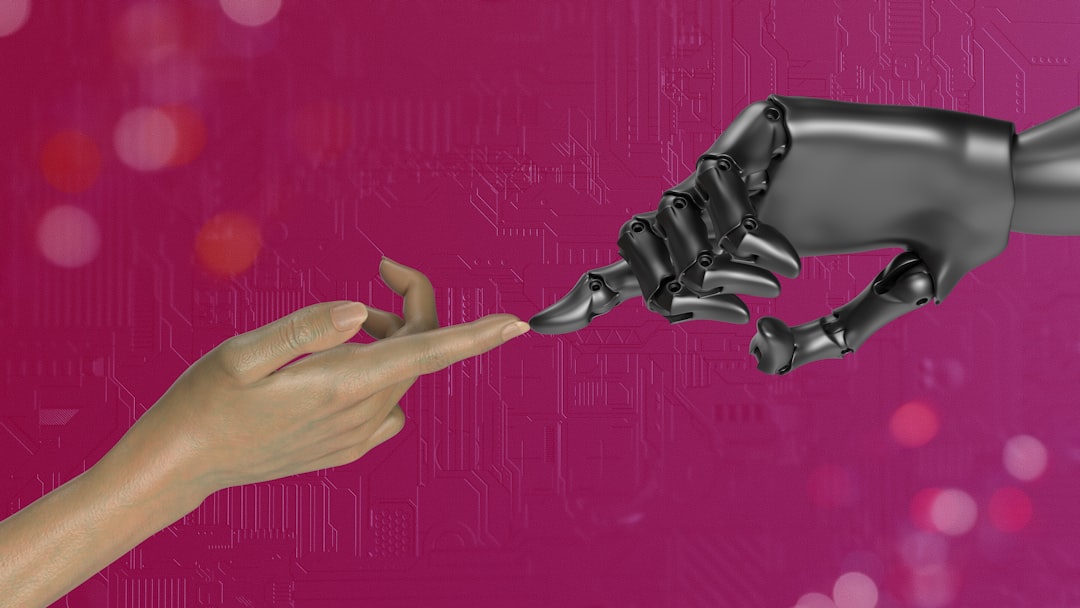
Photo by Igor Omilaev on Unsplash
If you've spent any time with AI image generators, you've seen it. You ask for a portrait and get back a hand with seven fingers. You request a family photo and receive a disturbing anatomical horror show. It's become the internet's favorite punchline about artificial intelligence: these systems can't count.
But here's the thing that makes this problem genuinely interesting—it's not actually about counting at all.
The Hand Problem That Nobody Expected
When DALL-E first emerged in 2021, the finger issue was immediate and pervasive. By the time Midjourney and Stable Diffusion launched, people weren't even surprised anymore. They'd just learned to phrase prompts with explicit requests like "five fingers, five fingers, five fingers" like some kind of incantation to ward off digital polydactyly.
The phenomenon got so notorious that it became a reliable test for spotting AI-generated images. AI researcher Yonatan Belinkov actually studied this systematically, finding that hands appeared correctly in only about 50-60% of human-generated images in training datasets. That's way worse than you'd expect given that humans have been drawing hands for thousands of years.
But why hands specifically? Why not faces, which are far more complex? Why not feet, which are arguably even harder to render? The answer reveals something peculiar about how these image models actually work.
It's Not Math, It's Density and Occlusion
Here's where it gets weird: the problem isn't mathematical reasoning. These models don't count. They don't possess a symbolic number system sitting somewhere in their neural networks ready to ensure 5 + 0 = 5.
What they do is pattern matching at an absurdly sophisticated scale. Stable Diffusion was trained on 512 million image-text pairs from the Common Crawl dataset. That's a lot of hands, sure. But hands in images are also geometrically difficult in ways we don't usually think about.
When you have a hand resting naturally against someone's body, fingers overlap. They occlude each other. The spatial relationships become ambiguous. From certain angles, you genuinely cannot see all five fingers without X-ray vision. The model's training data reflects this reality: many hand images don't show all five fingers clearly separated.
Add in the fact that hands are small regions in images, making them statistically less represented in the training data than, say, faces. Hands also appear in wildly different poses, sizes, and lighting conditions. The model has to learn from a messier, more ambiguous distribution of examples.
So when generating an image, the model isn't thinking "this person needs five fingers." It's predicting the next pixel based on statistical patterns. When those patterns are ambiguous—when the training data shows hands with varying numbers of visible fingers—the model occasionally generates extra digits. It's solving the immediate local problem (what color should this pixel be?) without maintaining global coherence.
The Real Lesson Hidden in the Failure
The finger problem actually teaches us something crucial about current AI limitations that matters far beyond image generation. These models are fundamentally local pattern matchers. They're brilliant at interpolating from training data, at finding statistical regularities across billions of examples. But they don't maintain abstract rules or global constraints.
This is why AI chatbots sound confidently wrong about verifiable facts—they're not reasoning about truth in an abstract sense. They're predicting the next token based on what usually comes next in human text, and sometimes the statistical regularities of human language don't align with truth.
The same limitation that causes a hands to sprout extra fingers causes language models to confidently invent citations that sound real. The same architectural choices that make images locally coherent but globally incoherent make these systems unreliable for tasks requiring explicit, enforceable rules.
Where We Stand Now (It's Better, But...)
The latest generation of image models have gotten substantially better at hands. Midjourney v6 produces anatomically correct hands far more consistently than version 3. This improvement came from better training data curation, architectural improvements, and massive increases in computational resources—not from the models learning to count.
But the fundamental issue persists. You still see occasional weirdness in complex images. You still see six-fingered hands pop up in edge cases. The models are better statistical interpolators than they used to be, but they're not reasoning about constraints in the way humans are implicitly thinking about them.
Why This Matters Beyond Aesthetics
The hand problem isn't just a funny quirk worth mocking. It's a window into a fundamental limit of current AI systems. As we deploy these models for increasingly important tasks—medical imaging, autonomous vehicles, safety-critical systems—we need to understand that they can fail in ways that seem obviously wrong to humans.
A model that can write convincing essays but can't maintain the constraint that a person has ten fingers is a model that needs human oversight. It's powerful but not in the way we might hope. Understanding that distinction might be more valuable than any perfect image ever generated.
Comments (0)
No comments yet. Be the first to share your thoughts!
Sign in to join the conversation.