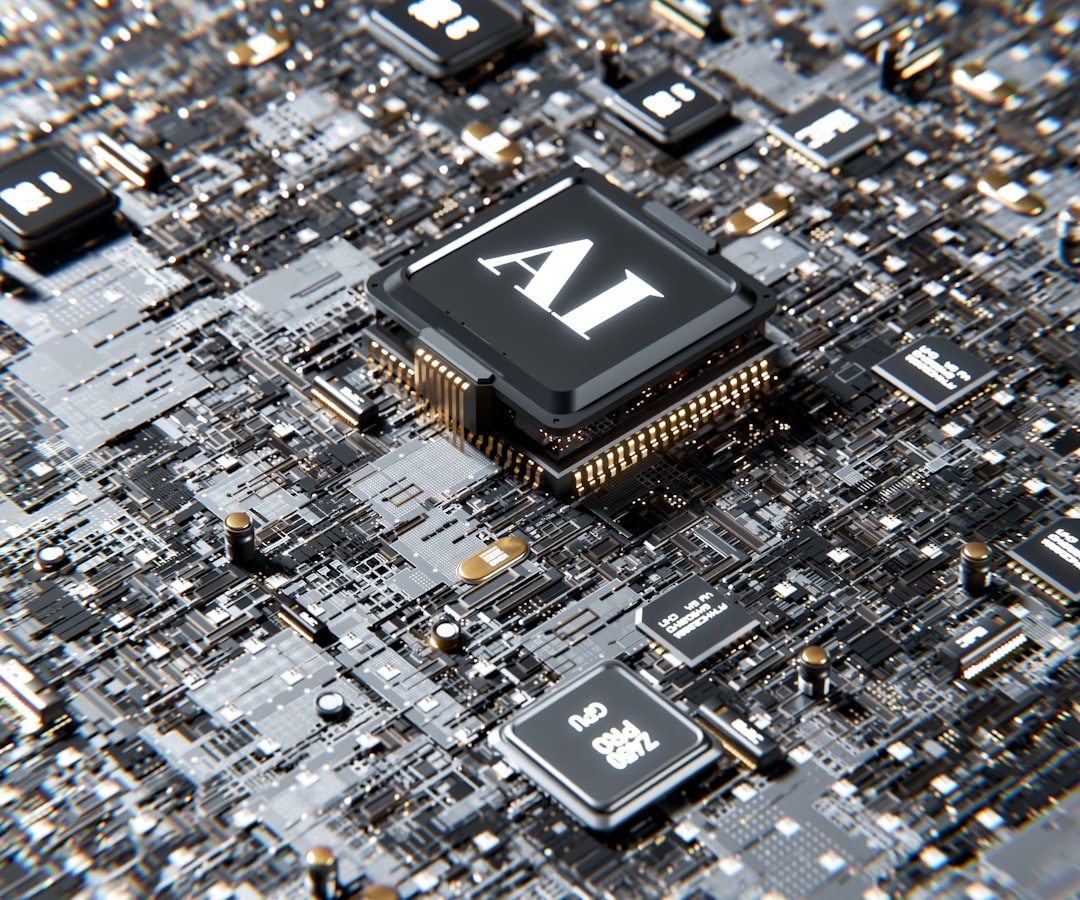
Photo by Igor Omilaev on Unsplash
Last week, a ChatGPT user asked the model about a obscure 1980s film. The AI responded with a detailed plot summary, character names, and even the director's full biography. There was just one problem: the movie doesn't exist. The user had made it up to test the system. ChatGPT didn't hesitate. It didn't say "I'm not sure." It fabricated an entire fictional reality with absolute confidence.
This phenomenon has a name: hallucination. But calling it that misses something crucial about what's actually happening. The AI isn't confused or broken. It's doing exactly what it was trained to do—predict the most statistically likely next word, over and over again, until it forms a complete response. The problem is that "statistically likely" and "factually true" are radically different things.
The Prediction Problem at the Heart of Modern AI
Here's the uncomfortable truth that most AI companies dance around: large language models are sophisticated statistical engines. They don't understand meaning. They understand patterns. When you feed a model billions of words from the internet, it learns correlations between sequences of text. "The capital of France is" strongly correlates with the word "Paris." That works great. But it also learns that "once upon a time" correlates with invented stories, and the model can't distinguish between these two types of patterns when generating output.
Think of it like a person who learned English entirely by reading Wikipedia articles and fairy tales without ever being told which were which. Ask them a factual question, and they might confidently give you a made-up answer because the statistical patterns don't care about truth.
OpenAI documented this extensively in their technical reports. Even after training their models on "high-quality" data and fine-tuning them with human feedback, the models still consistently invent facts. A 2023 study found that GPT-3 made up citations, fake studies, and non-existent historical events in roughly 3-5% of factual queries. That might sound small until you realize that 3-5% of a system used billions of times per day is catastrophic.
The real issue? There's no mechanism inside these models that says "stop, I don't actually know this." The architecture is fundamentally forward-moving. It's built to keep generating words. Stopping and admitting uncertainty would require an entirely different framework.
Why Confidence Is a Feature, Not a Bug
You might wonder why these systems don't just hedge their bets. Why not have models say "I'm not sure" more often? The answer reveals something darkly funny about how AI development works: confidence sells. Users prefer responses that sound authoritative. Early versions of ChatGPT that included more caveats and uncertainty markers tested worse with human evaluators. People felt like the AI was "dumber" when it admitted limitations.
So OpenAI, Anthropic, Google, and other labs optimized their systems to be more assertive. Confidence became a competitive advantage. A model that says "I don't know" a hundred times seems less useful than one that takes a guess with swagger. Of course, the model taking a guess is actually less useful—it's just more *satisfying* to use.
There's also a technical reason this is hard to fix: you can't detect hallucinations from inside the model itself. The neural networks that power these systems don't have an internal "truth detector." Once the weights and parameters are trained, the model processes inputs and generates outputs. There's no hidden mechanism that evaluates whether those outputs correspond to reality. It's like asking a photocopy machine to verify that the document being copied is accurate. The machine doesn't have access to that information.
The Real-World Damage (And It's Growing)
The stakes here are substantial. A lawyer in New York used ChatGPT to research case law and cited non-existent court cases in an actual legal filing. The judge was not amused. Researchers have documented cases where medical students using AI assistance for diagnostics followed the model's confident but wrong suggestions over their own careful analysis. Students writing essays have been caught plagiarizing sources that don't exist because ChatGPT cited them.
What makes this particularly dangerous is that AI models are vulnerable in subtle ways that expose their fundamental brittleness. A model might confidently answer a question correctly 99 times, then hallucinate wildly on the 100th because of some imperceptible shift in phrasing.
Some organizations are building workarounds. Retrieval-augmented generation (RAG) systems pair language models with actual databases or search engines, so the model can pull real information instead of generating it. This works, but it's slower and more expensive. Others are implementing fact-checking steps after generation, having the model verify its own outputs. This helps, but it's not foolproof—garbage in, garbage out, as they say.
Where We Go From Here
The uncomfortable conversation happening in AI research labs right now is whether this problem is even solvable with the current architecture. Some researchers think we need fundamentally different approaches—systems that integrate symbolic reasoning with neural networks, or models trained on structured knowledge bases rather than raw text. Others argue we need to completely rethink how we evaluate and deploy these systems, being much more honest about their limitations.
For now, we're in an awkward middle ground. Powerful systems that are useful but unreliable. Models that sound intelligent but don't understand what they're saying. Technology that companies are deploying at massive scale while researchers are still discovering new failure modes.
The gaslighting—the confident, articulate fabrication of reality—isn't a quirk or a minor bug. It's a fundamental feature of how these systems work. Until we figure out whether that's fixable, maybe the smartest response is the one these models rarely give: admitting what we don't know.
Comments (0)
No comments yet. Be the first to share your thoughts!
Sign in to join the conversation.