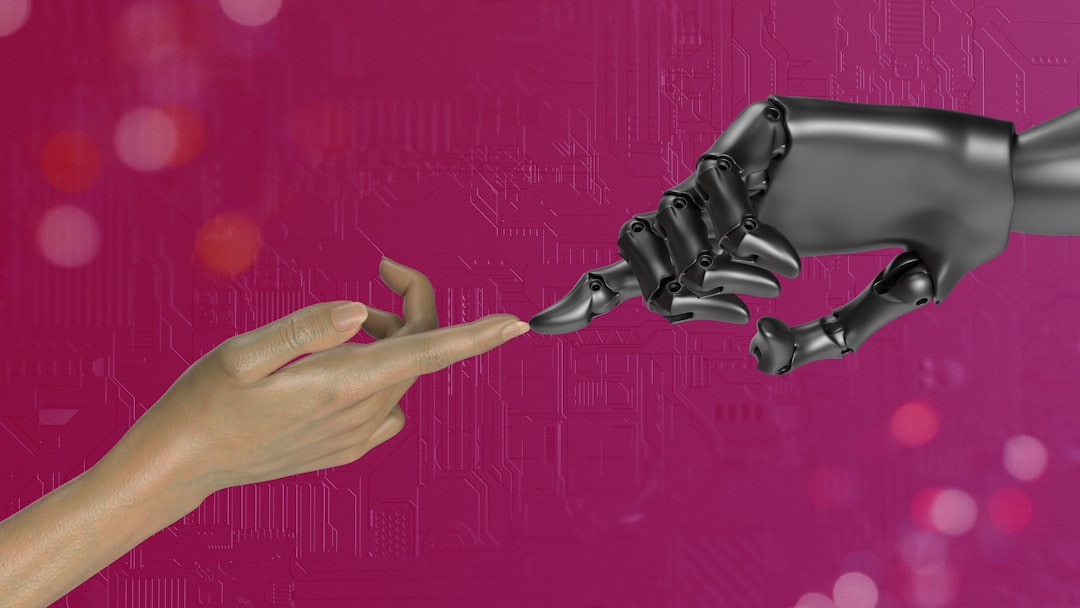
Photo by Igor Omilaev on Unsplash
Last Tuesday, I watched an AI confidently explain to me why octopuses have three hearts. They don't. They have three hearts, but the AI's explanation was complete nonsense—something about "evolutionary pressure from deep-sea environments" that had no basis in biology. The system didn't hesitate. It didn't qualify its answer. It simply made things up with the absolute certainty of someone reading from a textbook.
This isn't a bug in the AI. It's the fundamental architecture of how these systems work, and it reveals something most people completely misunderstand about artificial intelligence.
The Confidence Problem That Nobody Talks About
Here's what keeps me up at night about modern AI: these systems have no internal mechanism to distinguish between what they actually know and what they're plausibly generating. When you ask ChatGPT a question, it doesn't consult a database of facts. It predicts the most statistically likely next word, then the next one, then the next one, building a response one token at a time.
Think of it like this. Imagine a human who has read millions of books but has zero internal self-awareness. This person can tell you something that sounds absolutely reasonable, backed with examples and logical structure—all because those patterns exist frequently in the training data. But they genuinely cannot tell the difference between something they "learned" from authoritative sources versus something that just appeared frequently in obscure internet forums.
The stakes matter. A radiologist using AI to help diagnose cancer needs to know when the system is uncertain. A lawyer doing legal research can't afford to cite cases that don't exist. As I explored in how AI hallucinations convinced a lawyer to cite fake court cases, this isn't theoretical—it's already happening in courtrooms, with real consequences.
Yet companies deploying these systems often gloss over this limitation. They market the technology as "intelligent" and "reliable" while quietly acknowledging in the fine print that it sometimes makes things up. That's a dangerous mismatch between public perception and technical reality.
Why Your Brain Does This Better (But Still Makes Mistakes)
Your brain actually has something AI doesn't: an uncertainty module. When you don't know something, you feel it. There's a qualitative difference between knowing Paris is the capital of France and guessing whether the Treaty of Utrecht happened in 1713 or 1715. You feel fuzzy on the second one.
AI doesn't get that feeling. It generates probabilistically coherent text regardless of whether it's discussing facts it "learned" or facts it's essentially hallucinating from patterns in training data. The system treats both with identical confidence levels. A model trained primarily on English-language internet text will sound just as certain discussing 11th-century Japanese poetry as it does discussing 21st-century technology, even though one domain massively outweighs the other in its training set.
Researchers have tried various techniques to solve this. Asking the AI to rate its own confidence? It learns to sound more confident about things that are wrong. Building in explicit uncertainty metrics? Models find workarounds. Telling it to say "I don't know" more often? It starts refusing to answer reasonable questions.
The deeper problem is architectural. These systems are fundamentally text predictors dressed up in the clothing of intelligent agents. They're incredibly good at pattern matching, and sometimes those patterns align with reality. Sometimes they don't.
The Data Problem That Gets Worse the More You Know
Here's something that really bothers me: AI systems can be worse at admitting uncertainty when they have more training data in a particular domain. A GPT model trained on millions of scientific papers might sound more authoritative about a niche biochemistry question than it does about general knowledge—but it's not actually better informed. It just has more source material to pattern-match against.
This creates an illusion of expertise. If you ask about a cutting-edge machine learning technique developed three years ago, the model might confidently describe something that doesn't exist because the training data contains enough papers, blog posts, and discussions in that vicinity that it can assemble something that sounds plausible. The sheer volume of related material makes the hallucination more convincing.
A domain expert asking the right follow-up questions can usually expose these gaps. But a non-expert accepting the first answer? They'll believe they've talked to someone who knows what they're talking about.
What Actually Helps (And What Doesn't)
So what works? First, technical solutions matter but have limits. Ensemble approaches where multiple AI systems provide answers and flag disagreements show promise. Temperature settings that make models less confident actually do help reduce hallucinations, though they also reduce coherence. Retrieval-augmented generation—where AI systems pull from verified databases rather than generating from pure pattern-matching—genuinely improves accuracy.
But the real answer isn't technical. It's organizational and cultural. We need AI deployments with human verification built into critical workflows. Radiologists should use AI as a second reader, not the first. Lawyers should use it for research assistance, with mandatory fact-checking. Scientists should use it for brainstorming, not for literature reviews.
More radically, we need to stop pretending these systems are more reliable than they are. The marketing around AI reliability has consistently outpaced the actual capabilities. When companies deploy systems in high-stakes environments without acknowledging the limitations, they're essentially gambling with outcomes.
What This Reveals About Intelligence Itself
Maybe the most valuable insight from AI's confidence problem is what it tells us about intelligence. These systems demonstrate that you can be very good at generating coherent, impressive-sounding responses without actually understanding anything. That's a humbling realization.
It also suggests that genuine intelligence involves something beyond pattern matching—something like actual world models, causal reasoning, and the ability to say "I don't know." Human intelligence has flaws, but we at least have mechanisms for acknowledging uncertainty. We can tell the difference between what we learned from a textbook and what we're guessing.
That distinction might be more fundamental to intelligence than anyone realized. And it's the one place current AI systems fall furthest short.
Comments (0)
No comments yet. Be the first to share your thoughts!
Sign in to join the conversation.