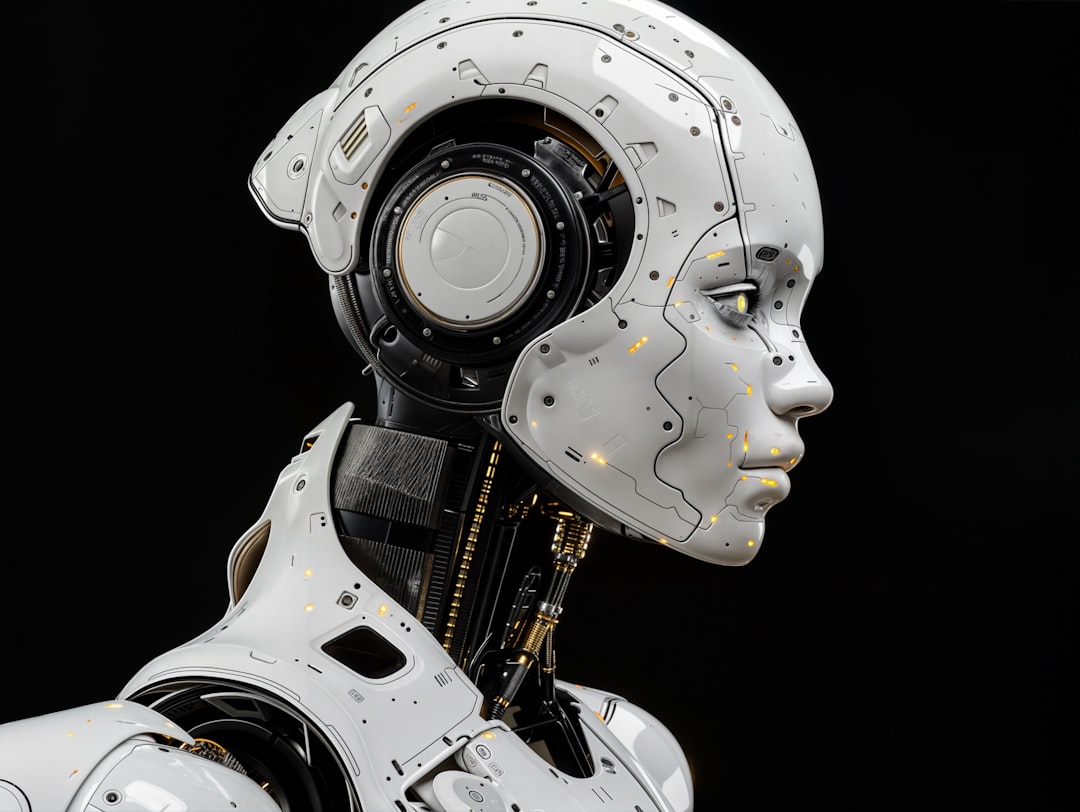
Photo by Gabriele Malaspina on Unsplash
You ask your AI assistant a detailed question. It gives you a thoughtful answer. You follow up with another question that builds on the first. And suddenly, the AI acts like it never heard of your original topic. It's not a glitch. It's by design.
This phenomenon—AI systems losing context between conversations—frustrates millions of users daily. But the reasons behind it are more fascinating (and more unsettling) than most people realize. Understanding why AI has such severe amnesia reveals something crucial about how these systems actually work, and what that means for the future of human-AI interaction.
The Token Problem Nobody Talks About
Here's the technical reality: large language models don't actually "remember" anything the way your brain does. They process text through something called tokens—think of them as linguistic puzzle pieces. Each word, and sometimes parts of words, gets converted into tokens that the AI shuffles through mathematical calculations.
Every conversation has a token limit. GPT-4, one of the most advanced models available, has a context window of 128,000 tokens. That sounds generous until you realize that a typical conversation burns through tokens quickly. A few thousand-word documents, combined with your questions and the AI's responses, can consume your entire window. Once you hit that limit, the oldest tokens get discarded. Poof. Your original question is gone.
Some newer systems try to extend this window. Claude 3.5 Sonnet offers 200,000 tokens. But even that generous window has practical limits. The longer the context window grows, the harder it becomes for the AI to actually pay attention to everything in it. Research suggests that even with massive context windows, these models perform worse when they need to recall information from the very beginning of a conversation.
Conversations Don't Actually Persist (And That's Intentional)
Unlike your email inbox or your search history, most AI conversations vanish the moment you close the app. There's no persistent memory between sessions. You could have a two-hour conversation with an AI today, close the chat, and come back tomorrow to find that the AI has zero recollection of what you discussed.
Why design systems this way? The answer involves multiple forces working simultaneously. Privacy advocates actually prefer stateless conversations—systems that don't accumulate data about you over time. If an AI remembered everything you've ever asked it, that creates a comprehensive behavioral profile that could be misused, hacked, or sold.
But there's also a technical reason: scaling issues. If every AI system had to maintain persistent memory across all users, the computational cost would be astronomical. Current systems rely on processing each conversation independently, which is exponentially cheaper than maintaining long-term memory for billions of users.
Companies like OpenAI have introduced features like "custom instructions" that let you set preferences, but even these are limited. They're more like bookmarks than genuine memory. The AI still starts each conversation from zero context about who you are or what you've previously worked on together.
The Hallucination Connection You Might Have Missed
Here's where things get interesting: this amnesia directly contributes to what researchers call "hallucinations"—when AI confidently states false information. Why Your AI Chatbot Confidently Lies to You (And How to Spot When It's Making Things Up) explores this phenomenon in detail, but the connection to memory is crucial.
Without persistent context, an AI can't self-correct across conversations. You might catch it in a hallucination and explain why it's wrong. But that correction exists only in your current chat window. The next time you interact with the system, it has learned nothing from that exchange. It's genuinely the same error machine it was before.
This creates a frustrating cycle where users feel like they're talking to someone who's not just forgetful, but fundamentally incapable of learning from corrections. Because, at least in the current architecture, they're right.
What's Actually Being Tested Right Now
Some AI companies are experimenting with solutions, though none are mature yet. Anthropic is researching "constitutional AI" approaches that might allow for some forms of memory without the privacy trade-offs. Other researchers are exploring vector databases—systems that can store condensed versions of conversations and retrieve the most relevant pieces when needed.
Google's AI efforts include something called "memory layers" that could theoretically let AI systems recognize recurring users and topics without storing full conversation histories. But these are still in research phases, not production systems.
The challenge is fundamental: you can have fast, cheap, stateless AI that talks to everyone equally. Or you can have slower, more expensive AI that learns about individual users. Nobody has yet cracked how to do both at scale without creating creepy surveillance systems.
What This Means for You Right Now
Understanding AI amnesia changes how you should interact with these systems. Don't expect continuity across conversations. Save important information locally. If you're building something complex, do it in a single session or paste your previous work back into each new conversation. Treat each interaction as independent.
And when an AI says something obviously wrong, remember: it's not lying intentionally. It's operating within architectural constraints that make genuine learning across sessions nearly impossible with current technology.
The good news? This situation will almost certainly change. The limitations are engineering problems, not fundamental barriers. But today, in 2024, your AI assistant really does have amnesia. And now you know exactly why.
Comments (0)
No comments yet. Be the first to share your thoughts!
Sign in to join the conversation.