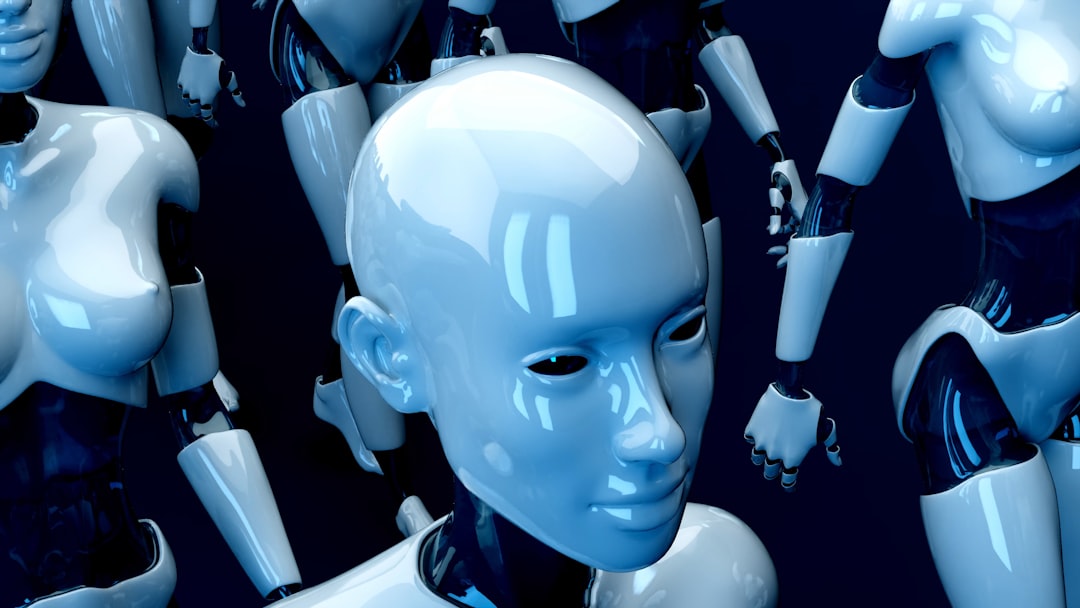
Photo by julien Tromeur on Unsplash
Last Tuesday, I had a conversation with Claude about my terrible habit of losing my keys. I asked it for memory tricks. It gave me solid advice. I asked it the next day if it remembered our chat. It didn't. Not a trace.
This isn't a bug. It's the fundamental design of every major AI system operating today. These models have no persistent memory between conversations. They don't remember you. They don't remember what they told you yesterday. Each chat session is a blank slate, like meeting someone with complete amnesia every single time you talk to them.
Until very recently, this was accepted as an unsolvable problem—a quirk of how transformer models work. But a team at a startup called Rewind AI just published research suggesting that persistent AI memory might actually be achievable. And the findings are messier, more complicated, and far more interesting than anyone expected.
The Memory Problem Nobody Really Talks About
Here's the thing most AI companies don't advertise: their models operate on a radical form of amnesia. When you close a ChatGPT window, everything vanishes. When you start a new conversation, the AI has zero context about who you are, what you care about, or what you've previously discussed.
This creates absurd situations. Imagine telling your therapist something deeply personal, then coming back a week later and having to re-explain your entire life story because they have no notes, no memory, nothing. That's the current state of AI assistants.
The reason is architectural. Large language models work by processing tokens—tiny chunks of text. They generate responses by predicting what comes next based on statistical patterns learned during training. The model only "sees" the tokens in your current conversation. It doesn't have a filing system. It doesn't have a database of past interactions. It's purely mechanical pattern-matching happening in real-time.
OpenAI added conversation history to ChatGPT, but even that's just a workaround. It's basically copying and pasting your old messages into the context window alongside new questions. It's not actual memory—it's retrieval of raw data.
Why Forgetting Might Actually Be a Feature
Before you start feeling too sorry for AI, consider this: sometimes forgetting is valuable.
When you interact with a system that remembers everything, it compounds mistakes. If an AI model develops a slightly incorrect belief about you in early conversations, that error gets baked in permanently. It influences every future interaction. A human might correct their misunderstanding. An AI system with bad persistent memory just digs deeper into the error.
There's also a privacy angle. Some people actually prefer that their AI doesn't remember them across sessions. There's something less creepy about a system that forgets your embarrassing questions after you close the browser. The moment these systems have persistent memory, data storage becomes a much bigger concern. Where does that memory live? How long? Who has access?
The limitations also prevent certain kinds of manipulation. An AI that remembers everything could potentially be trained to gradually shift your opinions, preferences, or spending habits across hundreds of conversations. A forgetful AI can't execute long-term psychological influence plays.
The Rewind AI Breakthrough (And Why It's Complicated)
The Rewind AI research suggests a new approach: instead of trying to modify how transformer models work fundamentally, just add a separate memory system running alongside them.
Their prototype uses what they call "embedding-based memory"—essentially converting important information from each conversation into condensed mathematical representations and storing those summaries. When you start a new conversation, the system retrieves relevant summaries from past interactions and feeds them into the context window before processing your new question.
It sounds simple. It works reasonably well in their demos. But the research reveals hidden complexity.
First, deciding what's worth remembering is genuinely hard. Should the system remember facts? Preferences? Emotional context? Contradictions you've expressed? A person's preferences change. Do you want your AI remembering that you said you hate cilantro six months ago, even if you've changed your mind? Should it flag contradictions when you contradict yourself?
Second, compression creates distortion. When you squeeze a whole conversation into a memory vector, you lose nuance. Details get flattened. Jokes become facts. The system might remember that you mentioned your cat's name was Whiskers, but forget that you were being sarcastic.
Third, there's the escalation problem. More persistent memory means users develop stronger relationships with their AI. That sounds nice until you realize it creates dependency. People start treating these systems more like friends than tools. When the model makes a mistake, it hits differently.
What This Means for the Future
If AI memory becomes standard, the landscape shifts. Personalization gets scary-good. Your AI assistant could develop nuanced understanding of your communication style, your values, your vulnerabilities. It could be extraordinarily helpful or extraordinarily manipulative depending on how it's deployed.
The research also hints at something more philosophical: maybe the way to create AI that feels more human isn't about making it smarter or faster. Maybe it's about giving it the fundamental human capacity to remember.
Related to this challenge of AI reliability, you might want to explore why AI models hallucinate and how researchers are finally catching them red-handed—because persistent memory doesn't help if the system is confidently making things up anyway.
The next few years will be interesting. We're probably going to see persistent AI memory become a competitive feature. Different companies will implement it differently. Some will prioritize accuracy. Others will prioritize personalization. Some will prioritize user privacy by keeping memories local. Others will build creepy centralized profiles.
The conversation about whether we should give AI persistent memory is worth having now, before it becomes standard. Because once these systems start remembering, forgetting becomes a lot harder.
Comments (0)
No comments yet. Be the first to share your thoughts!
Sign in to join the conversation.