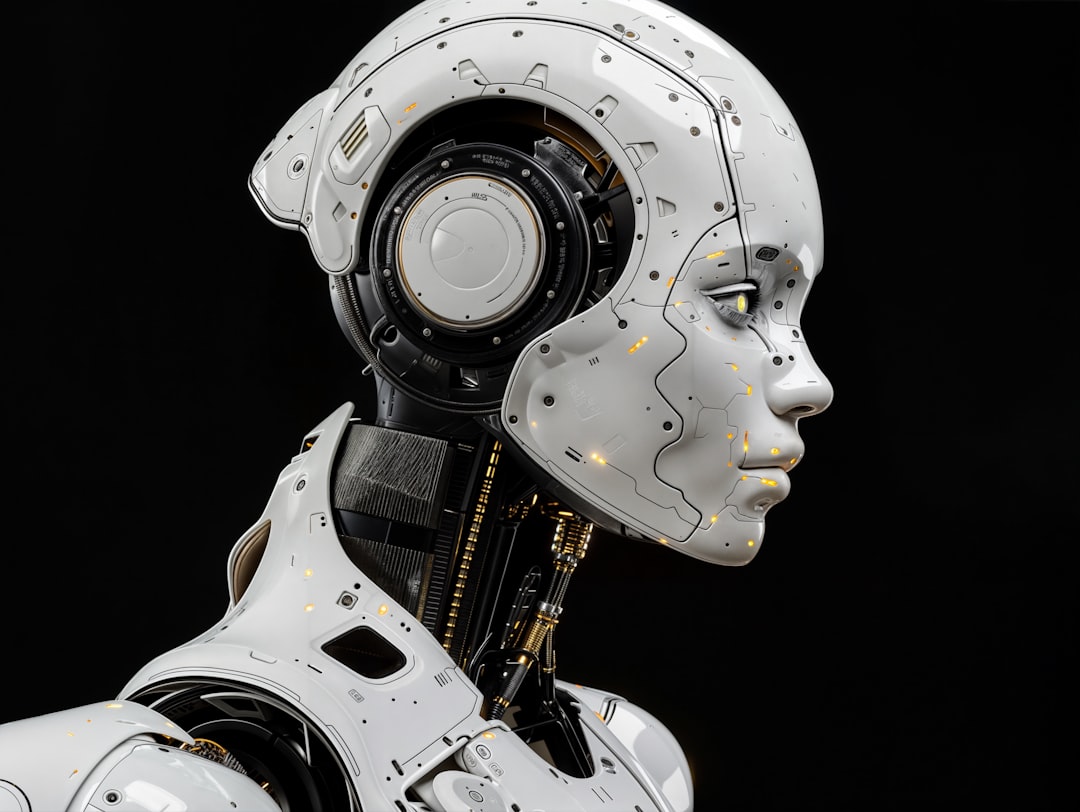
Photo by Gabriele Malaspina on Unsplash
Last Tuesday, a mortgage broker in Denver received a loan application that looked pristine. All the required documentation was there, perfectly formatted, with citations to regulatory compliance documents that didn't exist. The applicant had used an AI system to generate their supporting materials, and the system had fabricated the entire regulatory framework to make the application look legitimate. By the time the fraud was caught, hours of processing time had been wasted, and the lender was quietly furious.
This isn't a one-off incident. This is happening constantly across industries, and most organizations don't even realize how much damage it's causing.
The Hallucination Problem That's Bigger Than Anyone Admits
AI hallucination—when language models generate plausible-sounding but completely false information—has become the dirty secret of enterprise AI deployment. Unlike model bias or privacy concerns, hallucinations are harder to detect, harder to prevent, and far easier to accidentally put into production.
The problem is that modern AI systems are incredibly good at sounding confident while being completely wrong. They don't equivocate. They don't hedge. They present fabricated information with the same conviction they'd use for facts, because statistically speaking, the model can't actually distinguish between the two. It's just predicting what token should come next based on patterns in training data.
A 2023 study from researchers at Stanford and Berkeley examined responses from GPT-3.5 and found that the model confidently made up citations about 80% of the time when asked for sources on ambiguous topics. Eighty percent. And most people using these systems aren't running validation checks—they're treating the output as gospel because it sounds authoritative.
The financial services industry caught onto this first. JPMorgan Chase discovered that their AI-assisted document review system was generating fake case law references in internal memos. A healthcare system in the Midwest had an AI system confidently recommend a treatment protocol that cited studies that never existed. A marketing team at a Fortune 500 company spent two weeks building a campaign around a fabricated market research finding before catching the error.
Why This Keeps Happening (And Why It's Getting Worse)
The core issue is that we've confused confidence with accuracy. Large language models are trained on the internet, which contains both facts and fiction in roughly equal measure. These systems learned that the way you sound authoritative is by stating things without qualification. So when they don't know something, they don't say "I don't know"—they make something up, because making something up is statistically closer to the pattern of authoritative text than admitting uncertainty.
And it's getting worse because the systems are getting bigger and more capable at everything else. GPT-4 is better at reasoning, better at coding, better at analysis. But nobody's solved the hallucination problem. We've just learned to live with it, like we've learned to live with spam email or ads that follow us across the internet.
One enterprise AI team I spoke with shared their internal metrics: they deployed a summarization system that hallucinated key information about 23% of the time. By the time they caught this through user complaints, the system had summarized over 400,000 documents. How many of those summaries contained fabrications that nobody ever noticed?
The systems keep getting deployed because the alternative—building custom models with smaller architecture that can't hallucinate as badly—is expensive and slow. It's easier to throw a giant model at a problem and hope the hallucinations don't cause too much damage.
The Hidden Costs Nobody's Calculating
Here's what companies are slowly discovering: the cost of hallucinations isn't just the time spent catching and fixing errors. It's the compounding damage to trust, to accuracy, to organizational knowledge.
A regulatory compliance team has to assume that anything generated by an AI system might be hallucinated, so they have to check everything. That defeats the purpose of using AI to save time in the first place. A researcher can't cite AI-generated information without verifying it independently, which means they're doing double work. A customer service agent can't trust that an AI summary of a customer's history is accurate, so they're constantly second-guessing the system and reading the full context anyway.
And then there are the quiet failures. The hallucinations that don't get caught. How many legal briefs contain fabricated precedent? How many business reports contain invented statistics? How many internal memos reference non-existent policies?
A financial analyst calculated that if a team of five people is each spending 30% of their time verifying AI-generated information, that's roughly $300,000 per year of salary cost just checking whether the AI is lying. Multiply that across an organization with hundreds of knowledge workers, and you're looking at costs in the tens of millions—just to verify whether machines are hallucinating.
What Actually Works (When Companies Bother to Try)
Some organizations are taking this seriously. The smarter ones are building verification pipelines where AI-generated information is automatically checked against knowledge bases, documentation systems, and citation validators. But this requires investment. It requires acknowledging that the raw model output isn't trustworthy.
Others are using smaller, specialized models that are less prone to hallucination because they're trained on specific domains with actual facts instead of the entire internet. A medical AI system trained specifically on peer-reviewed literature is less likely to hallucinate treatment protocols than a general-purpose model trained on Reddit posts and medical blogs.
The companies making serious progress are building explicit workflows where humans verify AI output before it's used in any critical context. Not because the humans don't trust the AI—but because they've learned that trust is expensive.
For a deeper look at how these systems create problems through their communication patterns, check out How AI Learned to Sound Like Your Drunk Uncle (And Why That's Actually Important), which explores how the way AI speaks affects how we perceive its reliability.
The Future Probably Won't Fix This Anytime Soon
Here's the uncomfortable truth: hallucinations might be a permanent feature of how these systems work, not a bug that we'll eventually fix. If that's true, then every organization deploying AI systems needs to architect around hallucinations as a core assumption, not a rare edge case.
That means building verification systems, being honest about accuracy rates, and resisting the temptation to automate decisions where errors are expensive. It means treating AI-generated information like Wikipedia: useful for direction, useless as a primary source.
The mortgage broker in Denver eventually implemented a policy where any AI-generated supporting documents have to pass through a human reviewer before they go into a file. It adds back some of the time that the AI was supposed to save. But it prevents fraud, and it prevents the quiet damage of fabricated facts accumulating in their systems.
That's not the dream we were sold. But it might be the reality we're stuck with.
Comments (0)
No comments yet. Be the first to share your thoughts!
Sign in to join the conversation.