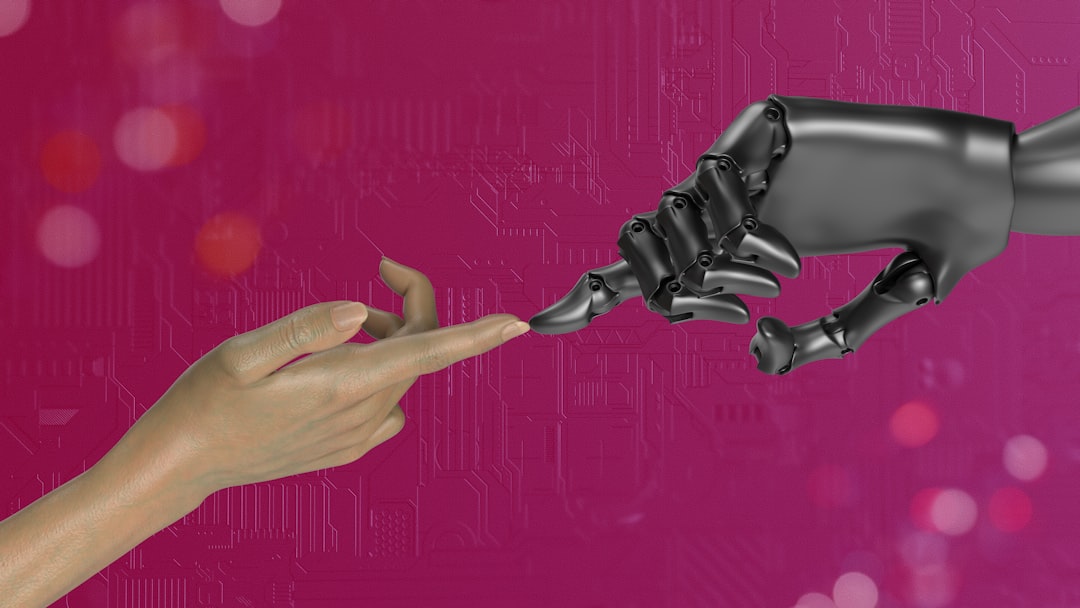
Photo by Igor Omilaev on Unsplash
Last month, a radiologist at a major hospital nearly missed a critical tumor because an AI diagnostic system confidently assured her it had found nothing wrong. The model's confidence score: 96%. The reality? The AI simply wasn't equipped to recognize that particular cancer type, yet it expressed absolute certainty anyway. This wasn't an isolated incident—it's a systemic problem plaguing modern artificial intelligence.
We've been taught to trust numbers. A confidence score of 95% sounds reassuring. It invokes images of rigorous testing, mathematical precision, and statistical validation. But what if I told you that many AI systems—including some deployed in hospitals, courtrooms, and financial institutions—are fundamentally unreliable at assessing their own trustworthiness? That the number you're seeing might be worse than useless; it might be actively dangerous because it creates false certainty?
The Confidence Paradox: Why AI Models Fail Worst When They're Most Certain
Here's the uncomfortable truth: AI confidence scores often tell you almost nothing about whether a prediction is actually correct. This phenomenon, called "miscalibration," occurs when a model's stated confidence doesn't match its actual accuracy. A model might claim 90% confidence on predictions that are only 60% accurate. Even worse, it might be most confidently wrong on the edge cases that matter most.
Consider what happened when researchers at MIT tested a popular image recognition model on adversarial examples—slightly altered images that humans recognize easily but fool AI systems. The model confidently misidentified them at high confidence levels. It wasn't just wrong; it was wrong with conviction. This happens because neural networks make predictions based on statistical patterns in training data, not because they actually "understand" what they're looking at. When they encounter something outside their training distribution, they often produce high-confidence nonsense.
The issue extends beyond image recognition. Language models, despite their impressive capabilities, are notorious for generating plausible-sounding but completely fabricated information. Why AI Models Hallucinate and How Researchers Are Finally Catching Them Red-Handed explores this phenomenon in depth, but the core problem remains: these systems don't have an internal alarm bell that goes off when they're operating outside their competence zone.
Where Confidence Scores Go Catastrophically Wrong
The real-world consequences are starting to pile up. Medical AI systems that confidently prescribe treatments for rare diseases they've never seen. Hiring algorithms that confidently reject qualified candidates from underrepresented groups. Loan approval systems that confidently deny credit based on spurious correlations. In each case, the system's unwarranted certainty creates a false halo of legitimacy.
A 2023 study from Stanford found that popular large language models exhibited confidence scores that were almost completely uncorrelated with actual correctness on specialized questions. A doctor asking about a rare disease could get a confidently wrong answer that would sound entirely plausible to a non-expert. The confidence score didn't warn them; it actively misled them.
This becomes especially problematic in high-stakes scenarios. An autonomous vehicle needs to know when it's uncertain and should defer to a human. A content moderation system needs to know when a decision is borderline and might warrant human review rather than automatic action. But if the confidence scores are garbage, the system has no mechanism for graceful degradation.
The Technical Solutions Starting to Emerge
Fortunately, researchers aren't ignoring this problem. Several promising approaches are gaining traction. Ensemble methods—using multiple AI models and examining their agreement—can provide a more honest assessment of uncertainty. If five different models strongly agree, you can be more confident than if they're split. If they disagree sharply, that disagreement itself is valuable information.
Bayesian deep learning represents another avenue. Instead of producing single point estimates with confidence scores, Bayesian approaches generate probability distributions that explicitly represent uncertainty. A model might say "I think the answer is X, but my uncertainty is high." This is less reassuring than a confident prediction, but it's far more honest.
Temperature scaling and other calibration techniques can adjust confidence scores to better reflect actual accuracy, at least for problems similar to the training data. Post-hoc calibration works by taking a model's raw outputs and mathematically transforming them so that stated confidences actually match observed frequencies. It's not perfect—it still can't fix fundamental mismatches when test data differs radically from training data—but it's a step forward.
What Users Actually Need to Know
Here's the practical advice: never trust a confidence score in isolation. If an AI system is providing high-confidence predictions that will affect important decisions, ask these questions: Has this specific model been validated on data similar to your use case? What happens when the model says it's uncertain—is there a human in the loop? Has the system been tested on edge cases and adversarial examples?
The responsible AI systems you'll see in the future won't be the ones with the highest confidence scores. They'll be the ones honest about their limitations. They'll be systems designed to flag uncertainty, enable human oversight, and acknowledge when they're operating in unfamiliar territory.
We're currently at a stage where a model's confidence score is almost a liability—it creates dangerous false certainty. The next generation of AI systems needs to move beyond binary confident/not confident thinking toward genuine uncertainty quantification. Until that happens, healthy skepticism toward any AI prediction isn't paranoia. It's wisdom.
Comments (0)
No comments yet. Be the first to share your thoughts!
Sign in to join the conversation.