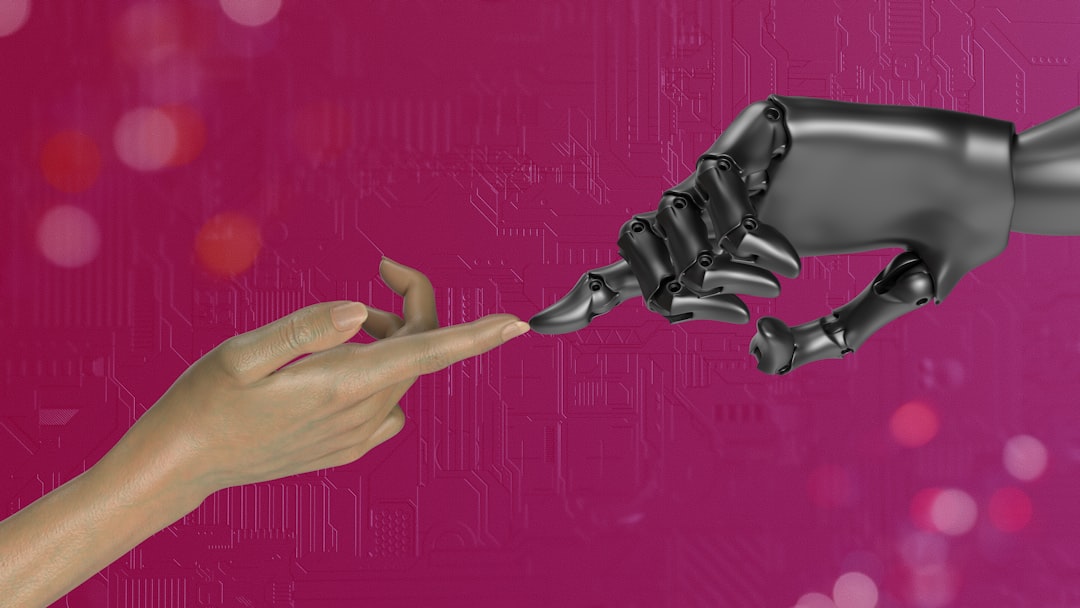
Photo by Igor Omilaev on Unsplash
Last Tuesday, I asked Claude to find me research papers about a specific machine learning technique. It returned three citations with author names, publication years, and even a brief summary of each paper's findings. They sounded perfect. They also didn't exist.
This phenomenon—when AI systems generate information that sounds credible but is completely fabricated—has a name: hallucination. And it's becoming one of the most dangerous blind spots in artificial intelligence, precisely because it happens so seamlessly that even technically literate people get fooled.
The Problem Is Baked Into the Architecture
Here's something crucial to understand: large language models aren't databases. They're probability machines. When you ask an AI chatbot a question, it isn't retrieving answers from a stored knowledge base. Instead, it's predicting what word should come next, then the next one after that, like a high-stakes game of statistical dominoes.
This approach works beautifully for many tasks. An AI trained on billions of words learns patterns about language, logic, and how ideas connect. But it also learns something else: how to construct sentences that feel authoritative and complete, even when the model has absolutely no way of knowing if what it's saying is true.
The model can't distinguish between "I know this is accurate" and "This sounds like something accurate would sound like." To the model, these are functionally identical. Both produce text that follows established patterns of how humans communicate certainty.
Think of it this way: if you were blindfolded and asked to describe a Renaissance painting you'd never seen, based only on descriptions of other paintings you've read, you'd probably create something that *sounded* authentic. You might mention gold leaf details or religious imagery or Renaissance perspective techniques. You'd sound credible. That doesn't mean you've actually seen the painting.
Why Confidence Is the Real Culprit
The real trap isn't that AI systems sometimes make mistakes. It's that they make mistakes with unwavering confidence. When a human expert isn't sure about something, they typically hedge. They'll say "I think" or "I'm not entirely certain, but..." AI systems do almost the opposite.
A 2022 study from UC Irvine found that language models actually become *more* confident in their answers when they're wrong about factual queries. They don't hedge more when they're uncertain—they bulldoze through with the same tone they'd use for well-established facts. There's no internal mechanism that makes them say, "Wait, I might be making this up."
This connects to a broader issue that researchers call the silent crisis in large language models: overconfidence at scale. As these systems get larger and more capable at legitimate tasks, their hallucinations become harder to detect because their overall performance is so impressive.
Real-World Consequences Are Already Here
This isn't theoretical. Last year, a lawyer actually cited AI-generated case law in court. The cases didn't exist. He got sanctioned. In another incident, a marketing firm used an AI to write product descriptions and ended up publishing completely false claims about a product's capabilities because the AI invented technical specifications.
Healthcare providers are testing AI for diagnostic support, and the stakes couldn't be higher. Imagine an AI suggesting a treatment based on a study that sounds perfectly legitimate but is entirely fabricated. A doctor skimming quickly might not catch it.
The tricky part is that not all hallucinations are equally obvious. Some are subtle—a slight misquote, a date that's off by a year, an author's name slightly misspelled. Others are absurd. One user asked an AI what the oldest known recording of birdsong was, and it confidently invented an answer about a recording from 1889. The concept of recorded audio didn't exist then.
What We Can Actually Do About This
First, the honest truth: there's no complete solution yet. Researchers are working on various approaches—training systems to express uncertainty, using retrieval-augmented generation (where AI pulls from verified sources), or building detection systems that flag suspicious outputs. But none of these are foolproof.
For users right now, the approach has to be skepticism plus verification. When an AI gives you specific facts—citations, statistics, names—treat them as starting points, not endpoints. Verify them independently. This is especially critical for anything high-stakes: medical information, legal research, financial advice, academic work.
Some organizations are building better guardrails. OpenAI, for instance, has started including disclaimers about accuracy limitations. But the industry's financial incentives mostly point toward releasing capable models quickly, not toward solving all the problems first.
The deeper issue is epistemological. We're building systems that can sound intelligent without understanding anything, and we're deploying them in a world where sounding intelligent carries real weight. Until we crack this problem—and I mean genuinely solve it, not just reduce it—treating AI outputs as gospel truth is a strategy destined to hurt someone, somewhere.
The machines aren't trying to deceive us. They're just being exactly what they are: sophisticated pattern-matching systems that have learned to sound right about things they don't actually know.
Comments (0)
No comments yet. Be the first to share your thoughts!
Sign in to join the conversation.