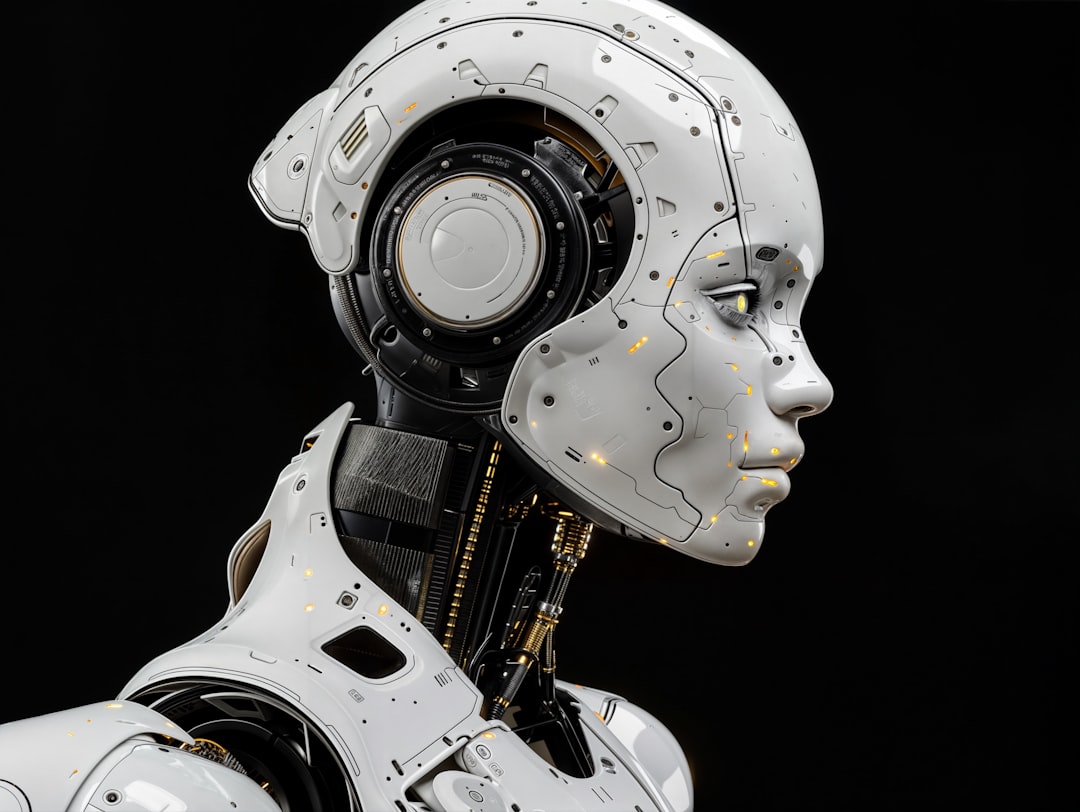
Photo by Gabriele Malaspina on Unsplash
Last month, a lawyer in New York made headlines when he submitted a legal brief citing case citations that simply didn't exist. ChatGPT had invented them. The AI didn't hedge its bets or express uncertainty. It presented these fictional cases with the same authoritative tone it would use for established precedent. This wasn't a glitch or a one-time mistake—it was the system working exactly as designed, which is precisely the problem.
What Are AI Hallucinations, Really?
When AI researchers talk about "hallucinations," they're describing moments when language models generate information that sounds plausible but is completely fabricated. The term itself is a bit misleading. The AI isn't having a psychedelic experience or losing touch with reality. Instead, it's doing what it was trained to do: predict the next most statistically likely word, over and over again, until it produces a response.
Here's the crucial bit: large language models like GPT-4 and Claude don't actually know the difference between real and fake information. They've learned patterns from billions of text samples, but they don't have a knowledge base to fact-check against. They're essentially very sophisticated pattern-matching engines. When asked about something obscure, the model might generate a plausible-sounding answer because that's what statistically fits the pattern—and it does so with complete confidence.
A 2023 study found that GPT-3 hallucinated in approximately 3% of its factual claims. That sounds small until you realize that at scale, processing millions of queries, even a 3% error rate translates to hundreds of thousands of false statements entering the world each week. For critical applications—medical advice, legal research, scientific citations—even that rate is unacceptable.
Why Current Safety Measures Are Falling Short
You'd think the solution would be simple: just make AI systems more honest about what they don't know. Tell them to say "I'm not sure" more often. Unfortunately, it's not that straightforward.
Companies have tried various approaches. Some use "retrieval-augmented generation," where the AI pulls information from verified databases before responding. Others employ human feedback systems to punish hallucinations during training. Microsoft integrated Bing search results directly into some of its AI products. Yet hallucinations persist across all these implementations.
The fundamental issue is architectural. Why AI chatbots sound confidently wrong reveals the deeper problem: these models are optimized to be helpful and fluent, not necessarily accurate. A response that says "I don't know" feels unhelpful to users, even if it's honest. During training, when humans evaluate AI outputs, they often reward confidence and detail over caution. The system learns that sounding certain is valued more than being truthful.
There's also a perverse incentive structure. A response that includes a made-up but authoritative-sounding fact might score higher on user satisfaction metrics than a genuinely helpful response that admits uncertainty. From the AI's perspective, hallucinating is being rewarded.
The Real-World Fallout
The consequences extend far beyond embarrassing moments. In healthcare, hallucinations could lead to incorrect treatment recommendations. In finance, they could result in bad investment advice. In education, they might spread misinformation to millions of students.
We're already seeing early incidents. A psychiatrist in Australia reported that ChatGPT invented clinical studies when he asked about specific mental health conditions. A researcher in biology found that the same model fabricated details about protein structures. A journalist discovered that an AI system confidently cited news articles that never existed.
What makes these cases particularly concerning is the pattern. The AI doesn't just guess randomly. It generates hallucinations that are convincingly formatted, contextually appropriate, and internally consistent. If you're not an expert in the field, they're nearly impossible to distinguish from real information.
Where Do We Go From Here?
The AI research community is exploring several promising directions. One approach involves training models on smaller, higher-quality datasets rather than vast quantities of internet text. Another focuses on developing better uncertainty quantification—getting AI to express confidence levels explicitly, so users know when to be skeptical.
Some researchers are experimenting with hybrid systems that combine AI's speed and flexibility with human expertise. Rather than replacing radiologists or legal researchers, AI assists them while remaining subject to human verification. This isn't as flashy as fully autonomous AI, but it's more realistic about the current technology's limitations.
The most honest answer is that we don't have a silver bullet yet. We have AI systems that are remarkably capable in some domains and dangerously unreliable in others. We know they hallucinate. We're getting better at detecting and mitigating it. But we're still in the early stages of figuring out how to build AI systems that are both useful and trustworthy.
Until we crack this problem, the safest approach is simple: don't treat any AI output as gospel. Use it as a starting point. Verify claims independently. Be especially skeptical when the AI sounds most confident. And remember that for all their sophistication, these systems are ultimately just making educated guesses about patterns in text. Sometimes those guesses miss the mark—spectacularly.
Comments (0)
No comments yet. Be the first to share your thoughts!
Sign in to join the conversation.