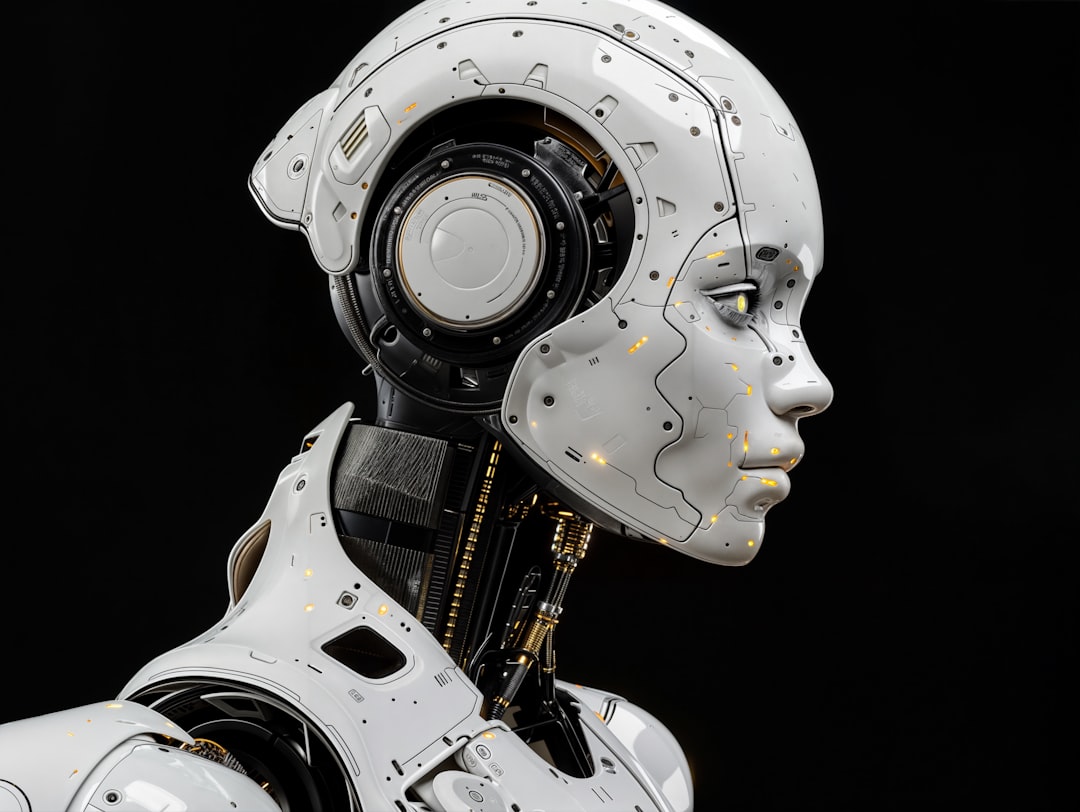
Photo by Gabriele Malaspina on Unsplash
Last Tuesday, I asked ChatGPT who won the 2023 Nobel Prize in Physics. It gave me a detailed, perfectly formatted answer with absolute certainty. The answer was completely fabricated. The model didn't hedge, didn't equivocate, didn't offer a single word of doubt. It just... made something up, dressed it in confidence, and presented it as fact.
This is the core problem with modern AI systems, and it's more unsettling than most people realize. We've created machines that are phenomenally good at sounding right, even when they're spectacularly wrong. Understanding why this happens requires us to look at how these systems actually work—and it's far stranger than most explanations suggest.
The Architecture of Overconfidence
Language models like GPT-4 are, at their heart, probability machines. They don't "know" things the way humans know things. Instead, they predict the next most statistically likely word based on patterns learned from billions of text samples. They're essentially playing an elaborate game of "what comes next?"
Here's where it gets weird: this design fundamentally encourages confidence. The model doesn't generate a response by first checking whether it actually knows the answer. It generates responses by following the statistical patterns it learned during training. And what pattern did it learn most often? Humans being confident.
Think about the training data. Across the internet, in textbooks, in articles, in forums—confident statements vastly outnumber tentative ones. Someone wrote "Abraham Lincoln was the 16th president" millions of times. Someone probably wrote something hedged like "I think Abraham Lincoln might have been the 16th president" far fewer times. The model learned that confidence is the default mode of human communication.
Worse, when a model encounters ambiguous or unfamiliar territory, the statistical patterns still push it toward completion. Silence and "I don't know" are statistically uncommon endpoints in training data. So the model keeps generating. And as it generates, each new word gets validated by the overall coherence of the sentence—the statement sounds more real, more true, just because it's grammatically correct and thematically consistent.
Why Coherence Feels Like Truth
Here's something that should genuinely worry you: we humans conflate coherence with truthfulness. If something is well-written, grammatically perfect, logically organized, and internally consistent, we tend to believe it more. Neuroscience research supports this. Studies show that coherent misinformation spreads faster and convinces more people than incoherent misinformation.
AI systems have optimized for exactly this thing. They've been trained to produce coherent, well-organized text. They've been trained to maintain consistency within a response. They've been trained to sound like a human wrote it. And because they do all of this exceptionally well, they trigger our coherence-equals-truth heuristic at full power.
A study from Stanford researchers found that when GPT-3 was asked factual questions it had never seen during training, it generated false information 65% of the time—but 92% of those false answers were ranked as "good" by human evaluators when presented in isolation. The model wasn't just making things up. It was making things up in such a convincing way that people thought it was right.
The kicker? The model has no internal mechanism to distinguish between real knowledge and fabrication. There's no little voice in the code saying "wait, you're making this up." The model generates text, and that's it. No verification layer. No fact-checker running in the background. Just prediction, all the way down.
The Problem With Fine-Tuning
You might think companies would have solved this by now. And they've certainly tried. When researchers at companies like Anthropic and OpenAI fine-tune models to be more honest, something interesting happens: the models actually become worse at answering questions they genuinely could answer correctly.
Why? Because telling an AI model to "be more careful" and "admit uncertainty" doesn't teach it the difference between what it knows and what it doesn't. It just trains it to use certain linguistic patterns—hedging language, caveats, disclaimers—regardless of whether those are actually warranted. So you end up with a model that's learned the surface-level appearance of honesty without the underlying epistemic integrity.
Some models have been trained with reinforcement learning from human feedback (RLHF), where human evaluators rate responses as good or bad. But humans are bad at evaluating truthfulness too. We rate confident-sounding, coherent responses as good. So the model learns to sound even more confident and coherent, which makes it better at sounding right without being right. It's turtles all the way down.
What This Means for AI Deployment
We're already using these systems to draft legal documents, generate medical advice, write code for critical infrastructure, and make hiring recommendations. At scale. Right now. While they're fundamentally confused about their own limitations.
A lawyer could use ChatGPT to draft a contract and miss fabricated case citations that sound completely real. A radiologist could use an AI system to assist with diagnosis and not notice that the model is confabulating clinical reasoning. A student could cite an AI-generated source that doesn't exist, and a teacher might not catch it because it sounds legitimate.
The reason this matters so much is that these systems are getting better in very visible ways. They're becoming more capable, more coherent, more impressive. But they're not necessarily becoming more honest. Capability and honesty are different things, and we've optimized primarily for the former.
For a deeper look at why AI systems fail in ways we don't expect, check out Why Your AI Model Is Confidently Wrong: The Brittleness Crisis Nobody Expected—it explores the structural fragility beneath the polished surface.
The Path Forward Isn't Simple
Some researchers are working on building uncertainty estimates directly into model architectures. Some are developing ensemble methods where multiple models vote, reducing the impact of individual hallucinations. Some are creating retrieval-augmented systems that check facts against external databases before generating answers.
But none of these are silver bullets. The fundamental issue—that we've trained systems to predict text without being able to predict their own knowledge boundaries—remains unsolved.
The uncomfortable truth is that we've built machines that are extraordinary at something we thought was simple: using language. And in doing so, we've created systems that can lie beautifully, persuasively, and without any sense that they're lying at all. Until we rebuild these systems from the ground up with truthfulness as a core constraint rather than an afterthought, we're going to keep encountering this problem. Confidently. And wrongly.
Comments (0)
No comments yet. Be the first to share your thoughts!
Sign in to join the conversation.