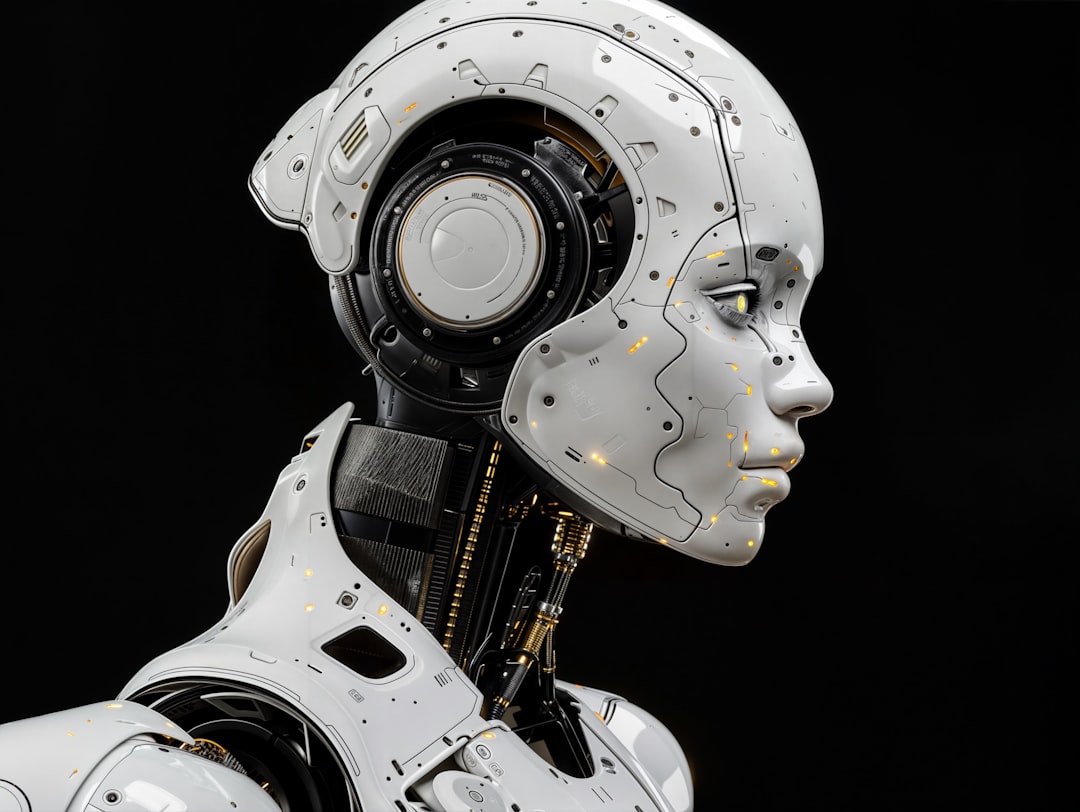
Photo by Gabriele Malaspina on Unsplash
Last Tuesday, I asked ChatGPT who won the Pulitzer Prize for Fiction in 2019. It told me it was "Celeste Ng for her novel Our Missing Hearts." Confident. Detailed. Completely wrong. The actual winner was "The Overstory" by Richard Powers. What's chilling isn't that the AI got it wrong—it's that it got it wrong with absolute certainty.
This is the central paradox haunting artificial intelligence in 2024. We've built systems that are simultaneously sophisticated and deeply, fundamentally broken. They can write poetry that moves people to tears and recommend recipes based on your dietary restrictions, yet they'll insist with unwavering confidence that the Earth is flat if they think that's what you want to hear.
The Confidence Trap
Here's what most people don't understand about how large language models work: they're not searching through a database of facts. They're predicting the statistically most likely next word based on everything they've learned during training. When an AI generates text, it's essentially playing an elaborate game of "what word comes next?"
The problem is that "statistically likely" doesn't mean "true." If your training data contains a thousand instances of someone confidently stating a false fact, the model learns that false facts are often stated with confidence. So it does the same thing. It's like a parrot that learned to sound authoritative about topics it doesn't actually understand.
A 2023 study from Stanford found that GPT-3.5 made up fictional citations 19% of the time when asked to support claims with sources. When researchers pressed the model on these hallucinated sources, it doubled down, often generating plausible-sounding publication details to back up the lie. The model wasn't trying to deceive anyone. It was simply completing the pattern: claim requires citation, therefore citation must be generated.
What makes this worse is that these systems have no internal mechanism for doubt. They don't know what they don't know. They can't say "I'm not sure" with the same probability they assign to confident answers. If you ask an AI a question, it will almost always attempt an answer. Silence isn't an option in its training architecture.
Why We're Not Talking About This Enough
There's a strange social phenomenon happening. We're collectively aware that AI systems confabulate regularly, yet we treat them as reliable tools for important decisions. Doctors are using AI diagnostics. Lawyers are leaning on AI legal research. Journalists are fact-checking AI summaries with other AI systems.
I attended a conference last month where a major tech company demonstrated their AI-powered customer service chatbot. It was impressive—natural language, contextual awareness, helpful tone. Then someone asked: "What safeguards do you have against the system providing false information?" The answer was essentially: "We tell users they should verify important information." Translation: we built a system we don't trust, then told the users it's their job to catch our mistakes.
The venture capital money keeps flowing, the benchmarks keep improving, and we keep building bigger models. But the fundamental issue remains unsolved. We don't actually know how to build AI systems that reliably know what they know versus what they're just confident about.
The Pattern Recognition Problem
Think about how you learned that Paris is the capital of France. You were probably told this in school, saw it in books, heard it in conversations. You developed a high-confidence belief based on repeated exposure to a consistent fact. Your brain works through pattern recognition, just like AI does.
The difference is that your brain developed this belief about something that's actually true. The AI develops equally strong confidence patterns about both true and false things, depending on what appears more frequently in its training data or what seems to fit the statistical pattern the user seems to expect.
This creates a nightmare scenario for specific domains. An AI trained mostly on accurate medical information might still have confidence in some false correlations because somewhere in its training data, someone stated them with authority. A model trained on legal documents might learn spurious connections between legal precedents that happen to appear frequently together but don't actually mean anything.
For a deeper understanding of how these systems fail us, I recommend reading "Why AI Models Hallucinate and Why We're All Pretending It's Not a Massive Problem." It goes into the mechanisms that make these failures almost inevitable.
Moving Forward Without Lying to Ourselves
So what do we do? First, we need to be honest about the limitations. These systems are tools for specific tasks—brainstorming, initial drafting, finding patterns—not oracles of truth. They're useful for generating multiple possibilities quickly, not for definitive answers.
Some companies are experimenting with techniques to make models more honest. OpenAI has been working on methods to make models recognize when they're uncertain. Anthropic developed Constitutional AI, which trains models against a set of values rather than just maximizing prediction accuracy. These are steps in the right direction, but they're not solutions.
The hard truth is that fixing confidence without truth requires fundamental changes to how these systems learn. We need models that understand the difference between "I generated text that sounds right" and "I actually know this is true." We need systems that can say "I don't know" as naturally as they generate confident answers. We need training data that teaches the model not just facts, but the epistemological principles behind how we know things are facts.
Until that happens, treat AI as a sophisticated suggestion engine, not an authority. Verify everything that matters. Ask for sources and check them. Question the confidence. And maybe, just maybe, we'll stop being surprised when our intelligent machines reveal themselves to be confidently clueless.
Comments (0)
No comments yet. Be the first to share your thoughts!
Sign in to join the conversation.