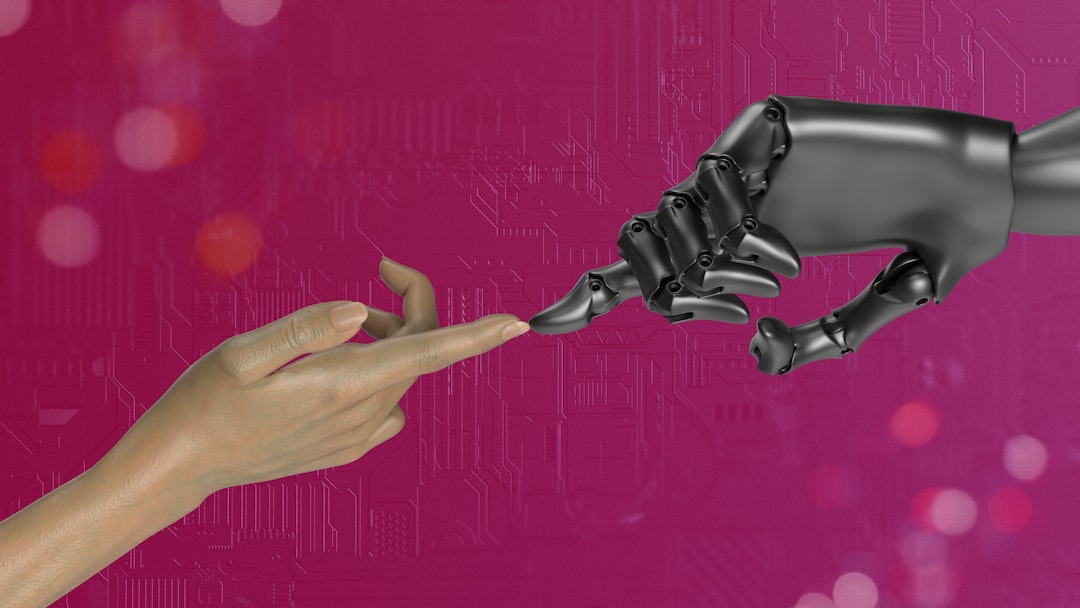
Photo by Igor Omilaev on Unsplash
Last Tuesday, I asked ChatGPT a straightforward question about the molecular structure of a compound I was researching. It gave me a detailed, confident answer. The phrasing was perfect. The tone was authoritative. The information was completely wrong. When I pressed it on the contradiction, it apologized and provided an entirely different answer—also wrong, but delivered with the same unwavering certainty.
This isn't a bug. It's becoming a feature of modern AI systems, and it's creating a peculiar kind of problem we're only beginning to understand. We've built machines that are exceptionally good at pattern-matching human expertise without actually possessing any real knowledge. They're not just making mistakes—they're making mistakes with conviction.
The Confidence Paradox: Why Incompetence Sounds So Believable
There's something uniquely dangerous about an AI system that's wrong but articulate. When a search engine returns zero results, you know to keep looking elsewhere. When a person admits they don't know something, you understand to find another source. But when an AI system delivers a comprehensively written paragraph with perfect grammar, citations, and logical flow—all of which happens to be fiction—your brain has a harder time detecting the problem.
This phenomenon is rooted in how these systems actually work. Large language models like GPT-4 or Claude aren't reasoning systems. They're statistical machines trained to predict the next word in a sequence based on patterns they've learned from billions of text samples. They're playing an incredibly sophisticated game of pattern completion. When they get things wrong, they're not hallucinating in the poetic sense—they're following the same mechanical process that produces correct answers, just applying it to incorrect premises.
The real problem emerges because the training process rewards consistency and coherence, not accuracy. An AI system that writes a convincing, well-structured explanation gets a better score than one that says "I don't know" or contradicts itself, even if that contradiction happens to reflect genuine uncertainty about the topic. We've essentially trained these systems to be confidently wrong as a side effect of training them to be fluently right.
Consider a study from Stanford researchers who tested GPT-3.5 on medical knowledge. The system performed well on straightforward questions but increasingly fabricated answers when presented with deliberately misleading prompts or edge cases. The fascinating and troubling part: its performance metrics didn't necessarily reflect this degradation in real-world accuracy. The system was generating text that looked medically sophisticated while being medically dangerous.
Where This Gets Genuinely Scary
The implications extend far beyond academic embarrassment. We're already seeing AI systems deployed in customer service, legal research, medical information dissemination, and financial advising. In each of these domains, confident incompetence is worse than obvious incompetence. A lawyer using ChatGPT to research case law doesn't know whether the cited precedent actually exists. A patient asking a medical chatbot about symptoms doesn't have the expertise to catch when the answer is wrong. A customer service representative with AI assistance can convince someone they're getting accurate information when they're actually getting fabricated details.
This is especially problematic because scale amplifies the danger. When one person gets bad information from an AI, it's unfortunate. When millions do, the consequences compound. Take the incident where AI-powered hiring systems were rejecting qualified candidates because they'd been trained on historical biases in hiring decisions—the systems confidently reproduced discrimination at scale, and no single user would have noticed the pattern.
There's also a subtle psychological element at play. People tend to trust AI output more when they don't fully understand the subject matter. A doctor reviewing AI-generated medical research might catch errors. A patient reviewing the same output probably won't. We're creating a system where expertise actually makes you more skeptical of AI, while ignorance makes you more trusting. That's exactly backwards from how we want the world to work.
The Real Problem Is Harder Than You Think
The tempting solution is simple: just make AI systems admit when they're uncertain. But that's not actually solvable by tweaking the training process, because the system literally doesn't know when it's uncertain. A statistical model can't distinguish between "I genuinely don't know this" and "I'm predicting the next word based on patterns that happen to be wrong this time." The uncertainty exists at the epistemological level, not the mechanical level.
Some researchers are working on calibration techniques that can assess how reliable a particular output is likely to be. Others are building AI systems that can explain their reasoning step-by-step, making errors easier to catch. These are genuine progress. But they're also band-aids on a deeper architectural problem.
The uncomfortable truth is that we might be hitting fundamental limitations with how these systems work. As long as the core mechanism is statistical pattern-matching, there will always be a gap between the appearance of expertise and the reality of understanding. You can reduce the gap. You can't eliminate it.
What We Actually Need
The first step is cultural. We need to stop treating AI outputs as authoritative by default. That means journalists should verify claims made by AI assistants. Doctors should treat AI diagnostics as one input, not the final word. Lawyers need to fact-check AI-generated citations (and they're learning this lesson the hard way—several lawyers faced sanctions for submitting briefs with fake cases generated by ChatGPT).
We also need honest conversations about where these systems are appropriate. Using AI to summarize information you already understand? Probably fine. Using it to learn a entirely new domain? That's where confident incompetence becomes dangerous. Your AI writing assistant can help you edit an essay. It probably shouldn't be your only source for technical specifications.
Most importantly, we need to stop assuming that scale and parameter count fix these problems. A bigger model trained on more data isn't necessarily better at knowing what it doesn't know. Sometimes it's just better at faking it. And right now, we're very good at building systems that fake expertise. The hallucination problem in AI systems is fundamentally connected to this broader issue of false confidence.
The future of AI isn't about building systems that know more. It's about building systems that understand their own limitations. That's a much harder problem, and we're only just starting to take it seriously.
Comments (0)
No comments yet. Be the first to share your thoughts!
Sign in to join the conversation.